

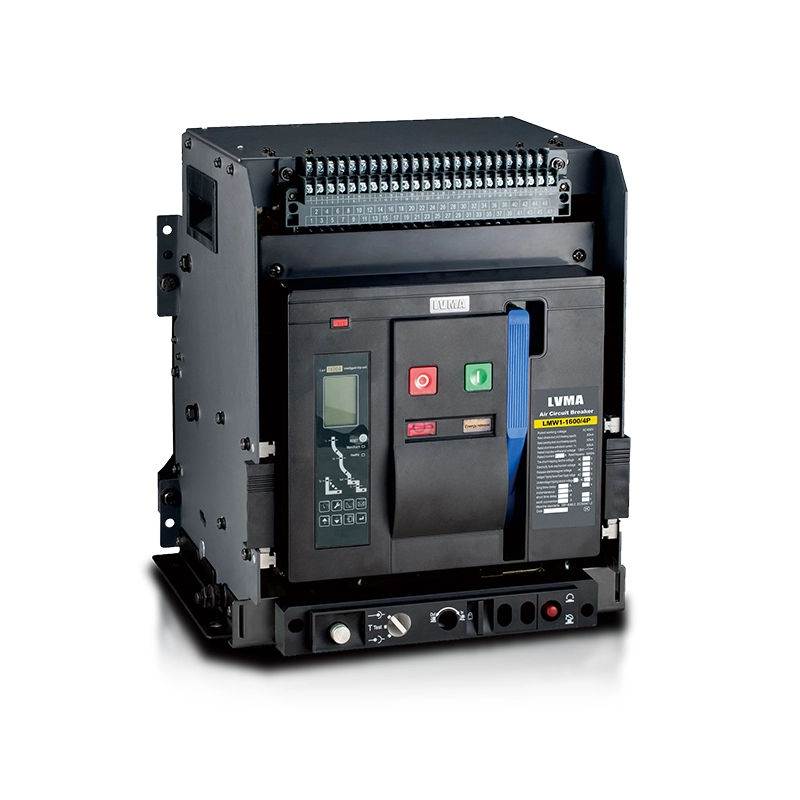
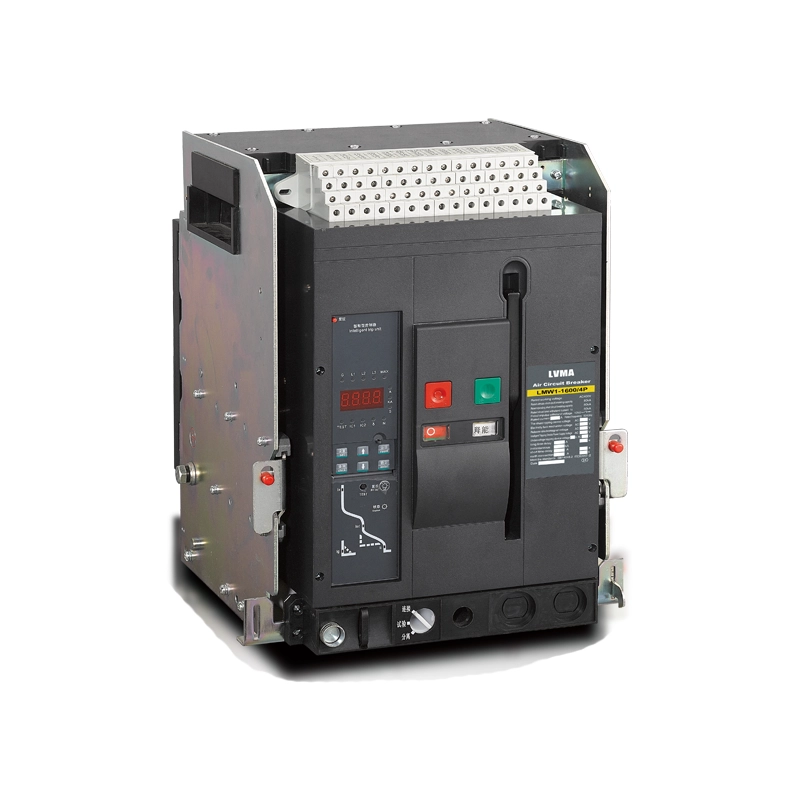
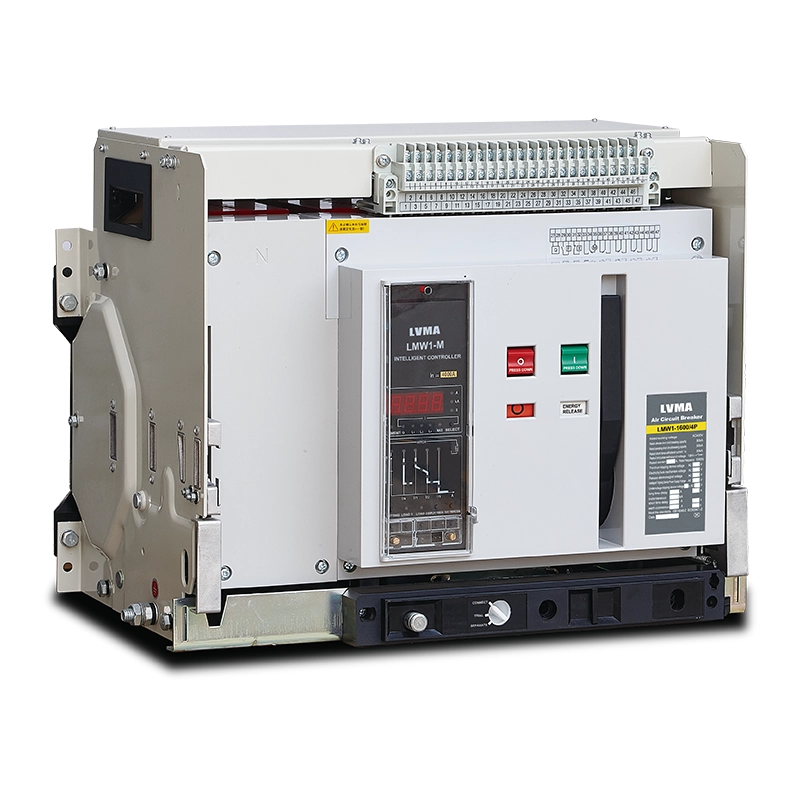
LMW1 630-6300A 4P ACB Intelligent Drawer Type Air Circuit Breaker
LMW1 630-6300A 4P ACB Intelligent Drawer Type Air Circuit Breaker
Rated current:630A~6300A
Current rank: 1600、2000、3200、4000、6300
Rated working voltage: AC400V、AC690V 50Hz
Rated insulation voltage: AC1000V
Number of Poles:3P、4P
Installation method: Drawer type,Fixed type
Wiring method: horizontal wiring
Breaking capacity: M=Standard, H=intellgence
Operation mode: electric operation, manual operation
Pollution level:3
Standard: IEC 60947-2
Rated current:630A~6300A
Current rank: 1600、2000、3200、4000、6300
Rated working voltage: AC400V、AC690V 50Hz
Rated insulation voltage: AC1000V
Number of Poles:3P、4P
Installation method: Drawer type,Fixed type
Wiring method: horizontal wiring
Breaking capacity: M=Standard, H=intellgence
Operation mode: electric operation, manual operation
Pollution level:3
Standard: IEC 60947-2
1. Product Overview
2. Key Features
- Wide Current Range: Available in 630A, 800A, 1000A, 1250A, 1600A, 2000A, 2500A, 3200A, 4000A, 5000A, 6300A ratings.
- 3P/4P Configurations: Both 3-pole and 4-pole versions available to suit different power distribution system requirements.
- Drawer-Type Design: Drawer construction allows for easy installation, inspection, and maintenance without power shutdown.
- Intelligent Microprocessor Trip Unit: Advanced protection functions with adjustable parameters and real-time fault display.
- Multiple Protection Functions: Overload (long/short time delay), short-circuit (instantaneous), earth fault, and under-voltage protection.
- Communication Capability: Optional RS485/Modbus communication modules for remote monitoring, control, and data logging.
- High Breaking Capacity: High short-circuit breaking and withstand capacity for reliable performance under fault conditions.
- Clear Status Indication: Digital display for current, voltage, and fault codes; mechanical position indicators for ON/OFF/TRIP status.
3. Technical Specifications
| Parameter | Specification |
|---|---|
| Product Model | LMW1 Series Air Circuit Breaker (ACB) |
| Rated Current Range | 630A ~ 6300A |
| Poles | 3P / 4P |
| Rated Operational Voltage | AC 400V (50/60Hz) |
| Rated Insulation Voltage | 1000V AC |
| Rated Impulse Withstand Voltage | 12kV |
| Breaking Capacity (Icu/Ics) | Up to 80kA / 65kA (depending on model) |
| Protection Unit | Microprocessor-based intelligent trip unit |
| Protection Functions | Long-time overload, short-time delay, instantaneous short-circuit, earth fault, under-voltage |
| Mounting Type | Drawer type / Fixed type (optional) |
| Communication Interface | Optional RS485 / Modbus |
| Compliance | IEC 60947-2, GB 14048.2, CE Certified |
4. Working Principle
- Normal Operation: The main contacts are closed, allowing current to flow through the circuit. The microprocessor trip unit continuously monitors current and voltage.
- Overload Protection: When the load current exceeds the long-time setting, the trip unit initiates a delayed trip to avoid nuisance tripping during temporary overloads.
- Short-Circuit Protection: In the event of a short circuit, the instantaneous trip function triggers an immediate opening of the contacts to prevent equipment damage.
- Earth Fault Protection: The trip unit detects residual current and trips the breaker if the fault exceeds the set threshold, preventing electric shock and fire hazards.
- Remote Monitoring: The optional communication module transmits real-time data (current, voltage, status) to a central control system for remote management.
5. Applications
- Industrial Power Distribution: Main incoming breakers for factories, mines, and large manufacturing facilities.
- Commercial Buildings: Power distribution for high-rise buildings, shopping malls, and office complexes.
- Data Centers & IT Facilities: Critical power distribution and backup systems for servers and IT equipment.
- Healthcare Facilities: Hospital power systems, ensuring uninterrupted power for life-saving equipment.
- Renewable Energy Plants: Solar and wind farm main power distribution and protection systems.
- Public Infrastructure: Airports, railway stations, and large-scale public utility power distribution.
6. Installation & Operation Instructions
- Installation:
- Mount the ACB in a suitable low-voltage switchgear cabinet, ensuring adequate ventilation and space for heat dissipation.
- For drawer-type units, insert the breaker into the drawer and slide it into the cabinet rails.
- Wiring:
- Connect the main power supply to the upper terminals and the load circuit to the lower terminals, following the wiring diagram.
- Connect control and auxiliary circuits (e.g., undervoltage release, shunt trip, communication modules) as required.
- Parameter Setting:
- Use the trip unit display and keypad to set protection parameters (overload, short-circuit, earth fault thresholds) according to the system requirements.
- Operation:
- Use the manual ON/OFF buttons on the breaker front to close or open the contacts.
- The breaker can also be operated remotely via the control circuit or communication module.
- Maintenance:
- Regularly inspect the breaker for signs of wear, overheating, or damage.
- Use the drawer function to withdraw the breaker for inspection or maintenance without shutting down the entire system.
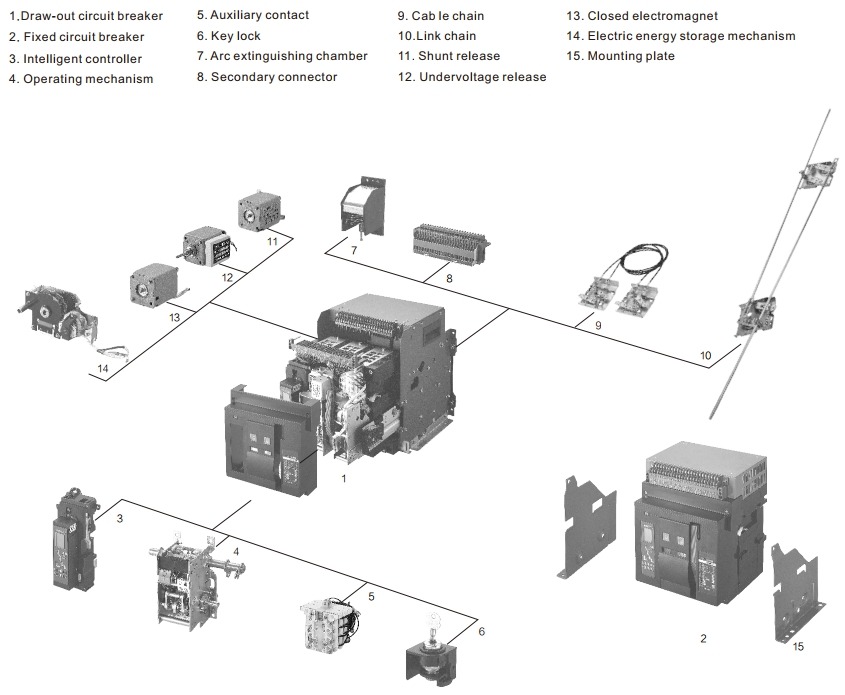
7. Frequently Asked Questions (FAQ)
Q1: What is the difference between ACB and MCCB?
- ACB (Air Circuit Breaker): Used for main distribution protection, rated currents from 630A to 6300A, with high breaking capacity and advanced protection features.
- MCCB (Molded Case Circuit Breaker): Used for branch circuit protection, rated currents from 10A to 2500A, with lower breaking capacity than ACBs.
Q2: Can the LMW1 ACB be used for motor protection?
Q3: What is the difference between fixed and drawer-type ACBs?
- Fixed Type: Permanently installed in the switchgear cabinet, requiring a full power shutdown for maintenance.
- Drawer Type: Can be partially or fully withdrawn from the cabinet, allowing for inspection, testing, and maintenance without disconnecting the main power supply.
Q4: Does the LMW1 series support remote monitoring?
Q5: Is the LMW1 series CE certified?
8. Technical Documents & Support
Download the full datasheet for detailed specifications, wiring diagrams, and trip coordination guidelines.
Contact our engineering team for custom configurations, communication module integration, or OEM solutions for large-scale projects.
Request a quote with your project details for bulk pricing, lead times, and compliance certifications.
1. Product Overview
2. Key Features
- Wide Current Range: Available in 630A, 800A, 1000A, 1250A, 1600A, 2000A, 2500A, 3200A, 4000A, 5000A, 6300A ratings.
- 3P/4P Configurations: Both 3-pole and 4-pole versions available to suit different power distribution system requirements.
- Drawer-Type Design: Drawer construction allows for easy installation, inspection, and maintenance without power shutdown.
- Intelligent Microprocessor Trip Unit: Advanced protection functions with adjustable parameters and real-time fault display.
- Multiple Protection Functions: Overload (long/short time delay), short-circuit (instantaneous), earth fault, and under-voltage protection.
- Communication Capability: Optional RS485/Modbus communication modules for remote monitoring, control, and data logging.
- High Breaking Capacity: High short-circuit breaking and withstand capacity for reliable performance under fault conditions.
- Clear Status Indication: Digital display for current, voltage, and fault codes; mechanical position indicators for ON/OFF/TRIP status.
3. Technical Specifications
| Parameter | Specification |
|---|---|
| Product Model | LMW1 Series Air Circuit Breaker (ACB) |
| Rated Current Range | 630A ~ 6300A |
| Poles | 3P / 4P |
| Rated Operational Voltage | AC 400V (50/60Hz) |
| Rated Insulation Voltage | 1000V AC |
| Rated Impulse Withstand Voltage | 12kV |
| Breaking Capacity (Icu/Ics) | Up to 80kA / 65kA (depending on model) |
| Protection Unit | Microprocessor-based intelligent trip unit |
| Protection Functions | Long-time overload, short-time delay, instantaneous short-circuit, earth fault, under-voltage |
| Mounting Type | Drawer type / Fixed type (optional) |
| Communication Interface | Optional RS485 / Modbus |
| Compliance | IEC 60947-2, GB 14048.2, CE Certified |
4. Working Principle
- Normal Operation: The main contacts are closed, allowing current to flow through the circuit. The microprocessor trip unit continuously monitors current and voltage.
- Overload Protection: When the load current exceeds the long-time setting, the trip unit initiates a delayed trip to avoid nuisance tripping during temporary overloads.
- Short-Circuit Protection: In the event of a short circuit, the instantaneous trip function triggers an immediate opening of the contacts to prevent equipment damage.
- Earth Fault Protection: The trip unit detects residual current and trips the breaker if the fault exceeds the set threshold, preventing electric shock and fire hazards.
- Remote Monitoring: The optional communication module transmits real-time data (current, voltage, status) to a central control system for remote management.
5. Applications
- Industrial Power Distribution: Main incoming breakers for factories, mines, and large manufacturing facilities.
- Commercial Buildings: Power distribution for high-rise buildings, shopping malls, and office complexes.
- Data Centers & IT Facilities: Critical power distribution and backup systems for servers and IT equipment.
- Healthcare Facilities: Hospital power systems, ensuring uninterrupted power for life-saving equipment.
- Renewable Energy Plants: Solar and wind farm main power distribution and protection systems.
- Public Infrastructure: Airports, railway stations, and large-scale public utility power distribution.
6. Installation & Operation Instructions
- Installation:
- Mount the ACB in a suitable low-voltage switchgear cabinet, ensuring adequate ventilation and space for heat dissipation.
- For drawer-type units, insert the breaker into the drawer and slide it into the cabinet rails.
- Wiring:
- Connect the main power supply to the upper terminals and the load circuit to the lower terminals, following the wiring diagram.
- Connect control and auxiliary circuits (e.g., undervoltage release, shunt trip, communication modules) as required.
- Parameter Setting:
- Use the trip unit display and keypad to set protection parameters (overload, short-circuit, earth fault thresholds) according to the system requirements.
- Operation:
- Use the manual ON/OFF buttons on the breaker front to close or open the contacts.
- The breaker can also be operated remotely via the control circuit or communication module.
- Maintenance:
- Regularly inspect the breaker for signs of wear, overheating, or damage.
- Use the drawer function to withdraw the breaker for inspection or maintenance without shutting down the entire system.
7. Frequently Asked Questions (FAQ)
Q1: What is the difference between ACB and MCCB?
- ACB (Air Circuit Breaker): Used for main distribution protection, rated currents from 630A to 6300A, with high breaking capacity and advanced protection features.
- MCCB (Molded Case Circuit Breaker): Used for branch circuit protection, rated currents from 10A to 2500A, with lower breaking capacity than ACBs.
Q2: Can the LMW1 ACB be used for motor protection?
Q3: What is the difference between fixed and drawer-type ACBs?
- Fixed Type: Permanently installed in the switchgear cabinet, requiring a full power shutdown for maintenance.
- Drawer Type: Can be partially or fully withdrawn from the cabinet, allowing for inspection, testing, and maintenance without disconnecting the main power supply.
Q4: Does the LMW1 series support remote monitoring?
Q5: Is the LMW1 series CE certified?
8. Technical Documents & Support
Download the full datasheet for detailed specifications, wiring diagrams, and trip coordination guidelines.
Contact our engineering team for custom configurations, communication module integration, or OEM solutions for large-scale projects.
Request a quote with your project details for bulk pricing, lead times, and compliance certifications.

Related Products
Contact Us
Have questions about our products or services? Our team is here to help you with any inquiries.