

1500V or 2000V? Which DC Platform Should Your Next PV Project Specify
1500V or 2000V? Which DC Platform Should Your Next PV Project Specify
Quick answer: Stay on 1500V for anything under roughly 100 MW, for any project in a market whose grid code does not yet recognise 2000V DC, and for any plant you have to finance. Go to 2000V only when you control the full supply chain for modules, inverters and DC protection devices for the entire construction window — and even then, pilot it on one block, not the whole plant. The 2000V ecosystem is real and certified in 2026, but it is uneven: modules and inverters are ahead, DC-side protection is behind, and that gap is where the savings quietly disappear.
The voltage race, as it actually stands in late 2026
Every step up in PV system voltage has been a step down in balance-of-system cost. 600V to 1000V to 1500V each removed cable, combiners, foundations and land for the same installed capacity. 1500V has been the utility-scale default for roughly a decade, and it is still the benchmark against which everything else is measured.
The 1500V versus 1000V comparison is well documented and worth restating, because the 2000V case follows exactly the same logic:
| Parameter | 1000V system | 1500V system | Change |
| Modules per string | 22–24 | 33–36 | +50% |
| Conductor cross-section (same power) | Baseline | ~33% smaller | Lower copper cost |
| Cable losses | Baseline | −30% to −35% | Higher yield |
| Balance-of-system cost | Baseline | −8% to −12% | Direct saving |
| System efficiency | Baseline | +1.5% to +2% | Higher yield |
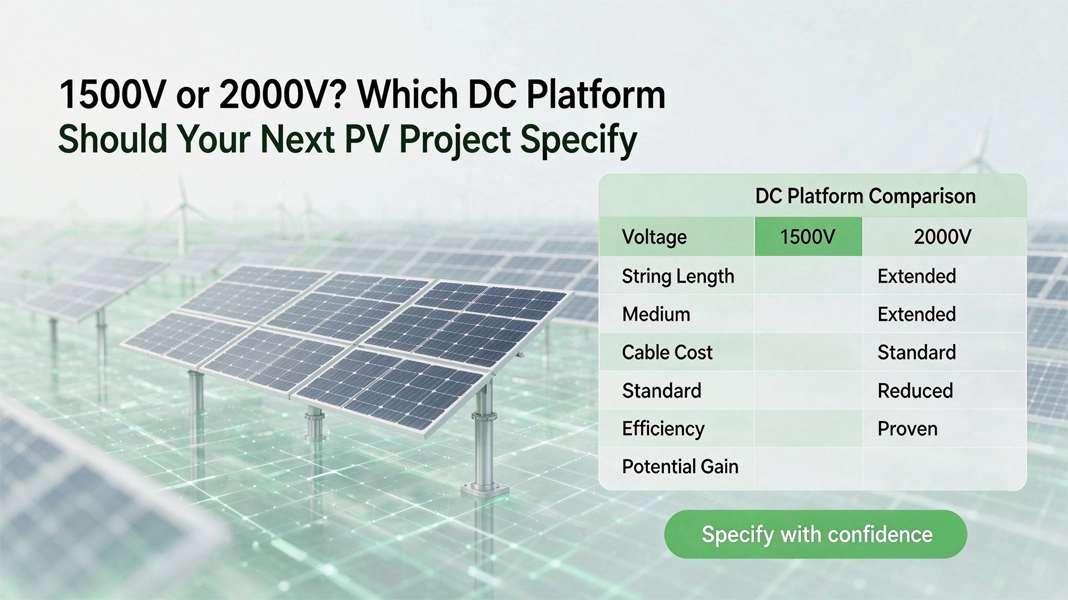
2000V repeats the pattern with a 33% voltage increase (2000 ÷ 1500 = 1.333). In practice, string length moves from 26–28 modules at 1500V to 34–36 modules at 2000V, and the resulting BOS reduction is quoted in the range of RMB 0.04–0.05/Wp for mainstream ground-mount designs.
The momentum is no longer theoretical. TÜV Rheinland released its Technical White Paper on 2000V DC Systems in August 2025 and has been certifying against it since. Huasun’s 2000V HJT module obtained TÜV SÜD certification in March 2026 under IEC 61730-1:2023 and IEC 61730-2:2023, with a declared maximum system voltage of 2000V DC; JinkoSolar and Trina Solar had already secured UL certification for 2000V modules. On the inverter side, CRRC Times Electric has shipped 2000V products including a 455 kW string inverter built on 1400V hybrid SiC IGBT modules and a 2000V/5000 kW central unit, both passing UL 62109-1.
And the Chinese standard has moved to match. NB/T 32004-2026, effective 26 December 2026, raises the inverter DC voltage ceiling from ≤1500V to ≤3000V and the AC ceiling from ≤1000V to ≤2000V. That is the clearest signal yet that the industry expects 2000V to become normal rather than exotic.
S&P Global’s forecast puts the trajectory in numbers: global 2000V product supply could grow from under 5 GW in 2026 to 380 GW in 2030, at which point 2000V is expected to account for around 77% of the global utility-scale market.
So the question is not whether 2000V is coming. It is whether your project, this year, on your site, should be the one to carry the transition risk.
The economics: what 2000V actually saves
The headline numbers are genuinely attractive, and they are worth understanding rather than dismissing.
Huasun published a comparison for an offshore PV project in Jimo, Shandong, pitting a 2000V HJT solution against a 1500V TOPCon baseline: BOS cost down by roughly RMB 0.24/W, which on a 1 GW plant is about RMB 240 million, with project IRR up 0.35 percentage points. For a 100 MW desert project in Xinjiang, comparing 2000V 760W HJT modules against 725W TOPCon on a 1500V system, BOS fell 11.95% and IRR rose 0.86 percentage points. The offshore case showed a smaller but still positive 6.48% BOS reduction.
Read those numbers carefully and a pattern emerges: the saving scales with project size, and it shrinks in difficult environments. Offshore and high-humidity sites gave back more than half the relative benefit that the desert site captured.
That is the first honest filter. A 40 MW rooftop portfolio will not see RMB 0.24/W. A 1 GW single-EPC desert block might.
The cost that never makes it into the spreadsheet
Here is the part of the 2000V conversation that is consistently under-discussed, and it is the part that decides whether the business case survives.
Modules and inverters have made the jump. DC protection devices largely have not.
Walk the DC side of a 2000V array and list what has to interrupt or isolate full string voltage:
- String-level DC isolators and DC MCBs
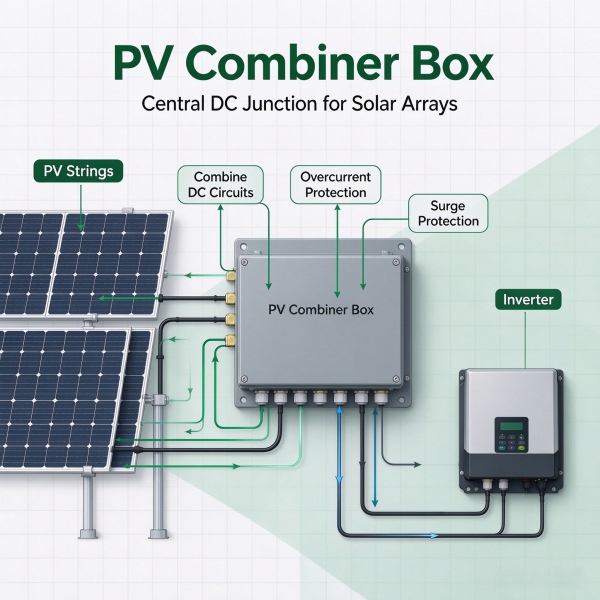
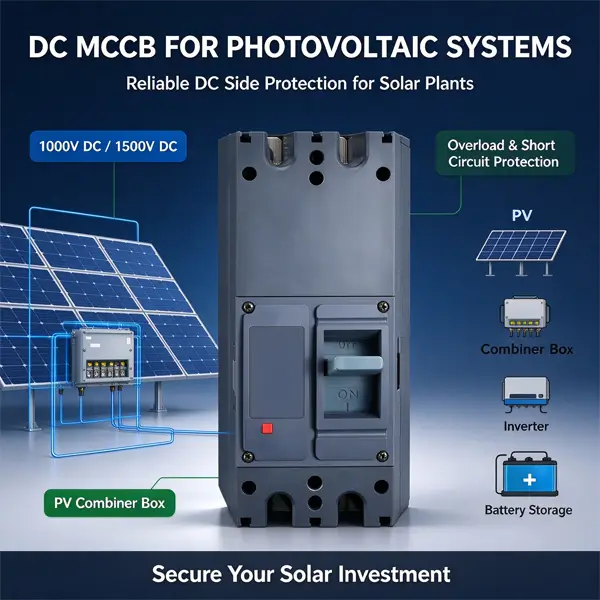
- Combiner box fuses and DC MCCBs
- Array-level DC disconnect switches
- DC surge protection devices rated for the full system voltage
- The main DC breaker between the collection system and the inverter
Every one of those devices must be type-tested at 2000V DC, not extrapolated from a 1500V design. And DC is not AC. There is no natural current zero-crossing, so the arc must be forced out by magnetic blowout and arc chutes sized for the higher voltage. Doubling the voltage roughly doubles the arc energy the chamber has to absorb, in a device that is supposed to fit the same DIN rail footprint.
Now add the requirement that catches most buyers out. Under IEC 60947-3 Annex D, the utilisation category DC-PV2 is the most demanding classification in the standard, because the device must be able to make and break a PV circuit that may carry significant overcurrent, with current flowing in either direction. It is the category that properly applies to PV and storage, and it is the one specified for the 1500V DC isolators that dominate the market today — the ABB Emax 2 MS/DC-E and Eaton IZM6 DC ranges, for example, are both rated 1500V DC and both certified to DC-PV2.
A 1500V DC-PV2 device cannot be substituted into a 2000V system. Not “with reduced margin” and not “if you series the poles” — the insulation coordination, clearance and creepage distances, and the breaking capacity were all validated at 1500V. Wiring a 1500V device into a 2000V string is a design error that will not show up until the first fault, and may not show up until the first fault on a hot afternoon five years in.
This produces a real, quantifiable drag on the 2000V business case:
- Availability. The number of suppliers able to deliver DC-PV2 devices at 2000V with a type test report is small. Sourcing competition is thin, lead times are longer, and you lose the pricing tension that keeps 1500V competitive.
- Price premium. Lower volumes and specialised arc-control design mean 2000V protection devices carry a premium over their 1500V equivalents. DC protection is a small share of CAPEX, but the saving you are chasing is also small — the two numbers are the same order of magnitude.
- Certification lead time. Your protection supplier needs a type test at full voltage. If that test has not been done yet, it becomes a critical-path item on a schedule that is usually already tight.
- Spares and O&M. A 2000V isolator that fails in year three has to be replaced with an identical 2000V isolator, from a short list of suppliers, shipped to a remote site.
The honest summary: at 2000V, part of your BOS saving is being spent buying back supply-chain risk. Whether that trade is worth it depends entirely on scale and on how much of the chain you control.
Five questions that decide it for your project
Work through these in order. The first “no” is usually decisive.
1. How large is the block, and how many EPCs are touching it?
The 2000V case is a scale case. Below roughly 100 MW the absolute saving is too small to justify a first-of-kind supply chain, and the fixed costs of certification, spares strategy and engineering rework dominate. Above that, and especially where one EPC controls modules through to commissioning, the numbers start to work.
2. Does your grid operator and local code recognise 2000V DC?
This is the question that kills more 2000V plans than any technical issue. Many national codes still define PV DC systems at 1500V maximum, and a utility interconnection study may simply reject a 2000V design because there is no clause that permits it. Check this before you check module availability. In markets where the code is silent, silence is not permission.
If you are building in a jurisdiction that references IEC 61730 and IEC 60947 without a voltage ceiling, you have room. If your code is written around a 1500V limit, you do not — regardless of what the modules are certified for.
3. Can you actually lock 2000V supply for the whole construction window?
A 2000V module certified in a lab and a 2000V module available in the quantity you need, in the month you need it, are different products. Ask each supplier for a delivery commitment with a named production line, not a datasheet. Then do the same for inverters and, most importantly, for DC protection. If any one of the three cannot commit, you are planning a plant you cannot build.
4. What will your site do to the insulation?
Higher voltage raises the electrical stress on every insulation interface, and the failure modes are environmental. Offshore and coastal sites bring salt mist and persistent humidity. Desert sites bring extreme diurnal temperature swing and conductive dust. High-altitude sites bring reduced air density, which reduces dielectric withstand and forces derating. Agrivoltaic sites bring ammonia.
2000V narrows your insulation margin at the same time as these stressors attack it. Note that the two 2000V case studies with the weakest relative economics in the data above were the offshore ones. That is not a coincidence.
5. Who carries the performance risk for 25 years?
If the plant is project-financed, your lender’s technical advisor will ask what happens if the 2000V protection devices are discontinued in year eight. A 1500V design has a dozen qualified suppliers and a deep aftermarket. A 2000V design may have two. For a balance-sheet project where you own and operate the asset, you can accept that concentration. For a financed project, it is a harder conversation.
The middle path: specify 1500V now, without closing the door
Most developers reading this will conclude, correctly, that 1500V is the right answer for the project in front of them. That does not mean designing as if 2000V will never arrive.
Three design decisions cost almost nothing today and preserve the option:
Keep the combiner and DC box footprint voltage-agnostic. Specify enclosures, busbar spacing and cable entry sized for the next voltage class, even while the devices inside are 1500V. The incremental cost is a slightly larger box; the benefit is that a future block can be re-specified without redesigning the enclosure.
Do not over-optimise the array layout. If your tracker pitch, cable tray routing and string mapping are tuned to the last centimetre for exactly 34 modules, moving to 36 later means re-engineering the whole block. Leave the tolerance in.
Write the protection specification at the voltage you are actually building, and demand the full test evidence. This is the single highest-value habit in DC protection procurement, at either voltage. See below.
What to demand in a DC protection specification
Whether you specify 1500V or 2000V, six things separate a device that will still be working in year twenty from one that will not. Ask for all six in writing:
- Rated voltage at the real maximum system voltage. That is the open-circuit voltage at the site’s record low ambient temperature, not the nominal string voltage on the drawing.
- Utilisation category DC-PV2 to IEC 60947-3 Annex D, including evidence of bidirectional breaking. If a supplier quotes only DC-21B or DC-22A, ask why.
- Icu and Ics at the voltage you specified. A device rated 1500V with a 2000V “maximum” in the datasheet, achieved by derating, is not the same product.
- Insulation coordination to IEC 60664-1, with the pollution degree and altitude correction stated explicitly for your site.
- A type test report at full voltage, from a recognised laboratory, with the certificate number verifiable. Not an extrapolation, not a self-declaration.
- Temperature rise test at 1.1× rated current, because the failure mode that actually kills DC devices in the field is thermal, not dielectric.
Any supplier who can produce all six quickly is a supplier worth keeping. Any supplier who cannot should not be on a 2000V project at all.
FAQ
Can I use 1500V DC breakers in a 2000V system? No. The device’s breaking capacity, insulation coordination and clearances were validated at 1500V. A 2000V string exceeds the validated envelope, and DC arcs do not self-extinguish. This is a safety limit, not a margin issue.
Is 2000V DC permitted? It is certified — modules to IEC 61730-1/-2 at 2000V, inverters under UL 62109-1 — and Chinese standards now contemplate up to 3000V DC. Whether it is permitted depends on your national electrical code and your utility’s interconnection rules. Confirm both before design freeze.
Will 2000V make my project cheaper? Above roughly 100 MW, in a benign environment, with locked supply, yes — BOS reductions of 4–12% have been reported. Below that scale, or on offshore and high-humidity sites, the saving shrinks and can be consumed by the premium on 2000V DC protection and the loss of supplier competition.
When will 2000V be mainstream? Forecasts put 2000V at around 77% of the global utility-scale market by 2030, up from under 5 GW of supply in 2026. Modules and inverters are leading; DC protection devices are the lagging link. Watch the protection side, not the module side, to judge real readiness.
Does any of this apply to 800V DC for data centres? No — that is a separate track with different fault-current profiles, different standards and much faster required clearing times. Do not carry assumptions across.
LVMA Electric supplies DC MCBs, DC MCCBs, DC isolation switches, DC SPDs, DC fuses and DC combiner boxes for photovoltaic and storage projects, with type test documentation and IEC 60947-3 DC-PV2 evidence available for tender packages. If you are specifying the DC side of a PV or BESS project, send us your string voltage and site conditions and we will tell you honestly which platform your specification supports.
Share This Article
Follow Us
Quick answer: Stay on 1500V for anything under roughly 100 MW, for any project in a market whose grid code does not yet recognise 2000V DC, and for any plant you have to finance. Go to 2000V only when you control the full supply chain for modules, inverters and DC protection devices for the entire construction window — and even then, pilot it on one block, not the whole plant. The 2000V ecosystem is real and certified in 2026, but it is uneven: modules and inverters are ahead, DC-side protection is behind, and that gap is where the savings quietly disappear.
The voltage race, as it actually stands in late 2026
Every step up in PV system voltage has been a step down in balance-of-system cost. 600V to 1000V to 1500V each removed cable, combiners, foundations and land for the same installed capacity. 1500V has been the utility-scale default for roughly a decade, and it is still the benchmark against which everything else is measured.
The 1500V versus 1000V comparison is well documented and worth restating, because the 2000V case follows exactly the same logic:
| Parameter | 1000V system | 1500V system | Change |
| Modules per string | 22–24 | 33–36 | +50% |
| Conductor cross-section (same power) | Baseline | ~33% smaller | Lower copper cost |
| Cable losses | Baseline | −30% to −35% | Higher yield |
| Balance-of-system cost | Baseline | −8% to −12% | Direct saving |
| System efficiency | Baseline | +1.5% to +2% | Higher yield |
2000V repeats the pattern with a 33% voltage increase (2000 ÷ 1500 = 1.333). In practice, string length moves from 26–28 modules at 1500V to 34–36 modules at 2000V, and the resulting BOS reduction is quoted in the range of RMB 0.04–0.05/Wp for mainstream ground-mount designs.
The momentum is no longer theoretical. TÜV Rheinland released its Technical White Paper on 2000V DC Systems in August 2025 and has been certifying against it since. Huasun’s 2000V HJT module obtained TÜV SÜD certification in March 2026 under IEC 61730-1:2023 and IEC 61730-2:2023, with a declared maximum system voltage of 2000V DC; JinkoSolar and Trina Solar had already secured UL certification for 2000V modules. On the inverter side, CRRC Times Electric has shipped 2000V products including a 455 kW string inverter built on 1400V hybrid SiC IGBT modules and a 2000V/5000 kW central unit, both passing UL 62109-1.
And the Chinese standard has moved to match. NB/T 32004-2026, effective 26 December 2026, raises the inverter DC voltage ceiling from ≤1500V to ≤3000V and the AC ceiling from ≤1000V to ≤2000V. That is the clearest signal yet that the industry expects 2000V to become normal rather than exotic.
S&P Global’s forecast puts the trajectory in numbers: global 2000V product supply could grow from under 5 GW in 2026 to 380 GW in 2030, at which point 2000V is expected to account for around 77% of the global utility-scale market.
So the question is not whether 2000V is coming. It is whether your project, this year, on your site, should be the one to carry the transition risk.
The economics: what 2000V actually saves
The headline numbers are genuinely attractive, and they are worth understanding rather than dismissing.
Huasun published a comparison for an offshore PV project in Jimo, Shandong, pitting a 2000V HJT solution against a 1500V TOPCon baseline: BOS cost down by roughly RMB 0.24/W, which on a 1 GW plant is about RMB 240 million, with project IRR up 0.35 percentage points. For a 100 MW desert project in Xinjiang, comparing 2000V 760W HJT modules against 725W TOPCon on a 1500V system, BOS fell 11.95% and IRR rose 0.86 percentage points. The offshore case showed a smaller but still positive 6.48% BOS reduction.
Read those numbers carefully and a pattern emerges: the saving scales with project size, and it shrinks in difficult environments. Offshore and high-humidity sites gave back more than half the relative benefit that the desert site captured.
That is the first honest filter. A 40 MW rooftop portfolio will not see RMB 0.24/W. A 1 GW single-EPC desert block might.
The cost that never makes it into the spreadsheet
Here is the part of the 2000V conversation that is consistently under-discussed, and it is the part that decides whether the business case survives.
Modules and inverters have made the jump. DC protection devices largely have not.
Walk the DC side of a 2000V array and list what has to interrupt or isolate full string voltage:
- String-level DC isolators and DC MCBs
- Combiner box fuses and DC MCCBs
- Array-level DC disconnect switches
- DC surge protection devices rated for the full system voltage
- The main DC breaker between the collection system and the inverter
Every one of those devices must be type-tested at 2000V DC, not extrapolated from a 1500V design. And DC is not AC. There is no natural current zero-crossing, so the arc must be forced out by magnetic blowout and arc chutes sized for the higher voltage. Doubling the voltage roughly doubles the arc energy the chamber has to absorb, in a device that is supposed to fit the same DIN rail footprint.
Now add the requirement that catches most buyers out. Under IEC 60947-3 Annex D, the utilisation category DC-PV2 is the most demanding classification in the standard, because the device must be able to make and break a PV circuit that may carry significant overcurrent, with current flowing in either direction. It is the category that properly applies to PV and storage, and it is the one specified for the 1500V DC isolators that dominate the market today — the ABB Emax 2 MS/DC-E and Eaton IZM6 DC ranges, for example, are both rated 1500V DC and both certified to DC-PV2.
A 1500V DC-PV2 device cannot be substituted into a 2000V system. Not “with reduced margin” and not “if you series the poles” — the insulation coordination, clearance and creepage distances, and the breaking capacity were all validated at 1500V. Wiring a 1500V device into a 2000V string is a design error that will not show up until the first fault, and may not show up until the first fault on a hot afternoon five years in.
This produces a real, quantifiable drag on the 2000V business case:
- Availability. The number of suppliers able to deliver DC-PV2 devices at 2000V with a type test report is small. Sourcing competition is thin, lead times are longer, and you lose the pricing tension that keeps 1500V competitive.
- Price premium. Lower volumes and specialised arc-control design mean 2000V protection devices carry a premium over their 1500V equivalents. DC protection is a small share of CAPEX, but the saving you are chasing is also small — the two numbers are the same order of magnitude.
- Certification lead time. Your protection supplier needs a type test at full voltage. If that test has not been done yet, it becomes a critical-path item on a schedule that is usually already tight.
- Spares and O&M. A 2000V isolator that fails in year three has to be replaced with an identical 2000V isolator, from a short list of suppliers, shipped to a remote site.
The honest summary: at 2000V, part of your BOS saving is being spent buying back supply-chain risk. Whether that trade is worth it depends entirely on scale and on how much of the chain you control.
Five questions that decide it for your project
Work through these in order. The first “no” is usually decisive.
1. How large is the block, and how many EPCs are touching it?
The 2000V case is a scale case. Below roughly 100 MW the absolute saving is too small to justify a first-of-kind supply chain, and the fixed costs of certification, spares strategy and engineering rework dominate. Above that, and especially where one EPC controls modules through to commissioning, the numbers start to work.
2. Does your grid operator and local code recognise 2000V DC?
This is the question that kills more 2000V plans than any technical issue. Many national codes still define PV DC systems at 1500V maximum, and a utility interconnection study may simply reject a 2000V design because there is no clause that permits it. Check this before you check module availability. In markets where the code is silent, silence is not permission.
If you are building in a jurisdiction that references IEC 61730 and IEC 60947 without a voltage ceiling, you have room. If your code is written around a 1500V limit, you do not — regardless of what the modules are certified for.
3. Can you actually lock 2000V supply for the whole construction window?
A 2000V module certified in a lab and a 2000V module available in the quantity you need, in the month you need it, are different products. Ask each supplier for a delivery commitment with a named production line, not a datasheet. Then do the same for inverters and, most importantly, for DC protection. If any one of the three cannot commit, you are planning a plant you cannot build.
4. What will your site do to the insulation?
Higher voltage raises the electrical stress on every insulation interface, and the failure modes are environmental. Offshore and coastal sites bring salt mist and persistent humidity. Desert sites bring extreme diurnal temperature swing and conductive dust. High-altitude sites bring reduced air density, which reduces dielectric withstand and forces derating. Agrivoltaic sites bring ammonia.
2000V narrows your insulation margin at the same time as these stressors attack it. Note that the two 2000V case studies with the weakest relative economics in the data above were the offshore ones. That is not a coincidence.
5. Who carries the performance risk for 25 years?
If the plant is project-financed, your lender’s technical advisor will ask what happens if the 2000V protection devices are discontinued in year eight. A 1500V design has a dozen qualified suppliers and a deep aftermarket. A 2000V design may have two. For a balance-sheet project where you own and operate the asset, you can accept that concentration. For a financed project, it is a harder conversation.
The middle path: specify 1500V now, without closing the door
Most developers reading this will conclude, correctly, that 1500V is the right answer for the project in front of them. That does not mean designing as if 2000V will never arrive.
Three design decisions cost almost nothing today and preserve the option:
Keep the combiner and DC box footprint voltage-agnostic. Specify enclosures, busbar spacing and cable entry sized for the next voltage class, even while the devices inside are 1500V. The incremental cost is a slightly larger box; the benefit is that a future block can be re-specified without redesigning the enclosure.
Do not over-optimise the array layout. If your tracker pitch, cable tray routing and string mapping are tuned to the last centimetre for exactly 34 modules, moving to 36 later means re-engineering the whole block. Leave the tolerance in.
Write the protection specification at the voltage you are actually building, and demand the full test evidence. This is the single highest-value habit in DC protection procurement, at either voltage. See below.
What to demand in a DC protection specification
Whether you specify 1500V or 2000V, six things separate a device that will still be working in year twenty from one that will not. Ask for all six in writing:
- Rated voltage at the real maximum system voltage. That is the open-circuit voltage at the site’s record low ambient temperature, not the nominal string voltage on the drawing.
- Utilisation category DC-PV2 to IEC 60947-3 Annex D, including evidence of bidirectional breaking. If a supplier quotes only DC-21B or DC-22A, ask why.
- Icu and Ics at the voltage you specified. A device rated 1500V with a 2000V “maximum” in the datasheet, achieved by derating, is not the same product.
- Insulation coordination to IEC 60664-1, with the pollution degree and altitude correction stated explicitly for your site.
- A type test report at full voltage, from a recognised laboratory, with the certificate number verifiable. Not an extrapolation, not a self-declaration.
- Temperature rise test at 1.1× rated current, because the failure mode that actually kills DC devices in the field is thermal, not dielectric.
Any supplier who can produce all six quickly is a supplier worth keeping. Any supplier who cannot should not be on a 2000V project at all.
FAQ
Can I use 1500V DC breakers in a 2000V system? No. The device’s breaking capacity, insulation coordination and clearances were validated at 1500V. A 2000V string exceeds the validated envelope, and DC arcs do not self-extinguish. This is a safety limit, not a margin issue.
Is 2000V DC permitted? It is certified — modules to IEC 61730-1/-2 at 2000V, inverters under UL 62109-1 — and Chinese standards now contemplate up to 3000V DC. Whether it is permitted depends on your national electrical code and your utility’s interconnection rules. Confirm both before design freeze.
Will 2000V make my project cheaper? Above roughly 100 MW, in a benign environment, with locked supply, yes — BOS reductions of 4–12% have been reported. Below that scale, or on offshore and high-humidity sites, the saving shrinks and can be consumed by the premium on 2000V DC protection and the loss of supplier competition.
When will 2000V be mainstream? Forecasts put 2000V at around 77% of the global utility-scale market by 2030, up from under 5 GW of supply in 2026. Modules and inverters are leading; DC protection devices are the lagging link. Watch the protection side, not the module side, to judge real readiness.
Does any of this apply to 800V DC for data centres? No — that is a separate track with different fault-current profiles, different standards and much faster required clearing times. Do not carry assumptions across.
LVMA Electric supplies DC MCBs, DC MCCBs, DC isolation switches, DC SPDs, DC fuses and DC combiner boxes for photovoltaic and storage projects, with type test documentation and IEC 60947-3 DC-PV2 evidence available for tender packages. If you are specifying the DC side of a PV or BESS project, send us your string voltage and site conditions and we will tell you honestly which platform your specification supports.
Contact Us
Related Blog


Contact Us
Have questions about our products or services? Our team is here to help you with any inquiries.