

LVMA Project | Philippines Custom Manual Transfer Switch Cabinet
Power grid instability including frequent grid outages, voltage dips and temporary supply interruptions is a widespread issue across the Philippines, affecting commercial retail outlets, light manufacturing workshops, small warehouses and rural commercial facilities. Sudden blackouts halt business operations, spoil refrigerated merchandise, disrupt production workflows and raise financial losses. Our tailor‑built distribution cabinet fitted with a manual dual power transfer switch is engineered to resolve local power supply pain points. It enables staff to safely toggle between mains utility power and backup generator power, delivering reliable power continuity that matches Philippine local electrical codes, humid tropical operating environments and on‑site maintenance habits.
Internal Hardware Functional Breakdown
1. Core Component: Manual Dual Power Transfer Switch
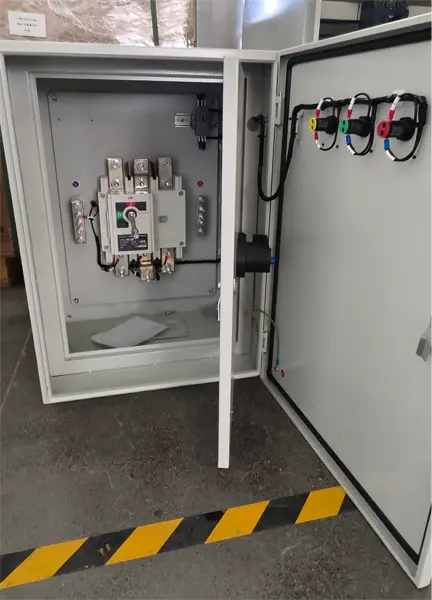
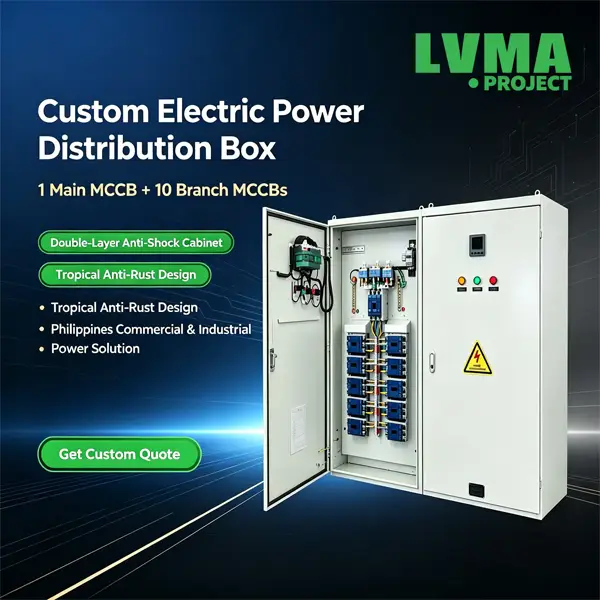
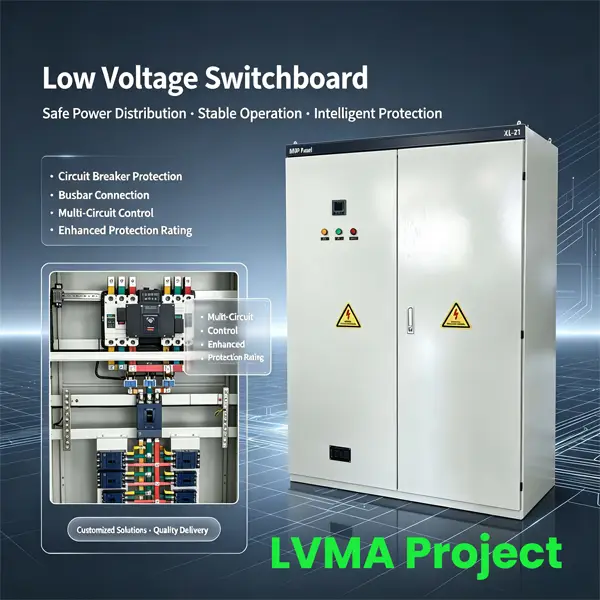
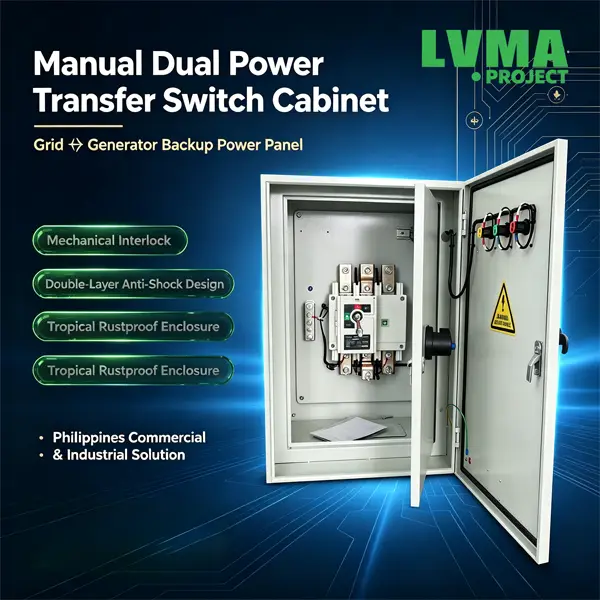
The heavy‑duty manual changeover switch serves as the cabinet’s central power switching unit, mounted on the inner insulated mounting panel with thick copper busbars for wiring connection.
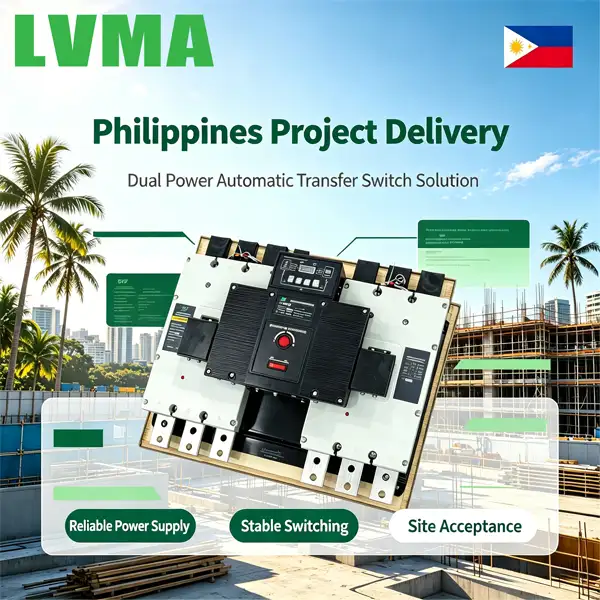
- Power switching capability: It accommodates two independent power inputs: primary public grid electricity and standby power from diesel generators or off‑grid power sources. Site electricians can manually rotate the operating handle to complete power source switching during municipal power failures. Mechanical interlock hardware blocks simultaneous connection of two power feeds, eliminating cross‑feed short‑circuit faults that may damage generators or public grid infrastructure.
- Safety maintenance perks: The clearly marked ON/OFF indicator delivers intuitive status feedback. When placed in the OFF position, both incoming power circuits get fully disconnected, creating complete power isolation for cabinet wiring inspections, component replacement and circuit upgrades to cut electric shock hazards during servicing work. The switch has robust short‑circuit withstand performance calibrated for Philippine grid transient surge loads, preventing hardware burnout from common local grid power spikes.
- Terminal layout design: dedicated separate neutral busbar and protective earth bar adhere to TN‑S grounding specifications widely implemented at Philippine construction sites, lowering electric leakage risks for downstream connected electrical equipment.
2. Double‑Layer Anti‑Shock Cabinet Structure
The enclosure adopts a dual‑door safety architecture optimized for Philippine site safety realities:
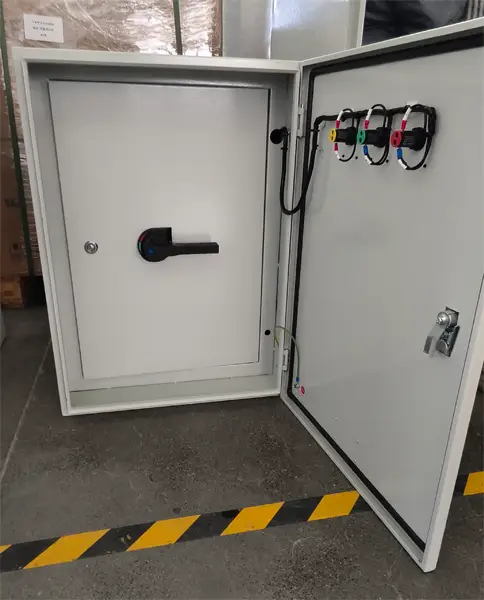
- The lockable outer main door restricts unauthorized tampering by untrained shop staff, casual visitors and non‑electrical site personnel, a common safety vulnerability at Philippine commercial premises and semi‑managed job sites.
- The middle inner steel barrier conceals all exposed live copper connectors and switch busbars; operators only need to open the outer cabinet door to manipulate the transfer switch handle. Live conductive parts stay shielded at all times during daily switching operations to greatly reduce accidental electrocution risks.Powder‑coated cold‑rolled steel cabinet shell delivers strong anti‑corrosion performance, resisting rust brought on by the Philippines’ humid coastal tropical climate, extending cabinet indoor service life.
3. Exterior Door Monitoring & Safety Accessories
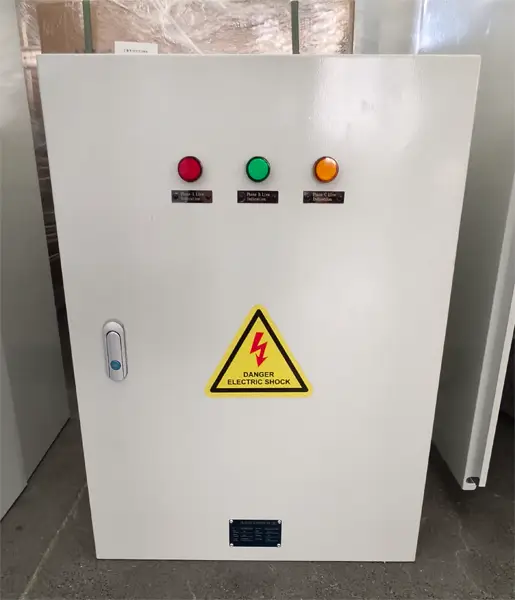
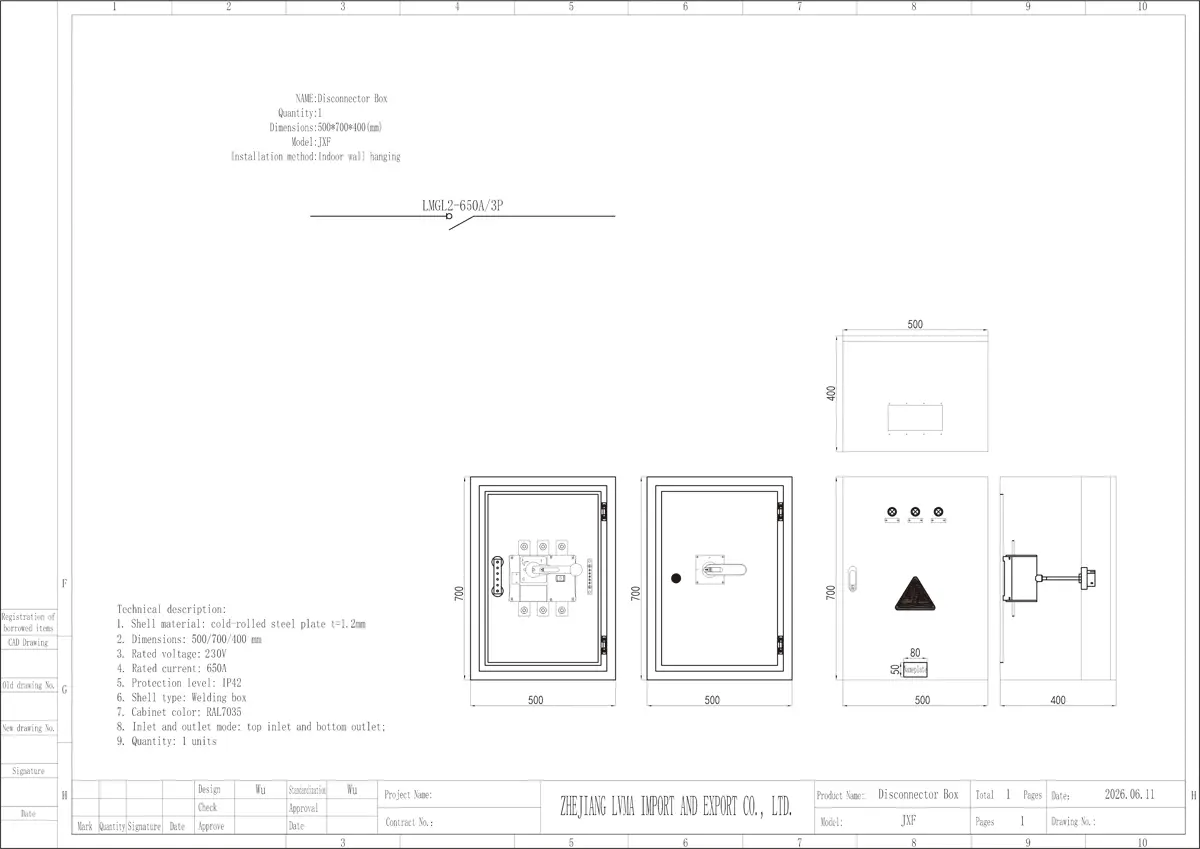
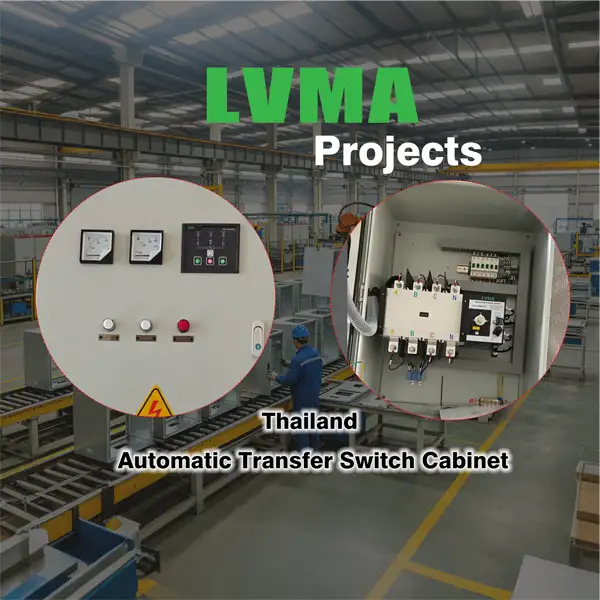
Three phase indicator lamps (red for Phase A, green for Phase B, yellow for Phase C) mounted on the front cabinet door offer real‑time visual phase status feedback, letting maintenance crews rapidly spot phase loss and abnormal voltage conditions prevalent on local power networks. A standard international “DANGER ELECTRIC SHOCK” warning sticker reminds Filipino electricians to enforce lockout‑tagout procedures before cabinet disassembly and repair. A metal product nameplate at the cabinet bottom can record rated current, applicable project details and manufacturing specifications for local electrical authority inspection.
Applicable Philippine Deployment Scenarios
- Neighborhood retail stores, convenience shops and food service outlets: maintain power supply for refrigerated display cases, POS cash registers and lighting during municipal blackouts to avoid inventory spoilage and transaction downtime.
- Small light processing factories and assembly workshops: keep critical low‑power production machinery running on standby generator power to limit production schedule delays triggered by routine regional grid outages.
- Mid‑size storage warehouses: sustain ventilation systems, security lighting and access control hardware during supply interruptions to safeguard stored merchandise and site asset security.
- Low‑rise residential‑commercial mixed‑use buildings: deployed as floor‑level backup power distribution hardware for tenant commercial storefronts.
Targeted Product Advantages For Local Philippine Operating Conditions
- Outstanding grid fault resilience: mechanical interlock hardware completely removes the risk of dual‑power parallel short circuits; robust surge tolerance lowers switch component damage caused by Philippine grid voltage swings and transient surges.
- Low operation & maintenance difficulty: straightforward manual handle operation requires no complicated programming. Local electricians with varied skill levels can finish power source switching with minimal training; clearly labelled wiring terminals speed up fault diagnosis and periodic upkeep.
- Local regulatory compliance: grounding design, fault protection ratings and physical live‑part isolation measures align with mainstream Philippine electrical construction codes, streamlining official site electrical inspection and project acceptance workflows.
- Cost‑effective backup power solution: compared with pricey automatic ATS hardware, manual transfer switch configurations cut upfront project procurement costs perfectly matching the budget demands of small‑to‑medium Philippine business operators. The cabinet reserves spare wiring expansion space for later standby power system upgrades.
Closing Summary
This customized manual dual‑power transfer switch distribution cabinet balances reliable power source switching, tropical anti‑rust durability, physical anti‑shock safety and Philippine regulatory compliance. It mitigates common local operational headaches including frequent municipal blackouts, tropical metal corrosion and onsite electrocution hazards, acting as a budget‑friendly dependable backup power distribution pick for indoor commercial and light industrial facilities nationwide across the Philippines.
LVMA Project | Philippines Custom Manual Transfer Switch Cabinet
Power grid instability including frequent grid outages, voltage dips and temporary supply interruptions is a widespread issue across the Philippines, affecting commercial retail outlets, light manufacturing workshops, small warehouses and rural commercial facilities. Sudden blackouts halt business operations, spoil refrigerated merchandise, disrupt production workflows and raise financial losses. Our tailor‑built distribution cabinet fitted with a manual dual power transfer switch is engineered to resolve local power supply pain points. It enables staff to safely toggle between mains utility power and backup generator power, delivering reliable power continuity that matches Philippine local electrical codes, humid tropical operating environments and on‑site maintenance habits.
Internal Hardware Functional Breakdown
1. Core Component: Manual Dual Power Transfer Switch
The heavy‑duty manual changeover switch serves as the cabinet’s central power switching unit, mounted on the inner insulated mounting panel with thick copper busbars for wiring connection.
- Power switching capability: It accommodates two independent power inputs: primary public grid electricity and standby power from diesel generators or off‑grid power sources. Site electricians can manually rotate the operating handle to complete power source switching during municipal power failures. Mechanical interlock hardware blocks simultaneous connection of two power feeds, eliminating cross‑feed short‑circuit faults that may damage generators or public grid infrastructure.
- Safety maintenance perks: The clearly marked ON/OFF indicator delivers intuitive status feedback. When placed in the OFF position, both incoming power circuits get fully disconnected, creating complete power isolation for cabinet wiring inspections, component replacement and circuit upgrades to cut electric shock hazards during servicing work. The switch has robust short‑circuit withstand performance calibrated for Philippine grid transient surge loads, preventing hardware burnout from common local grid power spikes.
- Terminal layout design: dedicated separate neutral busbar and protective earth bar adhere to TN‑S grounding specifications widely implemented at Philippine construction sites, lowering electric leakage risks for downstream connected electrical equipment.
2. Double‑Layer Anti‑Shock Cabinet Structure
The enclosure adopts a dual‑door safety architecture optimized for Philippine site safety realities:
- The lockable outer main door restricts unauthorized tampering by untrained shop staff, casual visitors and non‑electrical site personnel, a common safety vulnerability at Philippine commercial premises and semi‑managed job sites.
- The middle inner steel barrier conceals all exposed live copper connectors and switch busbars; operators only need to open the outer cabinet door to manipulate the transfer switch handle. Live conductive parts stay shielded at all times during daily switching operations to greatly reduce accidental electrocution risks.Powder‑coated cold‑rolled steel cabinet shell delivers strong anti‑corrosion performance, resisting rust brought on by the Philippines’ humid coastal tropical climate, extending cabinet indoor service life.
3. Exterior Door Monitoring & Safety Accessories
Three phase indicator lamps (red for Phase A, green for Phase B, yellow for Phase C) mounted on the front cabinet door offer real‑time visual phase status feedback, letting maintenance crews rapidly spot phase loss and abnormal voltage conditions prevalent on local power networks. A standard international “DANGER ELECTRIC SHOCK” warning sticker reminds Filipino electricians to enforce lockout‑tagout procedures before cabinet disassembly and repair. A metal product nameplate at the cabinet bottom can record rated current, applicable project details and manufacturing specifications for local electrical authority inspection.
Applicable Philippine Deployment Scenarios
- Neighborhood retail stores, convenience shops and food service outlets: maintain power supply for refrigerated display cases, POS cash registers and lighting during municipal blackouts to avoid inventory spoilage and transaction downtime.
- Small light processing factories and assembly workshops: keep critical low‑power production machinery running on standby generator power to limit production schedule delays triggered by routine regional grid outages.
- Mid‑size storage warehouses: sustain ventilation systems, security lighting and access control hardware during supply interruptions to safeguard stored merchandise and site asset security.
- Low‑rise residential‑commercial mixed‑use buildings: deployed as floor‑level backup power distribution hardware for tenant commercial storefronts.
Targeted Product Advantages For Local Philippine Operating Conditions
- Outstanding grid fault resilience: mechanical interlock hardware completely removes the risk of dual‑power parallel short circuits; robust surge tolerance lowers switch component damage caused by Philippine grid voltage swings and transient surges.
- Low operation & maintenance difficulty: straightforward manual handle operation requires no complicated programming. Local electricians with varied skill levels can finish power source switching with minimal training; clearly labelled wiring terminals speed up fault diagnosis and periodic upkeep.
- Local regulatory compliance: grounding design, fault protection ratings and physical live‑part isolation measures align with mainstream Philippine electrical construction codes, streamlining official site electrical inspection and project acceptance workflows.
- Cost‑effective backup power solution: compared with pricey automatic ATS hardware, manual transfer switch configurations cut upfront project procurement costs perfectly matching the budget demands of small‑to‑medium Philippine business operators. The cabinet reserves spare wiring expansion space for later standby power system upgrades.
Closing Summary
This customized manual dual‑power transfer switch distribution cabinet balances reliable power source switching, tropical anti‑rust durability, physical anti‑shock safety and Philippine regulatory compliance. It mitigates common local operational headaches including frequent municipal blackouts, tropical metal corrosion and onsite electrocution hazards, acting as a budget‑friendly dependable backup power distribution pick for indoor commercial and light industrial facilities nationwide across the Philippines.
Contact Us

Contact Us
Have questions about our products or services? Our team is here to help you with any inquiries.