

DC Isolator Switch: The Ultimate Guide to Functions, Benefits & Applications 2026
DC Isolator Switch: The Ultimate Guide to Functions, Benefits & Applications 2026
As renewable energy systems, battery energy storage stations, and DC-powered industrial equipment gain massive popularity worldwide, the demand for safe and efficient DC circuit management components has skyrocketed. Among all essential electrical devices, a DC isolator switch stands out as the foundational safety barrier for all direct current circuits.
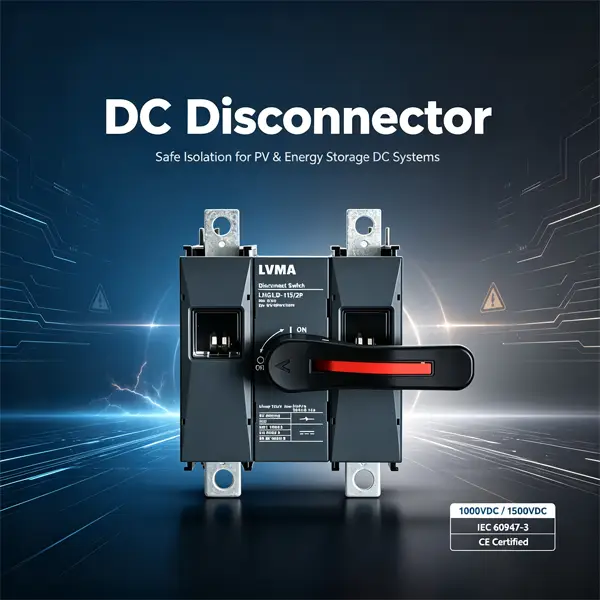
A DC isolator switch, also known as a DC disconnect switch or DC disconnector, is a specialized mechanical switching device engineered to create a visible physical air gap within DC circuits. Different from common AC switches and DC circuit breakers, this device is exclusively optimized to tackle the biggest challenge of DC power systems—sustained electric arcs without natural zero-crossing points, delivering reliable circuit isolation for equipment maintenance, emergency shutdown, and daily risk prevention.
Whether you are designing a residential solar PV system, commercial battery energy storage project, EV charging station, or industrial DC distribution network, a high-quality DC isolation switch is an indispensable component to protect your assets and electrical workers.
1. What Is a DC Isolator Switch? Detailed Definition
To put it simply, a DC isolator switch is a manually operated electrical component designed to physically separate DC-powered loads from power sources (solar panels, battery banks, DC generators). Complying with IEC 60947-3 and NEC 690.13(B)(1) global electrical standards, it provides a clearly visible break point for operators to confirm circuit de-energization, eliminating potential electric shock risks during maintenance work.
Many buyers confuse DC isolators with DC circuit breakers or fuses, but their core working mechanisms and application scenarios are completely different:
- DC Circuit Breaker: Focuses on automatic overcurrent and short-circuit protection, designed to cut off faulty circuits instantly under abnormal conditions.
- DC Fuse: A one-time protective part that melts to break the circuit when overloaded, requiring replacement after activation.
- DC Isolator Switch: Prioritizes static circuit isolation instead of fault current interruption. It is mainly used for no-load or light-load circuit switching to create a safe maintenance environment, working with breakers and fuses to form a complete DC protection system.
2. Core Functions of DC Isolator Switch
Our premium DC isolator switches integrate multiple practical functions to meet diverse operational demands of new energy and industrial DC systems. Every function is developed to solve pain points in DC power management
2.1 Visual Circuit Isolation
The primary function of the DC isolator switch is to form an intuitive visible air gap after switching off. Unlike invisible electronic disconnection modes, the physical break allows technicians to directly verify the power-off status, which is a mandatory safety requirement for high-power DC system maintenance specified by mainstream global electrical codes.
2.2 Efficient DC Arc Extinction
Unlike AC circuits that have natural voltage zero-crossing points to extinguish arcs automatically, DC arcs can burn continuously and damage contacts or even trigger fire accidents. Our DC isolators are equipped with upgraded professional arc chutes and optimized contact structures, which can extinguish DC arcs within 8ms, effectively solving the arc burning problem during switching operations.
2.3 Emergency Power Shutdown
In case of emergencies such as line leakage, equipment overheating, short-circuit risks, or fire hazards, operators can manually cut off the entire DC circuit in one second via the external operating handle. This rapid emergency isolation function minimizes property losses and personal safety risks for PV power plants and battery storage systems.
2.4 System Partition Management
For large-scale DC projects including centralized solar farms and container energy storage stations, DC isolator switches can divide the whole system into multiple independent power units. Users can isolate faulty areas separately without shutting down the entire system, ensuring the stable operation of normal working units and improving overall project operational efficiency.
3. Key Advantages of Our DC Isolator Switch
Compared with ordinary low-cost DC disconnect switches on the market, our DC isolator switches adopt upgraded materials and industrial-grade design, with comprehensive advantages in safety, durability, compatibility, and cost performance. Here are our core competitive edges:
3.1 Industry-Leading Safety Performance
- Professional Arc Suppression System: Customized multi-layer arc chutes and silver alloy contacts shorten arc extinction time to below 8ms, 40% faster than ordinary products, greatly reducing contact ablation risks.
- IP66 Waterproof & Dustproof Rating: The fully sealed housing structure adapts to harsh outdoor environments, resisting rain, snow, dust, and corrosive gases. It can work stably in temperatures ranging from -40℃ to +85℃.
- Anti-Misoperation Design: Equipped with lockable operating handles to prevent accidental switching by humans or external vibrations; dual mechanical interlock structure avoids simultaneous closing and opening faults.
3.2 Superior Durability & Long Service Life
- High-Quality Contact Materials: Adopt silver-tungsten alloy moving and static contacts, featuring high conductivity and anti-ablation properties, effectively resisting arc damage and oxidation.
- Extended Service Cycle: Support 18,000 times of mechanical switching operations and 2,000 times of electrical load switching, doubling the service life of ordinary plastic DC isolators.
- Reinforced Housing: Use high-strength flame-retardant PA66 engineering plastic, which is fireproof, anti-aging, and impact-resistant, suitable for long-term outdoor unattended operation.
3.3 Wide Voltage & Current Compatibility
- Complete Specification Coverage: Support working voltage up to 1200V DC and rated current from 16A to 800A, covering small residential solar systems to large industrial energy storage projects.
- Multi-Mounting Support: Available with DIN rail mounting, wall mounting, and integrated box-type installation modes, compatible with mainstream electrical control boxes and PV combiner boxes worldwide.
- Polarity Adaptability: Support positive and negative pole simultaneous isolation, applicable to unipolar and bipolar DC circuits of all new energy devices.
3.4 Global Certification & Low Maintenance Cost
- Full Standard Compliance: All products have passed CE, IEC 60947-3, and ROHS certifications, meeting NEC and international mainstream electrical standards, eligible for sales and installation in most countries and regions.
- Maintenance-Free Design: Integrated modular structure without vulnerable accessories; users only need regular visual inspection, zero daily maintenance cost, helping clients cut long-term operational expenses.
- Cost-Effective Pricing: Direct sales from the factory without middlemen, providing premium industrial-grade DC isolators at a competitive wholesale price to help customers optimize project budgets.
4. Common Types of DC Isolator Switches
We classify our DC isolator switches according to installation methods and structural designs to help customers select the most suitable model quickly:
4.1 DIN Rail Mount DC Isolator
Compact size, lightweight design, easy to install on standard DIN rails inside distribution boxes. Ideal for small-scale scenarios such as residential rooftop solar systems, small off-grid battery systems, and household DC power distribution.
4.2 Outdoor Box-Type DC Isolator
Equipped with an independent waterproof box with IP66 protection grade. The integrated design simplifies on-site wiring, specially developed for outdoor solar string combiner boxes, distributed PV stations, and outdoor EV charging piles.
4.3 High-Current Industrial DC Isolator
Designed for high-power scenarios with rated current above 800A. Adopt thickened copper busbars and reinforced operating mechanisms, suitable for large solar farms, container energy storage systems, and industrial high-power DC loads.
5. Main Applications of DC Isolator Switches
Thanks to excellent environmental adaptability and stable isolation performance, our DC isolator switches are widely used in all mainstream DC power industries:
5.1 Solar PV Systems
As the most common application scenario, DC isolators are installed at the DC input end of solar inverters and combiner boxes. They isolate solar panel arrays from inverters during equipment maintenance or rainy nights to avoid electric leakage and accidental electric shock, and cut off circuits in time when PV strings fail.
5.2 Battery Energy Storage Systems (BESS)
Used for isolation between battery packs and bidirectional inverters. The switch can completely disconnect faulty battery units to prevent thermal runaway from spreading to the entire battery cluster, improving the overall safety of energy storage power stations and off-grid battery power supply systems.
5.3 EV Charging Infrastructure
Applied to DC fast charging stations and residential charging piles. It realizes safe isolation between DC power modules and charging guns, facilitating daily equipment maintenance, and provides emergency power-off protection to avoid charging safety accidents caused by line faults.
5.4 Industrial DC Distribution
Suitable for DC-powered automated production equipment, telecommunications base station power supply systems, and subway auxiliary DC circuits. It provides stable circuit isolation for industrial scenarios with high requirements for equipment continuity and personnel safety.
6. How to Choose the Right DC Isolator Switch? (Buying Guide)
Choosing an inappropriate DC disconnect switch will lead to potential safety hazards and shorten the service life of peripheral equipment. You can follow the 4 core criteria below to complete model selection:
6.1 Confirm Rated Voltage
The rated voltage of the isolator must be higher than the maximum open-circuit voltage of the local DC system. For conventional solar PV systems, 1000V/1200V DC models are the most mainstream choices.
6.2 Match Rated Current
The rated working current of the switch should be 1.25 times higher than the actual maximum operating current of the circuit to avoid long-term overload operation causing contact aging and burnout.
6.3 Select Installation Type
Choose DIN rail type for indoor distribution box installation; select sealed box-type products for outdoor open-air environments to ensure waterproof and dustproof performance.
6.4 Check Certification & Working Environment
Prioritize products with CE and IEC certifications to meet local electrical code requirements. Meanwhile, confirm the product’s operating temperature range according to the extreme climate of the installation area.
7. FAQ About DC Isolator Switch
Q1: Is a DC isolator switch necessary for solar panels?
Yes. Most countries’ electrical codes require solar PV systems to be equipped with DC isolators. It is the only reliable way to form a visible power-off point for solar panels, protecting maintenance workers from electric shock risks caused by residual voltage of PV strings.
Q2: Can a DC isolator switch cut off short-circuit current?
No. DC isolators are designed for static isolation and light-load switching. Short-circuit fault current needs to be handled by DC circuit breakers or fuses. We recommend using the three-in-one matching scheme of “isolator + breaker + SPD” for optimal system protection.
Q3: What is the difference between IP54 and IP66 DC isolators?
IP54 products can prevent splashing water and fine dust, suitable for indoor and semi-outdoor scenarios; IP66 fully sealed products are dust-tight and resistant to heavy rain flushing, which is the best choice for long-term outdoor installation.
Q4: How long is the service life of a DC isolator switch?
Our industrial-grade DC isolator switches can be used for more than 10 years under normal working conditions, with no need for daily maintenance, far exceeding the average service life of ordinary low-end products on the market.
8. Conclusion
To sum up, a high-quality DC isolator switch is the core safety guarantee for all DC power systems including solar PV, battery energy storage, and EV charging stations. It undertakes key tasks such as visual circuit isolation, arc suppression switching, and emergency power-off, reducing operational risks and maintenance costs for new energy projects.
Our DC isolator switches stand out in the global market with high safety, ultra-long service life, complete specifications, and affordable factory prices. We support customized voltage, current, and structural design services to meet personalized demands from distributors, engineering contractors, and end users worldwide.
Need a free quotation or customized DC isolator switch solution? Contact our professional technical team now!
Share This Article
Follow Us
As renewable energy systems, battery energy storage stations, and DC-powered industrial equipment gain massive popularity worldwide, the demand for safe and efficient DC circuit management components has skyrocketed. Among all essential electrical devices, a DC isolator switch stands out as the foundational safety barrier for all direct current circuits.
A DC isolator switch, also known as a DC disconnect switch or DC disconnector, is a specialized mechanical switching device engineered to create a visible physical air gap within DC circuits. Different from common AC switches and DC circuit breakers, this device is exclusively optimized to tackle the biggest challenge of DC power systems—sustained electric arcs without natural zero-crossing points, delivering reliable circuit isolation for equipment maintenance, emergency shutdown, and daily risk prevention.
Whether you are designing a residential solar PV system, commercial battery energy storage project, EV charging station, or industrial DC distribution network, a high-quality DC isolation switch is an indispensable component to protect your assets and electrical workers.
1. What Is a DC Isolator Switch? Detailed Definition
To put it simply, a DC isolator switch is a manually operated electrical component designed to physically separate DC-powered loads from power sources (solar panels, battery banks, DC generators). Complying with IEC 60947-3 and NEC 690.13(B)(1) global electrical standards, it provides a clearly visible break point for operators to confirm circuit de-energization, eliminating potential electric shock risks during maintenance work.
Many buyers confuse DC isolators with DC circuit breakers or fuses, but their core working mechanisms and application scenarios are completely different:
- DC Circuit Breaker: Focuses on automatic overcurrent and short-circuit protection, designed to cut off faulty circuits instantly under abnormal conditions.
- DC Fuse: A one-time protective part that melts to break the circuit when overloaded, requiring replacement after activation.
- DC Isolator Switch: Prioritizes static circuit isolation instead of fault current interruption. It is mainly used for no-load or light-load circuit switching to create a safe maintenance environment, working with breakers and fuses to form a complete DC protection system.
2. Core Functions of DC Isolator Switch
Our premium DC isolator switches integrate multiple practical functions to meet diverse operational demands of new energy and industrial DC systems. Every function is developed to solve pain points in DC power management
2.1 Visual Circuit Isolation
The primary function of the DC isolator switch is to form an intuitive visible air gap after switching off. Unlike invisible electronic disconnection modes, the physical break allows technicians to directly verify the power-off status, which is a mandatory safety requirement for high-power DC system maintenance specified by mainstream global electrical codes.
2.2 Efficient DC Arc Extinction
Unlike AC circuits that have natural voltage zero-crossing points to extinguish arcs automatically, DC arcs can burn continuously and damage contacts or even trigger fire accidents. Our DC isolators are equipped with upgraded professional arc chutes and optimized contact structures, which can extinguish DC arcs within 8ms, effectively solving the arc burning problem during switching operations.
2.3 Emergency Power Shutdown
In case of emergencies such as line leakage, equipment overheating, short-circuit risks, or fire hazards, operators can manually cut off the entire DC circuit in one second via the external operating handle. This rapid emergency isolation function minimizes property losses and personal safety risks for PV power plants and battery storage systems.
2.4 System Partition Management
For large-scale DC projects including centralized solar farms and container energy storage stations, DC isolator switches can divide the whole system into multiple independent power units. Users can isolate faulty areas separately without shutting down the entire system, ensuring the stable operation of normal working units and improving overall project operational efficiency.
3. Key Advantages of Our DC Isolator Switch
Compared with ordinary low-cost DC disconnect switches on the market, our DC isolator switches adopt upgraded materials and industrial-grade design, with comprehensive advantages in safety, durability, compatibility, and cost performance. Here are our core competitive edges:
3.1 Industry-Leading Safety Performance
- Professional Arc Suppression System: Customized multi-layer arc chutes and silver alloy contacts shorten arc extinction time to below 8ms, 40% faster than ordinary products, greatly reducing contact ablation risks.
- IP66 Waterproof & Dustproof Rating: The fully sealed housing structure adapts to harsh outdoor environments, resisting rain, snow, dust, and corrosive gases. It can work stably in temperatures ranging from -40℃ to +85℃.
- Anti-Misoperation Design: Equipped with lockable operating handles to prevent accidental switching by humans or external vibrations; dual mechanical interlock structure avoids simultaneous closing and opening faults.
3.2 Superior Durability & Long Service Life
- High-Quality Contact Materials: Adopt silver-tungsten alloy moving and static contacts, featuring high conductivity and anti-ablation properties, effectively resisting arc damage and oxidation.
- Extended Service Cycle: Support 18,000 times of mechanical switching operations and 2,000 times of electrical load switching, doubling the service life of ordinary plastic DC isolators.
- Reinforced Housing: Use high-strength flame-retardant PA66 engineering plastic, which is fireproof, anti-aging, and impact-resistant, suitable for long-term outdoor unattended operation.
3.3 Wide Voltage & Current Compatibility
- Complete Specification Coverage: Support working voltage up to 1200V DC and rated current from 16A to 800A, covering small residential solar systems to large industrial energy storage projects.
- Multi-Mounting Support: Available with DIN rail mounting, wall mounting, and integrated box-type installation modes, compatible with mainstream electrical control boxes and PV combiner boxes worldwide.
- Polarity Adaptability: Support positive and negative pole simultaneous isolation, applicable to unipolar and bipolar DC circuits of all new energy devices.
3.4 Global Certification & Low Maintenance Cost
- Full Standard Compliance: All products have passed CE, IEC 60947-3, and ROHS certifications, meeting NEC and international mainstream electrical standards, eligible for sales and installation in most countries and regions.
- Maintenance-Free Design: Integrated modular structure without vulnerable accessories; users only need regular visual inspection, zero daily maintenance cost, helping clients cut long-term operational expenses.
- Cost-Effective Pricing: Direct sales from the factory without middlemen, providing premium industrial-grade DC isolators at a competitive wholesale price to help customers optimize project budgets.
4. Common Types of DC Isolator Switches
We classify our DC isolator switches according to installation methods and structural designs to help customers select the most suitable model quickly:
4.1 DIN Rail Mount DC Isolator
Compact size, lightweight design, easy to install on standard DIN rails inside distribution boxes. Ideal for small-scale scenarios such as residential rooftop solar systems, small off-grid battery systems, and household DC power distribution.
4.2 Outdoor Box-Type DC Isolator
Equipped with an independent waterproof box with IP66 protection grade. The integrated design simplifies on-site wiring, specially developed for outdoor solar string combiner boxes, distributed PV stations, and outdoor EV charging piles.
4.3 High-Current Industrial DC Isolator
Designed for high-power scenarios with rated current above 800A. Adopt thickened copper busbars and reinforced operating mechanisms, suitable for large solar farms, container energy storage systems, and industrial high-power DC loads.
5. Main Applications of DC Isolator Switches
Thanks to excellent environmental adaptability and stable isolation performance, our DC isolator switches are widely used in all mainstream DC power industries:
5.1 Solar PV Systems
As the most common application scenario, DC isolators are installed at the DC input end of solar inverters and combiner boxes. They isolate solar panel arrays from inverters during equipment maintenance or rainy nights to avoid electric leakage and accidental electric shock, and cut off circuits in time when PV strings fail.
5.2 Battery Energy Storage Systems (BESS)
Used for isolation between battery packs and bidirectional inverters. The switch can completely disconnect faulty battery units to prevent thermal runaway from spreading to the entire battery cluster, improving the overall safety of energy storage power stations and off-grid battery power supply systems.
5.3 EV Charging Infrastructure
Applied to DC fast charging stations and residential charging piles. It realizes safe isolation between DC power modules and charging guns, facilitating daily equipment maintenance, and provides emergency power-off protection to avoid charging safety accidents caused by line faults.
5.4 Industrial DC Distribution
Suitable for DC-powered automated production equipment, telecommunications base station power supply systems, and subway auxiliary DC circuits. It provides stable circuit isolation for industrial scenarios with high requirements for equipment continuity and personnel safety.
6. How to Choose the Right DC Isolator Switch? (Buying Guide)
Choosing an inappropriate DC disconnect switch will lead to potential safety hazards and shorten the service life of peripheral equipment. You can follow the 4 core criteria below to complete model selection:
6.1 Confirm Rated Voltage
The rated voltage of the isolator must be higher than the maximum open-circuit voltage of the local DC system. For conventional solar PV systems, 1000V/1200V DC models are the most mainstream choices.
6.2 Match Rated Current
The rated working current of the switch should be 1.25 times higher than the actual maximum operating current of the circuit to avoid long-term overload operation causing contact aging and burnout.
6.3 Select Installation Type
Choose DIN rail type for indoor distribution box installation; select sealed box-type products for outdoor open-air environments to ensure waterproof and dustproof performance.
6.4 Check Certification & Working Environment
Prioritize products with CE and IEC certifications to meet local electrical code requirements. Meanwhile, confirm the product’s operating temperature range according to the extreme climate of the installation area.
7. FAQ About DC Isolator Switch
Q1: Is a DC isolator switch necessary for solar panels?
Yes. Most countries’ electrical codes require solar PV systems to be equipped with DC isolators. It is the only reliable way to form a visible power-off point for solar panels, protecting maintenance workers from electric shock risks caused by residual voltage of PV strings.
Q2: Can a DC isolator switch cut off short-circuit current?
No. DC isolators are designed for static isolation and light-load switching. Short-circuit fault current needs to be handled by DC circuit breakers or fuses. We recommend using the three-in-one matching scheme of “isolator + breaker + SPD” for optimal system protection.
Q3: What is the difference between IP54 and IP66 DC isolators?
IP54 products can prevent splashing water and fine dust, suitable for indoor and semi-outdoor scenarios; IP66 fully sealed products are dust-tight and resistant to heavy rain flushing, which is the best choice for long-term outdoor installation.
Q4: How long is the service life of a DC isolator switch?
Our industrial-grade DC isolator switches can be used for more than 10 years under normal working conditions, with no need for daily maintenance, far exceeding the average service life of ordinary low-end products on the market.
8. Conclusion
To sum up, a high-quality DC isolator switch is the core safety guarantee for all DC power systems including solar PV, battery energy storage, and EV charging stations. It undertakes key tasks such as visual circuit isolation, arc suppression switching, and emergency power-off, reducing operational risks and maintenance costs for new energy projects.
Our DC isolator switches stand out in the global market with high safety, ultra-long service life, complete specifications, and affordable factory prices. We support customized voltage, current, and structural design services to meet personalized demands from distributors, engineering contractors, and end users worldwide.
Need a free quotation or customized DC isolator switch solution? Contact our professional technical team now!
Contact Us
Related Blog

Contact Us
Have questions about our products or services? Our team is here to help you with any inquiries.