

DC MCB: The Ultimate Guide to DC Miniature Circuit Breakers (2026)
DC MCB: The Ultimate Guide to DC Miniature Circuit Breakers (2026)
As residential and commercial solar PV, off-grid battery storage, and DC power systems grow exponentially worldwide, the demand for safe, certified DC protection hardware has skyrocketed. Unlike standard AC MCBs, a dedicated DC MCB (DC miniature circuit breaker) is engineered to extinguish DC arcs, resist high photovoltaic voltage, and deliver consistent overcurrent/short-circuit protection for direct current circuits.
Today, we break down the LVMA LMB series DC MCB lineup, featuring three core models designed to cover low, medium, and high-voltage solar PV applications: the LMB1-63DC 2P 500V DC breaker, LMB1-125DC 2P 1000V DC MCB, and LMBD-40P 4P 1500V DC miniature circuit breaker. We’ll cover working principles, key technical specs, use cases, installation best practices, and why LVMA DC MCBs stand out for global solar installers.
What Is a DC MCB & Why You Cannot Replace It With an AC Breaker
An AC miniature circuit breaker relies on alternating current’s natural zero-cross voltage to snuff out dangerous electrical arcs during fault events. Direct current has no zero voltage point, so DC arcs burn far hotter and longer—using an AC breaker on DC circuits creates extreme fire and equipment damage risks.
A purpose-built DC MCB adds specialized arc-quenching chambers, reverse polarity terminals (marked + / -), and voltage-rated insulation for PV string, battery bank, and DC power distribution circuits. Core protection functions of LVMA DC MCBs include:
- Overload protection: Trips gradually during sustained excess current to prevent cable melting
- Short-circuit protection: Instant cut-off during short-circuit faults to stop arc flash hazards
- Isolation function: Visible ON/OFF contact gap for safe system maintenance
- Cat A breaking capacity: Compliant with IEC 60947-2 for photovoltaic DC applications
Introduce LVMA 3 Core DC MCB Models
LVMA’s LMB DC MCB range covers all mainstream solar system voltage classes from 500V up to 1500V DC, with 2-pole and 4-pole modular designs compatible with standard DIN rail mounting for solar combiner boxes, off-grid battery cabinets, and commercial PV arrays.
1. LVMA LMB1-63DC 1P 2P 3P 4P DC MCB (500V,32A)
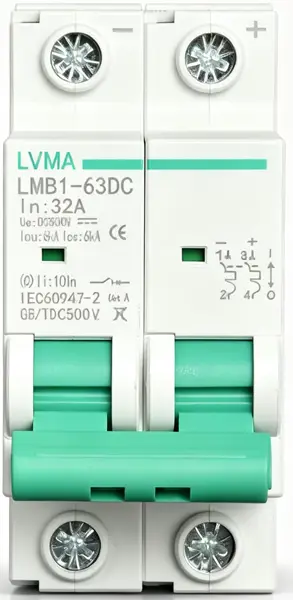
This compact 2-pole DC miniature circuit breaker is the entry-level workhorse for small residential solar systems, portable battery storage, and low-voltage DC equipment.
Key Technical Specifications
- Model: LMB1-63DC
- Rated Current (In): 32A (multiple amp options: 6A–63A available)
- Rated DC Voltage: Ue DC 500V
- Breaking Capacity: Icu/Ics = 6kA
- Standard Compliance: IEC60947-2, GB/T DC500V, CE Certified
- Pole Count: 1P, 2P, 3P, 4P modular integrated design
- Trip Curve: B curve (10In instantaneous short trip)
- Mounting: Standard 35mm DIN rail
Ideal Applications
- Small rooftop residential solar systems (≤5kW)
- Portable solar generators & RV DC power systems
- Low-voltage lithium battery bank isolation
- Small off-grid DC lighting circuits
Product Advantages
Green ergonomic dual switch handle, clear +/- polarity labeling to avoid reverse wiring errors, compact modular size to save combiner box space, 6kA high short-circuit breaking capacity for residential fault safety.
2. LVMA LMB1-125DC 1P 2P 3P 4P DC MCB (1000V, 125A)
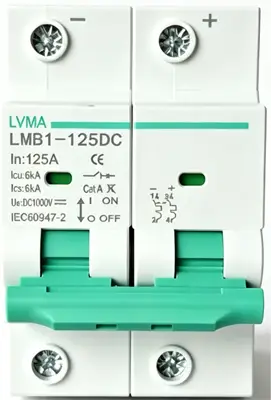
Designed for mid-size commercial solar PV strings, 1000V DC is the most widely adopted voltage rating for rooftop and ground-mounted solar projects across Europe, Southeast Asia, and Australia. The LMB1-125DC handles high current PV arrays and large battery energy storage systems.
Key Technical Specifications
- Model: LMB1-125DC
- Rated Current (In): 125A (range: 63A–125A)
- Rated DC Voltage: Ue DC 1000V
- Breaking Capacity: Icu/Ics = 6kA, Cat A PV rated
- Standard Compliance: IEC60947-2, CE Mark
- Pole Count: 1P, 2P, 3P, 4P modular integrated design
- Visible contact status window for safety inspection
- High-temperature resistant flame-retardant housing
Ideal Applications
- Medium commercial solar PV string combiner boxes
- Large home battery storage systems (48V/51.2V lithium banks)
- Agricultural off-grid solar irrigation power
- Industrial DC charging station branch circuits
Product Advantages
1000V high DC voltage rating meets global solar industry standards, 125A high current capacity for heavy PV strings, reinforced arc extinguishing system for sustained DC fault currents, screw-type cable terminals supporting thick solar PV cables.
3. LVMA LMBD-40P 1P 2P 3P 4P DC MCB (1500V, 40A )
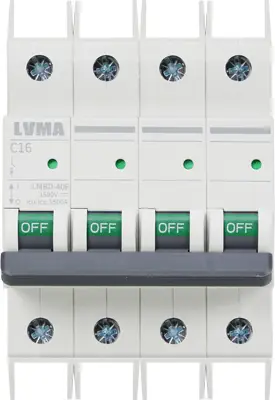
1500V DC is the dominant voltage standard for utility-scale solar farms, large commercial ground-mounted PV plants, and high-capacity energy storage power stations. The 4-pole LMBD-40P DC MCB delivers full four-channel isolation for high-voltage DC arrays.
Key Technical Specifications
- Model: LMBD-40P
- Rated Current: C16 (custom current ratings available C6-C40)
- Rated DC Voltage: 1500V DC
- Breaking Capacity: Icu/Ics = 1500A
- Pole Count: 1P, 2P, 3P, 4P modular integrated design
- Trip Curve: C curve for industrial PV loads
- DIN rail modular installation, unified OFF position indicator
Ideal Applications
- Utility-scale solar farm combiner cabinets
- Large commercial 1500V PV ground mount systems
- Megawatt-class battery energy storage stations
- High-voltage DC microgrid power distribution
Product Advantages
4-pole integrated structure simplifies multi-string PV wiring, 1500V ultra-high DC voltage rating compliant with global large-scale solar codes, unified locking switch handle for synchronous pole isolation, high flame retardant PA66 plastic housing for outdoor cabinet environments.
Core Benefits of Choosing LVMA DC MCBs for Solar Installations
- Strict International Standard Certification
All LVMA DC miniature circuit breakers pass IEC60947-2 photovoltaic DC safety standards and carry CE certification, fully eligible for EU, Southeast Asia, Australia, and Middle East solar project tender requirements. - Full Voltage Range Coverage
Our product portfolio spans 500V, 1000V, and 1500V DC rated models, covering every solar project type from tiny residential rooftop to multi-megawatt utility solar farms. - Specialized DC Arc Suppression Technology
Custom multi-chamber arc extinguishing structure eliminates sustained DC arc risks, a critical safety feature absent from generic AC breakers repurposed for DC circuits. - Modular DIN Rail Universal Design
All three DC MCB models fit standard 35mm DIN rails, compatible with mainstream solar combiner boxes, battery cabinets, and industrial control enclosures worldwide. - Clear Polarity Marking & Anti-Miswiring Design
Every 2P model prints permanent + / – polarity labels on terminal blocks to prevent dangerous reverse wiring faults during installation, a common error that damages solar panels and inverters. - High Temperature & Weather Resistance
Flame-retardant, UV-stabilized plastic housings withstand extreme cabinet operating temperatures, ideal for outdoor solar installations in tropical, desert, and cold climate regions.
How to Select the Right DC MCB for Your Solar Project
Use this simple selection guide to match your system parameters to the correct LVMA DC MCB model:
- Check your solar array DC open-circuit voltage
- ≤500V DC: Select LMB1-63DC
- ≤1000V DC: Select LMB1-125DC
- ≤1500V DC: Select LMBD-40P
- Calculate maximum string operating currentMatch the breaker’s rated In current to your PV string output current (add 1.25x safety margin per IEC solar wiring codes)
- Determine pole requirements
- 2P: Standard for single positive/negative PV string isolation (residential & small commercial)
- 4P: Multi-string high-voltage solar farm combiner boxes
Installation & Safety Best Practices for DC MCBs
- Strictly follow the printed +/- polarity markings on the DC MCB terminals; reverse polarity will render protection ineffective and create arc hazards.
- Only use DC-rated wiring lugs and PV cables matched to the breaker’s terminal current rating.
- Install the DC MCB inside a sealed, weatherproof combiner box to avoid dust, moisture, and direct sunlight exposure.
- Perform full system isolation by switching the DC MCB to OFF before carrying out any solar panel, inverter, or battery maintenance work.
- Never connect an AC load downstream of a DC MCB; separate AC and DC protection hardware entirely.
Frequently Asked Questions (FAQ) – Boost SEO Long-Tail Traffic
Q1: Can I use an AC MCB for DC solar panel circuits?
Q2: What is the difference between 2P and 4P DC MCB?
Q3: What breaking capacity do I need for my solar DC breaker?
Q4: Are LVMA DC MCBs certified for global export?
Final Thoughts
Share This Article
Follow Us
As residential and commercial solar PV, off-grid battery storage, and DC power systems grow exponentially worldwide, the demand for safe, certified DC protection hardware has skyrocketed. Unlike standard AC MCBs, a dedicated DC MCB (DC miniature circuit breaker) is engineered to extinguish DC arcs, resist high photovoltaic voltage, and deliver consistent overcurrent/short-circuit protection for direct current circuits.
Today, we break down the LVMA LMB series DC MCB lineup, featuring three core models designed to cover low, medium, and high-voltage solar PV applications: the LMB1-63DC 2P 500V DC breaker, LMB1-125DC 2P 1000V DC MCB, and LMBD-40P 4P 1500V DC miniature circuit breaker. We’ll cover working principles, key technical specs, use cases, installation best practices, and why LVMA DC MCBs stand out for global solar installers.
What Is a DC MCB & Why You Cannot Replace It With an AC Breaker
An AC miniature circuit breaker relies on alternating current’s natural zero-cross voltage to snuff out dangerous electrical arcs during fault events. Direct current has no zero voltage point, so DC arcs burn far hotter and longer—using an AC breaker on DC circuits creates extreme fire and equipment damage risks.
A purpose-built DC MCB adds specialized arc-quenching chambers, reverse polarity terminals (marked + / -), and voltage-rated insulation for PV string, battery bank, and DC power distribution circuits. Core protection functions of LVMA DC MCBs include:
- Overload protection: Trips gradually during sustained excess current to prevent cable melting
- Short-circuit protection: Instant cut-off during short-circuit faults to stop arc flash hazards
- Isolation function: Visible ON/OFF contact gap for safe system maintenance
- Cat A breaking capacity: Compliant with IEC 60947-2 for photovoltaic DC applications
Introduce LVMA 3 Core DC MCB Models
LVMA’s LMB DC MCB range covers all mainstream solar system voltage classes from 500V up to 1500V DC, with 2-pole and 4-pole modular designs compatible with standard DIN rail mounting for solar combiner boxes, off-grid battery cabinets, and commercial PV arrays.
1. LVMA LMB1-63DC 1P 2P 3P 4P DC MCB (500V,32A)
This compact 2-pole DC miniature circuit breaker is the entry-level workhorse for small residential solar systems, portable battery storage, and low-voltage DC equipment.
Key Technical Specifications
- Model: LMB1-63DC
- Rated Current (In): 32A (multiple amp options: 6A–63A available)
- Rated DC Voltage: Ue DC 500V
- Breaking Capacity: Icu/Ics = 6kA
- Standard Compliance: IEC60947-2, GB/T DC500V, CE Certified
- Pole Count: 1P, 2P, 3P, 4P modular integrated design
- Trip Curve: B curve (10In instantaneous short trip)
- Mounting: Standard 35mm DIN rail
Ideal Applications
- Small rooftop residential solar systems (≤5kW)
- Portable solar generators & RV DC power systems
- Low-voltage lithium battery bank isolation
- Small off-grid DC lighting circuits
Product Advantages
Green ergonomic dual switch handle, clear +/- polarity labeling to avoid reverse wiring errors, compact modular size to save combiner box space, 6kA high short-circuit breaking capacity for residential fault safety.
2. LVMA LMB1-125DC 1P 2P 3P 4P DC MCB (1000V, 125A)
Designed for mid-size commercial solar PV strings, 1000V DC is the most widely adopted voltage rating for rooftop and ground-mounted solar projects across Europe, Southeast Asia, and Australia. The LMB1-125DC handles high current PV arrays and large battery energy storage systems.
Key Technical Specifications
- Model: LMB1-125DC
- Rated Current (In): 125A (range: 63A–125A)
- Rated DC Voltage: Ue DC 1000V
- Breaking Capacity: Icu/Ics = 6kA, Cat A PV rated
- Standard Compliance: IEC60947-2, CE Mark
- Pole Count: 1P, 2P, 3P, 4P modular integrated design
- Visible contact status window for safety inspection
- High-temperature resistant flame-retardant housing
Ideal Applications
- Medium commercial solar PV string combiner boxes
- Large home battery storage systems (48V/51.2V lithium banks)
- Agricultural off-grid solar irrigation power
- Industrial DC charging station branch circuits
Product Advantages
1000V high DC voltage rating meets global solar industry standards, 125A high current capacity for heavy PV strings, reinforced arc extinguishing system for sustained DC fault currents, screw-type cable terminals supporting thick solar PV cables.
3. LVMA LMBD-40P 1P 2P 3P 4P DC MCB (1500V, 40A )
1500V DC is the dominant voltage standard for utility-scale solar farms, large commercial ground-mounted PV plants, and high-capacity energy storage power stations. The 4-pole LMBD-40P DC MCB delivers full four-channel isolation for high-voltage DC arrays.
Key Technical Specifications
- Model: LMBD-40P
- Rated Current: C16 (custom current ratings available C6-C40)
- Rated DC Voltage: 1500V DC
- Breaking Capacity: Icu/Ics = 1500A
- Pole Count: 1P, 2P, 3P, 4P modular integrated design
- Trip Curve: C curve for industrial PV loads
- DIN rail modular installation, unified OFF position indicator
Ideal Applications
- Utility-scale solar farm combiner cabinets
- Large commercial 1500V PV ground mount systems
- Megawatt-class battery energy storage stations
- High-voltage DC microgrid power distribution
Product Advantages
4-pole integrated structure simplifies multi-string PV wiring, 1500V ultra-high DC voltage rating compliant with global large-scale solar codes, unified locking switch handle for synchronous pole isolation, high flame retardant PA66 plastic housing for outdoor cabinet environments.
Core Benefits of Choosing LVMA DC MCBs for Solar Installations
- Strict International Standard Certification
All LVMA DC miniature circuit breakers pass IEC60947-2 photovoltaic DC safety standards and carry CE certification, fully eligible for EU, Southeast Asia, Australia, and Middle East solar project tender requirements. - Full Voltage Range Coverage
Our product portfolio spans 500V, 1000V, and 1500V DC rated models, covering every solar project type from tiny residential rooftop to multi-megawatt utility solar farms. - Specialized DC Arc Suppression Technology
Custom multi-chamber arc extinguishing structure eliminates sustained DC arc risks, a critical safety feature absent from generic AC breakers repurposed for DC circuits. - Modular DIN Rail Universal Design
All three DC MCB models fit standard 35mm DIN rails, compatible with mainstream solar combiner boxes, battery cabinets, and industrial control enclosures worldwide. - Clear Polarity Marking & Anti-Miswiring Design
Every 2P model prints permanent + / – polarity labels on terminal blocks to prevent dangerous reverse wiring faults during installation, a common error that damages solar panels and inverters. - High Temperature & Weather Resistance
Flame-retardant, UV-stabilized plastic housings withstand extreme cabinet operating temperatures, ideal for outdoor solar installations in tropical, desert, and cold climate regions.
How to Select the Right DC MCB for Your Solar Project
Use this simple selection guide to match your system parameters to the correct LVMA DC MCB model:
- Check your solar array DC open-circuit voltage
- ≤500V DC: Select LMB1-63DC
- ≤1000V DC: Select LMB1-125DC
- ≤1500V DC: Select LMBD-40P
- Calculate maximum string operating currentMatch the breaker’s rated In current to your PV string output current (add 1.25x safety margin per IEC solar wiring codes)
- Determine pole requirements
- 2P: Standard for single positive/negative PV string isolation (residential & small commercial)
- 4P: Multi-string high-voltage solar farm combiner boxes
Installation & Safety Best Practices for DC MCBs
- Strictly follow the printed +/- polarity markings on the DC MCB terminals; reverse polarity will render protection ineffective and create arc hazards.
- Only use DC-rated wiring lugs and PV cables matched to the breaker’s terminal current rating.
- Install the DC MCB inside a sealed, weatherproof combiner box to avoid dust, moisture, and direct sunlight exposure.
- Perform full system isolation by switching the DC MCB to OFF before carrying out any solar panel, inverter, or battery maintenance work.
- Never connect an AC load downstream of a DC MCB; separate AC and DC protection hardware entirely.
Frequently Asked Questions (FAQ) – Boost SEO Long-Tail Traffic
Q1: Can I use an AC MCB for DC solar panel circuits?
Q2: What is the difference between 2P and 4P DC MCB?
Q3: What breaking capacity do I need for my solar DC breaker?
Q4: Are LVMA DC MCBs certified for global export?
Final Thoughts
Contact Us
Related Blog



Contact Us
Have questions about our products or services? Our team is here to help you with any inquiries.