

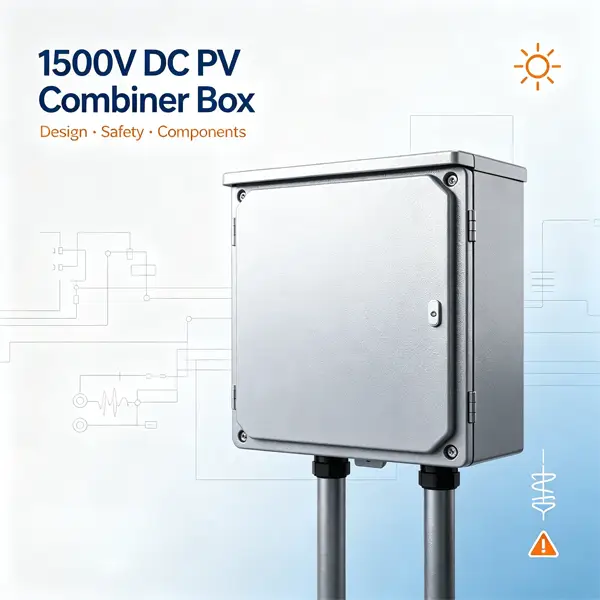
1500v DC Combiner Box: System Design and Safety Considerations
1500v DC Combiner Box: System Design and Safety Considerations
Introduction
The global solar photovoltaic (PV) industry is rapidly shifting from traditional 1000V DC systems to 1500V DC PV systems for utility-scale and large commercial solar projects. Higher DC voltage levels reduce overall system current, minimize cable power losses, cut installation costs, and boost solar array power density significantly. However, 1500V DC technology introduces far more stringent electrical risks compared to 1000V DC setups, primarily due to amplified DC arc flash energy, higher insulation stress, and stricter clearance requirements.
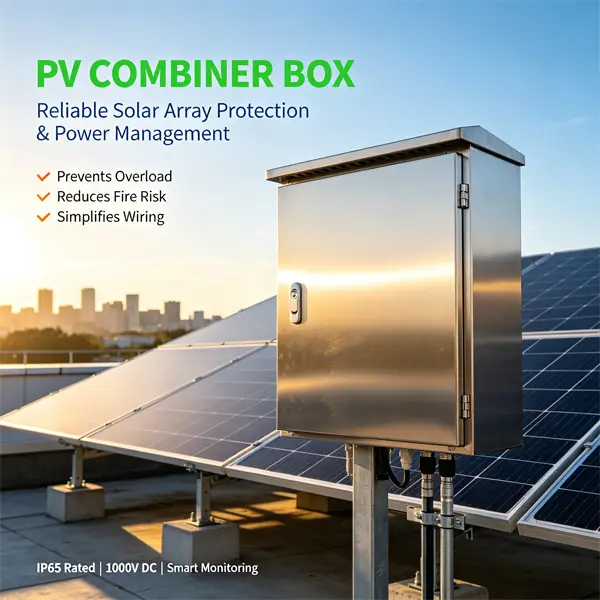
As the core junction device that consolidates multiple PV strings and feeds power to inverters, the 1500V DC combiner box determines the overall safety, stability, and service life of the entire PV system. Poor combiner box design is one of the leading causes of PV site faults, including arc faults, short circuits, overheating, and even fire hazards. This article breaks down the professional design principles, core component selection criteria, and critical safety considerations for 1500V DC PV combiner boxes, helping solar engineers, EPC contractors, and system operators deploy compliant, high-efficiency, and ultra-safe solar systems.
Why 1500V DC PV Systems Demand Specialized Combiner Box Design
A common misconception in the solar industry is that standard 1000V DC combiner boxes can be upgraded for 1500V DC operation with minor part replacements. In reality, 1500V DC systems pose unique electrical challenges that require fully customized combiner box engineering.
The most critical risk difference lies in DC arc fault energy. Data shows that a 1500V DC arc generates approximately 2.25 times more energy than a 1000V DC arc under the same current conditions. High-energy DC arcs are extremely difficult to extinguish, as DC current has no zero-crossing point like AC current, leading to sustained burning, component ablation, and rapid fire spread. Additionally, 1500V high voltage imposes greater stress on insulation materials, increasing the risk of insulation breakdown, creepage discharge, and leakage current in humid or dusty environments.
Beyond arc hazards, 1500V DC systems require larger electrical clearances and creepage distances between live components. Standard 1000V combiner box internal layouts fail to meet these spacing standards, resulting in hidden short-circuit risks. Therefore, dedicated 1500V DC combiner box design is not an optional upgrade but a mandatory requirement for system compliance and operational safety.
Core Design Principles for 1500V DC PV Combiner Boxes
Professional 1500V DC combiner box design must adhere to international standards including IEC 60364-7-712, NEC 2023, focusing on insulation performance, structural safety, thermal management, and fault protection coordination. Below are the four core design principles.
1. High-Grade Insulation and Structural Spacing Design
Insulation failure is the top cause of 1500V combiner box faults. All internal structural plates, terminal bases, and isolating components must adopt high-temperature, anti-aging insulating materials with a rated withstand voltage exceeding 2000V DC to withstand system surge voltage and long-term high-voltage stress.
Strict clearance and creepage distance standards must be implemented: live busbars, cable terminals, and switching components need enlarged horizontal and vertical clearances to avoid air breakdown. Meanwhile, insulating barriers and partition plates are installed between positive and negative circuits and between different string circuits to prevent cross-arc faults and improve overall dielectric strength.
2. Optimized Thermal Dissipation and Enclosure Protection
1500V DC combiner boxes are usually deployed in outdoor open-air solar farms, enduring extreme temperatures, UV radiation, rain, dust, and humidity. The enclosure must reach IP65 or IP66 protection grade to block dust and water ingress. High-quality aluminum alloy or cold-rolled steel plates with anti-corrosion, UV-resistant powder coating are preferred for long-term outdoor operation.
Thermal design is equally critical. High-current operation and frequent switching generate continuous heat. A reasonable internal ventilation layout and heat conduction structure avoid heat accumulation, which can accelerate insulation aging and trigger over-temperature faults. All wiring terminals adopt crimping and locking structures to prevent loose connections and contact overheating.
3. Graded Fault Protection Coordination
Unlike low-voltage PV combiner boxes, 1500V DC models require multi-level coordinated protection to cope with high-energy fault currents. The protection system must cover overcurrent, short circuit, lightning surge, and DC arc faults, with precise grading to avoid whole-system shutdown caused by single-string faults.
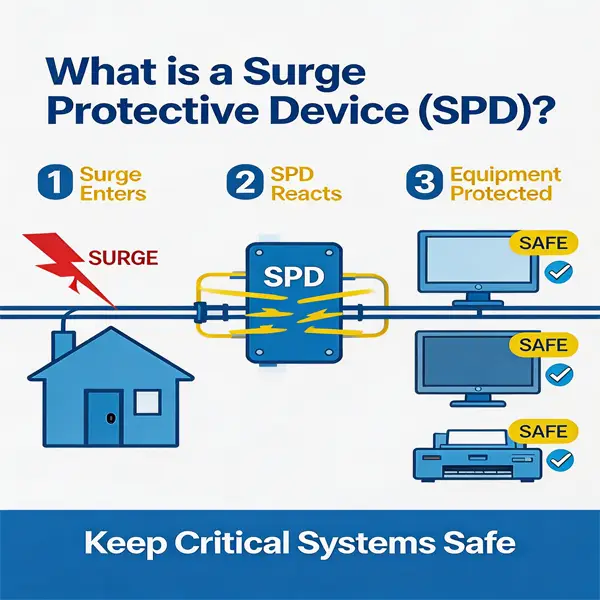
String-level DC fuses or miniature circuit breakers provide overcurrent and short-circuit protection for individual PV strings. Meanwhile, high-performance DC surge protective devices (SPDs) with 1500V DC rated voltage are installed to absorb lightning and switching surges, protecting rear-end inverters and electrical equipment. Arc fault circuit interrupters (AFCIs) are integrated to monitor abnormal arc signatures in real time and cut off circuits within milliseconds to eliminate arc fire risks.
4. Safe Operation and Maintenance Ergonomic Design
1500V high-voltage operation poses high safety risks for maintenance personnel. The combiner box must adopt touch-safe structural design: all live parts are fully covered with insulating protective covers, and internal components are isolated from external operation areas. Equipped with visible DC isolators, the box supports full disconnection of front-end PV strings and rear-end equipment, ensuring zero-voltage operation during maintenance.
Key Component Selection Criteria for 1500V DC Combiner Boxes
The performance of internal components directly determines the reliability of 1500V DC combiner boxes. All electrical components must be strictly rated for 1500V DC operation; mismatched low-voltage components will lead to rapid system failure. The core component selection rules are as follows:
- DC Fuses & Holders: Select 1500V DC dedicated fuses with a breaking capacity of no less than 40kA to handle high short-circuit fault currents. Match the current specification according to PV string parameters to achieve precise overcurrent protection.
- DC Breaker: Adopt 1500V DC visible break isolators with high dielectric strength and anti-arc performance, ensuring reliable circuit isolation and visual safety confirmation.
- DC SPDs: Use type II 1500V DC surge protectors with stable discharge performance and temperature protection functions to avoid SPD burnout and secondary faults.
- Terminals & Cables: All terminals and PV cables must support 1500V DC rated voltage, with excellent low-temperature resistance, UV resistance, and anti-aging properties to adapt harsh outdoor environments.
- AFCI Modules: High-sensitivity DC arc fault detectors that can identify series and parallel arc faults, with fast response speed and strong anti-interference ability to avoid false alarms and missed detections.
Critical Safety Considerations for Installation & Operation
Even with optimal design and high-quality components, improper installation, operation, and maintenance will leave severe safety hazards for 1500V DC PV combiner boxes. Below are the non-negotiable safety specifications for the whole lifecycle.
1. Strict Installation Compliance
Installation must follow IEC and NEC standards, with standardized wiring sequences and firm cable connections. Positive and negative cables must be separated and marked clearly to prevent reverse connection and short circuits. The combiner box must be reliably grounded with low grounding resistance to ensure rapid release of surge current and prevent static accumulation and electric shock accidents.
2. Standardized Operation & Maintenance
All operators must receive professional 1500V high-voltage DC training and wear certified arc-flash PPE before operation. All maintenance work must be carried out after cutting off the DC isolator and confirming zero voltage, with strict implementation of LOTO procedures to prevent accidental power-on. Regular inspection of insulation performance, terminal temperature, SPD status, and fuse conditions is required to eliminate hidden dangers in advance.
3. Environmental Adaptation Safety
In high-temperature, high-humidity, coastal salt-fog, and desert dust environments, enhanced anti-corrosion, moisture-proof, and dust-proof measures must be taken for combiner boxes. Install waterproof sealing strips, anti-condensation heaters, and dust-proof filters to avoid insulation damp discharge and component corrosion failure.
4. Fault Emergency Handling Specifications
Once arc faults, overheating, or tripping faults occur, operators must not open the box for inspection immediately. Cut off the system power first, wait for component cooling and voltage discharge, and then conduct fault detection and maintenance. Regular system arc flash risk assessment is required to update safety protection measures per IEC requirements.
Common Design and Safety Mistakes to Avoid
Many PV project faults stem from non-standard combiner box design and configuration. Here are the most frequent mistakes that EPCs and operators should avoid:
- Using 1000V DC components in 1500V systems to cut costs, leading to insulation breakdown and component burnout.
- Ignoring clearance and creepage distance standards, causing cross-arc faults in high-humidity environments.
- Missing AFCI protection or using low-sensitivity arc detectors, failing to detect hidden DC arc faults.
- Unreasonable thermal design leading to long-term overheating and accelerated insulation aging.
- Non-standard grounding and incomplete safety markings, bringing electric shock and misoperation risks.
Conclusion
1500V DC PV systems represent the mainstream development trend of large-scale solar power generation, bringing significant economic benefits in power generation efficiency and project cost. However, the high-voltage characteristics also raise higher barriers for combiner box design and safety management. A qualified 1500V DC combiner box must integrate high-standard insulation structure, coordinated multi-level protection, reliable environmental adaptability, and humanized safety operation design.
For solar EPCs, project owners, and maintenance teams, adhering to international design standards, selecting certified professional components, and implementing standardized installation and maintenance procedures are the core keys to ensuring long-term safe and stable operation of 1500V DC PV systems. Reasonable combiner box design not only reduces system fault rates and maintenance costs but also maximizes the power generation income of solar assets.
About LVMA Electric
Founded in 2004 and based in Yueqing, the renowned “Electrical Capital of China”, LVMA Electric is a professional high-tech manufacturer and global solution provider specializing in low-voltage and DC electrical equipment for renewable energy, power distribution, and industrial applications. With four modern production bases, a 50,000+ square-meter manufacturing workshop, and a professional R&D team with over 10 years of industry experience, LVMA focuses on the research, design, production, and customization of high-reliability PV electrical components and complete power distribution solutions.
Dedicated to serving the global solar PV industry, LVMA Electric provides full-range certified components tailored for 1000V and 1500V DC PV systems, including DC isolators, DC fuses, surge protective devices (SPDs), AFCI modules, and supporting combiner box electrical accessories. All products strictly comply with IEC, NEC, and NFPA international standards, undergoing rigorous testing for high-voltage resistance, arc flash prevention, thermal stability, and harsh environmental adaptability, fully meeting the safety and reliability requirements of utility-scale solar farms, commercial PV projects, and industrial power systems.
Adhering to the core philosophy of Quality First, Service Oriented, LVMA has established a complete industrial chain from raw material processing to precision manufacturing and quality inspection. The brand serves over 200 listed and global enterprise clients, with a leading industry repurchase rate, and its products are widely exported to Southeast Asia, Africa, the Middle East, and other international markets. Whether for standard 1500V DC combiner box supporting components or customized PV electrical solutions, LVMA Electric delivers cost-effective, safe, and long-lasting products to help global solar EPCs, project owners, and operators optimize system performance and reduce operational risks.
For reliable 1500V DC PV electrical components and professional solar power distribution solutions, LVMA Electric is your trusted long-term partner.
Share This Article
Follow Us
Introduction
The global solar photovoltaic (PV) industry is rapidly shifting from traditional 1000V DC systems to 1500V DC PV systems for utility-scale and large commercial solar projects. Higher DC voltage levels reduce overall system current, minimize cable power losses, cut installation costs, and boost solar array power density significantly. However, 1500V DC technology introduces far more stringent electrical risks compared to 1000V DC setups, primarily due to amplified DC arc flash energy, higher insulation stress, and stricter clearance requirements.
As the core junction device that consolidates multiple PV strings and feeds power to inverters, the 1500V DC combiner box determines the overall safety, stability, and service life of the entire PV system. Poor combiner box design is one of the leading causes of PV site faults, including arc faults, short circuits, overheating, and even fire hazards. This article breaks down the professional design principles, core component selection criteria, and critical safety considerations for 1500V DC PV combiner boxes, helping solar engineers, EPC contractors, and system operators deploy compliant, high-efficiency, and ultra-safe solar systems.
Why 1500V DC PV Systems Demand Specialized Combiner Box Design
A common misconception in the solar industry is that standard 1000V DC combiner boxes can be upgraded for 1500V DC operation with minor part replacements. In reality, 1500V DC systems pose unique electrical challenges that require fully customized combiner box engineering.
The most critical risk difference lies in DC arc fault energy. Data shows that a 1500V DC arc generates approximately 2.25 times more energy than a 1000V DC arc under the same current conditions. High-energy DC arcs are extremely difficult to extinguish, as DC current has no zero-crossing point like AC current, leading to sustained burning, component ablation, and rapid fire spread. Additionally, 1500V high voltage imposes greater stress on insulation materials, increasing the risk of insulation breakdown, creepage discharge, and leakage current in humid or dusty environments.
Beyond arc hazards, 1500V DC systems require larger electrical clearances and creepage distances between live components. Standard 1000V combiner box internal layouts fail to meet these spacing standards, resulting in hidden short-circuit risks. Therefore, dedicated 1500V DC combiner box design is not an optional upgrade but a mandatory requirement for system compliance and operational safety.
Core Design Principles for 1500V DC PV Combiner Boxes
Professional 1500V DC combiner box design must adhere to international standards including IEC 60364-7-712, NEC 2023, focusing on insulation performance, structural safety, thermal management, and fault protection coordination. Below are the four core design principles.
1. High-Grade Insulation and Structural Spacing Design
Insulation failure is the top cause of 1500V combiner box faults. All internal structural plates, terminal bases, and isolating components must adopt high-temperature, anti-aging insulating materials with a rated withstand voltage exceeding 2000V DC to withstand system surge voltage and long-term high-voltage stress.
Strict clearance and creepage distance standards must be implemented: live busbars, cable terminals, and switching components need enlarged horizontal and vertical clearances to avoid air breakdown. Meanwhile, insulating barriers and partition plates are installed between positive and negative circuits and between different string circuits to prevent cross-arc faults and improve overall dielectric strength.
2. Optimized Thermal Dissipation and Enclosure Protection
1500V DC combiner boxes are usually deployed in outdoor open-air solar farms, enduring extreme temperatures, UV radiation, rain, dust, and humidity. The enclosure must reach IP65 or IP66 protection grade to block dust and water ingress. High-quality aluminum alloy or cold-rolled steel plates with anti-corrosion, UV-resistant powder coating are preferred for long-term outdoor operation.
Thermal design is equally critical. High-current operation and frequent switching generate continuous heat. A reasonable internal ventilation layout and heat conduction structure avoid heat accumulation, which can accelerate insulation aging and trigger over-temperature faults. All wiring terminals adopt crimping and locking structures to prevent loose connections and contact overheating.
3. Graded Fault Protection Coordination
Unlike low-voltage PV combiner boxes, 1500V DC models require multi-level coordinated protection to cope with high-energy fault currents. The protection system must cover overcurrent, short circuit, lightning surge, and DC arc faults, with precise grading to avoid whole-system shutdown caused by single-string faults.
String-level DC fuses or miniature circuit breakers provide overcurrent and short-circuit protection for individual PV strings. Meanwhile, high-performance DC surge protective devices (SPDs) with 1500V DC rated voltage are installed to absorb lightning and switching surges, protecting rear-end inverters and electrical equipment. Arc fault circuit interrupters (AFCIs) are integrated to monitor abnormal arc signatures in real time and cut off circuits within milliseconds to eliminate arc fire risks.
4. Safe Operation and Maintenance Ergonomic Design
1500V high-voltage operation poses high safety risks for maintenance personnel. The combiner box must adopt touch-safe structural design: all live parts are fully covered with insulating protective covers, and internal components are isolated from external operation areas. Equipped with visible DC isolators, the box supports full disconnection of front-end PV strings and rear-end equipment, ensuring zero-voltage operation during maintenance.
Key Component Selection Criteria for 1500V DC Combiner Boxes
The performance of internal components directly determines the reliability of 1500V DC combiner boxes. All electrical components must be strictly rated for 1500V DC operation; mismatched low-voltage components will lead to rapid system failure. The core component selection rules are as follows:
- DC Fuses & Holders: Select 1500V DC dedicated fuses with a breaking capacity of no less than 40kA to handle high short-circuit fault currents. Match the current specification according to PV string parameters to achieve precise overcurrent protection.
- DC Breaker: Adopt 1500V DC visible break isolators with high dielectric strength and anti-arc performance, ensuring reliable circuit isolation and visual safety confirmation.
- DC SPDs: Use type II 1500V DC surge protectors with stable discharge performance and temperature protection functions to avoid SPD burnout and secondary faults.
- Terminals & Cables: All terminals and PV cables must support 1500V DC rated voltage, with excellent low-temperature resistance, UV resistance, and anti-aging properties to adapt harsh outdoor environments.
- AFCI Modules: High-sensitivity DC arc fault detectors that can identify series and parallel arc faults, with fast response speed and strong anti-interference ability to avoid false alarms and missed detections.
Critical Safety Considerations for Installation & Operation
Even with optimal design and high-quality components, improper installation, operation, and maintenance will leave severe safety hazards for 1500V DC PV combiner boxes. Below are the non-negotiable safety specifications for the whole lifecycle.
1. Strict Installation Compliance
Installation must follow IEC and NEC standards, with standardized wiring sequences and firm cable connections. Positive and negative cables must be separated and marked clearly to prevent reverse connection and short circuits. The combiner box must be reliably grounded with low grounding resistance to ensure rapid release of surge current and prevent static accumulation and electric shock accidents.
2. Standardized Operation & Maintenance
All operators must receive professional 1500V high-voltage DC training and wear certified arc-flash PPE before operation. All maintenance work must be carried out after cutting off the DC isolator and confirming zero voltage, with strict implementation of LOTO procedures to prevent accidental power-on. Regular inspection of insulation performance, terminal temperature, SPD status, and fuse conditions is required to eliminate hidden dangers in advance.
3. Environmental Adaptation Safety
In high-temperature, high-humidity, coastal salt-fog, and desert dust environments, enhanced anti-corrosion, moisture-proof, and dust-proof measures must be taken for combiner boxes. Install waterproof sealing strips, anti-condensation heaters, and dust-proof filters to avoid insulation damp discharge and component corrosion failure.
4. Fault Emergency Handling Specifications
Once arc faults, overheating, or tripping faults occur, operators must not open the box for inspection immediately. Cut off the system power first, wait for component cooling and voltage discharge, and then conduct fault detection and maintenance. Regular system arc flash risk assessment is required to update safety protection measures per IEC requirements.
Common Design and Safety Mistakes to Avoid
Many PV project faults stem from non-standard combiner box design and configuration. Here are the most frequent mistakes that EPCs and operators should avoid:
- Using 1000V DC components in 1500V systems to cut costs, leading to insulation breakdown and component burnout.
- Ignoring clearance and creepage distance standards, causing cross-arc faults in high-humidity environments.
- Missing AFCI protection or using low-sensitivity arc detectors, failing to detect hidden DC arc faults.
- Unreasonable thermal design leading to long-term overheating and accelerated insulation aging.
- Non-standard grounding and incomplete safety markings, bringing electric shock and misoperation risks.
Conclusion
1500V DC PV systems represent the mainstream development trend of large-scale solar power generation, bringing significant economic benefits in power generation efficiency and project cost. However, the high-voltage characteristics also raise higher barriers for combiner box design and safety management. A qualified 1500V DC combiner box must integrate high-standard insulation structure, coordinated multi-level protection, reliable environmental adaptability, and humanized safety operation design.
For solar EPCs, project owners, and maintenance teams, adhering to international design standards, selecting certified professional components, and implementing standardized installation and maintenance procedures are the core keys to ensuring long-term safe and stable operation of 1500V DC PV systems. Reasonable combiner box design not only reduces system fault rates and maintenance costs but also maximizes the power generation income of solar assets.
About LVMA Electric
Founded in 2004 and based in Yueqing, the renowned “Electrical Capital of China”, LVMA Electric is a professional high-tech manufacturer and global solution provider specializing in low-voltage and DC electrical equipment for renewable energy, power distribution, and industrial applications. With four modern production bases, a 50,000+ square-meter manufacturing workshop, and a professional R&D team with over 10 years of industry experience, LVMA focuses on the research, design, production, and customization of high-reliability PV electrical components and complete power distribution solutions.
Dedicated to serving the global solar PV industry, LVMA Electric provides full-range certified components tailored for 1000V and 1500V DC PV systems, including DC isolators, DC fuses, surge protective devices (SPDs), AFCI modules, and supporting combiner box electrical accessories. All products strictly comply with IEC, NEC, and NFPA international standards, undergoing rigorous testing for high-voltage resistance, arc flash prevention, thermal stability, and harsh environmental adaptability, fully meeting the safety and reliability requirements of utility-scale solar farms, commercial PV projects, and industrial power systems.
Adhering to the core philosophy of Quality First, Service Oriented, LVMA has established a complete industrial chain from raw material processing to precision manufacturing and quality inspection. The brand serves over 200 listed and global enterprise clients, with a leading industry repurchase rate, and its products are widely exported to Southeast Asia, Africa, the Middle East, and other international markets. Whether for standard 1500V DC combiner box supporting components or customized PV electrical solutions, LVMA Electric delivers cost-effective, safe, and long-lasting products to help global solar EPCs, project owners, and operators optimize system performance and reduce operational risks.
For reliable 1500V DC PV electrical components and professional solar power distribution solutions, LVMA Electric is your trusted long-term partner.
Contact Us
Related Blog

Contact Us
Have questions about our products or services? Our team is here to help you with any inquiries.