

RCD Type AC vs Type A vs Type B: Key Differences & Selection Guide
RCD Type AC vs Type A vs Type B: Key Differences & Selection Guide
If you source residual current circuit breakers (RCCB / RCD / RCBO) for residential wiring, commercial sockets, solar PV systems, battery energy storage or EV charging installations, you have definitely encountered Type AC, Type A and Type B marking on RCD housings. Many buyers mistakenly assume these labels are minor cosmetic differences, while the core function difference lies in which earth-fault leakage waveforms the internal toroidal transformer and detection circuit can reliably recognise and trip on. Selecting the wrong RCD will leave your installation with hidden shock and fire hazards, even if the rated current, 30mA sensitivity and CE certification look fully compliant.
Modern power electronics including rectifiers, switching power supplies, inverters and variable frequency drives create DC leakage components that saturate the RCD current transformer. Once saturation occurs, an RCD can fail to trip even under dangerous AC earth faults. This is why waveform understanding becomes non-negotiable for electrical contractors, panel builders, system integrators and wholesale distributors.
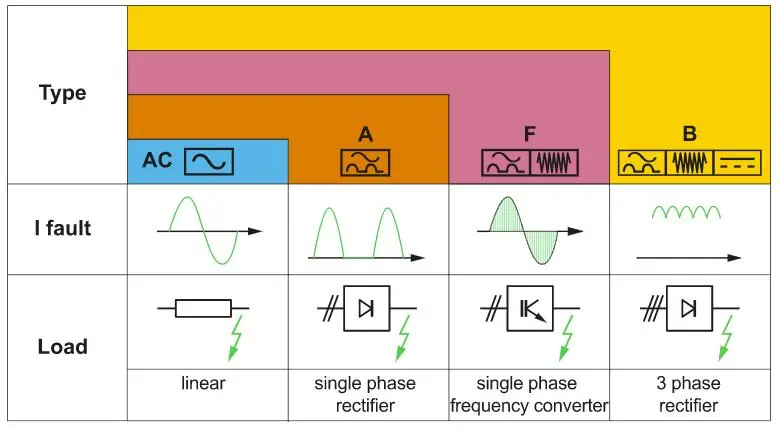
Type AC RCD – Only for Pure Sinusoidal AC Leakage
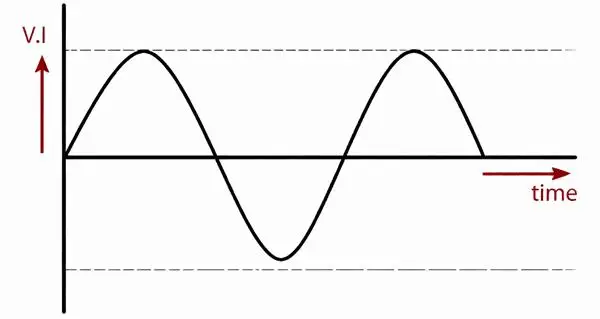
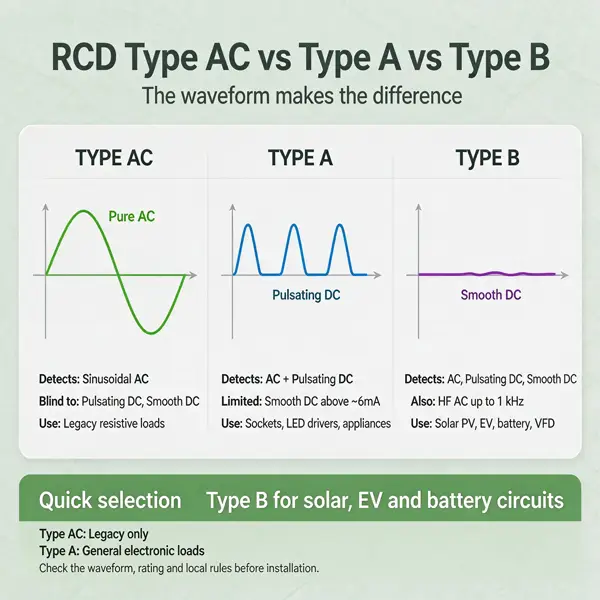
Type AC is the earliest residual current protection design, built only to respond to symmetrical sinusoidal alternating residual current at mains frequency (50Hz or 60Hz). Its magnetic core sensor cannot identify any DC leakage component, whether pulsating or smooth steady DC. Even a small DC offset will magnetically saturate the toroid, making the breaker blind to subsequent AC earth faults.
Key specifications & limits
- Detected waveform: Pure sine-wave AC residual leakage only
- Cannot trip: Pulsating DC, smooth DC, high-frequency AC residual current
- Standard reference: IEC 61008 / IEC 61009 base requirement for Type AC
- Typical loads: Pure resistive legacy loads with no electronic rectifier boards: old incandescent lighting, simple immersion water heaters, basic resistance ovens, traditional non-electronic fan circuits
- Common pitfalls: Not permitted for most new domestic socket circuits under updated IEC and regional wiring codes. Any LED driver, SMPS or inverter on the protected circuit invalidates Type AC protection.
- Price level: Lowest cost RCD variant
Type A RCD – AC + Pulsating DC Protection (Global Default for General Electronic Loads)
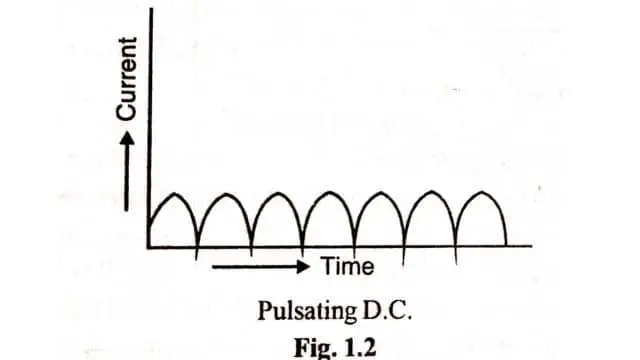
Type A upgrades the sensing circuit of Type AC. It reliably trips on standard sinusoidal AC leakage plus pulsating DC residual current, the fault waveform generated by single-phase diode rectifiers inside everyday consumer electronics. Pulsating DC always stays on one side of the zero current line, rising and falling with each mains half-cycle without reversing polarity.
Key specifications & limits
- Detected waveform: Sinusoidal AC + pulsating DC (half-wave / full-wave single-phase rectified leakage)
- Critical limitation: Only tolerates maximum ~6mA superimposed smooth DC residual current. Once smooth DC leakage exceeds this threshold, the core saturates and the Type A RCD loses tripping capability
- Standard reference: IEC 61008, IEC 61009 for Type A residual current devices
- Typical loads: LED drivers, TV power supplies, laptop & phone adapters, washing machine inverter boards, dishwashers, air conditioner indoor units, standard domestic sockets, office power circuits, Mode 2 EV chargers with built-in 6mA DC residual monitoring
- Common pitfalls: Type A cannot replace Type B for standalone EV chargers, solar inverters or three-phase rectifier equipment without native DC fault detection. This is one of the most frequent specification mistakes in electrical projects.
- Price level: Medium cost, the most widely stocked RCD for general-purpose installations
Type B RCD – Universal Waveform Coverage: AC, Pulsating DC & Smooth DC
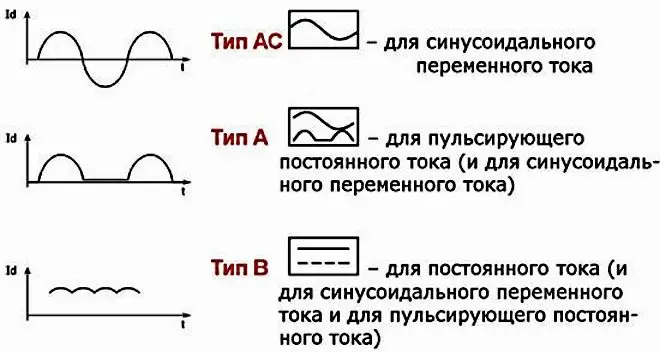
Type B is the highest-performance residual current category, defined under IEC 62423. It covers all fault waveforms protected by Type A, plus continuous smooth DC residual leakage and residual AC current up to 1000Hz high frequency. Unlike AC and Type A units that rely on simple magnetic transformer principles, Type B uses active magnetic modulation or electronic flux compensation to avoid core saturation from steady DC leakage.
Key specifications & limits
- Detected waveform: Sinusoidal 50/60Hz AC, pulsating DC, smooth steady DC, mixed-frequency AC up to 1kHz
- Compatibility: Backward compatible; you can directly substitute Type AC or Type A with Type B on any circuit
- Standard reference: IEC 62423, mandatory for many PV, battery storage and EV charging regional regulations
- Typical loads: Grid-tied & off-grid solar PV inverters, lithium battery energy storage systems, three-phase variable frequency drives (VFD), welding rectifiers, online UPS, EV charging stations without integrated 6mA DC residual monitoring, industrial rectifier panels
- Common pitfalls: Over-specifying Type B for simple residential circuits raises project cost unnecessarily, though it does not create safety issues.
- Price level: Higher cost due to extra sensing electronics
Side-by-Side Full Comparison Table
| RCD Type | Sinusoidal AC (50/60Hz) | Pulsating DC | Smooth / Steady DC | High-frequency AC up to 1kHz | Primary Application |
|---|---|---|---|---|---|
| Type AC | ✅ | ❌ | ❌ | ❌ | Legacy pure resistive circuits |
| Type A | ✅ | ✅ | ❌ (only <6mA DC allowed) | ❌ | General sockets, home appliances, single-phase SMPS loads |
| Type B | ✅ | ✅ | ✅ | ✅ | Solar PV, battery storage, EV chargers, 3-phase VFD, industrial inverters |
How DC Saturation Disables RCD Protection (Critical Buyer Knowledge)
The toroidal current transformer inside every RCD works by detecting the difference between incoming line current and returning neutral current. A DC leakage component creates permanent magnetisation of the ferrite core. Once saturated, the core no longer transforms AC fault current correctly.
For example: A solar inverter insulation fault creates 20mA smooth DC leakage to earth. A 30mA Type A RCD installed on this circuit will not trip. The DC current saturates the core, and if a separate AC earth fault occurs at the same time, the RCD remains silent, exposing users to fatal electric shock risk. This is why electrical inspectors increasingly reject Type A RCDs for solar and EV circuits.
Most Frequent Specification Mistakes
- Fitting Type A RCD for EV chargers with no built-in DC residual monitoring: Violates IEC 60364-7-722 EV charging rules in many markets
- Using Type AC RCD for LED lighting circuits: The rectifier inside LED drivers generates pulsating DC and will blind the Type AC breaker
- Unnecessarily using expensive Type B on standard domestic socket circuits with only laptops, TVs and small household appliances: Type A meets safety codes and reduces BOM cost
- Confusing RCBO and standalone RCCB type marking: The Type AC/A/B classification applies equally to both RCCB and RCBO devices
Practical Selection Checklist for Engineers & Buyers
- Simple heating, old halogen lighting with zero electronic controls → Type AC (only for renovation legacy circuits)
- Domestic sockets, office power, LED lights, washing machines, air conditioners, electronics adapters → Type A (30mA for personal protection)
- Solar PV combiner/inverter circuits, battery storage, EV charging points, three-phase VFD, welding equipment, industrial UPS → Type B (30mA for touch protection, 100mA / 300mA for fire protection)
Always cross-reference the equipment datasheet and local wiring regulation before finalising your bill of materials. Many African, Middle East, Southeast Asia and European electrical standards explicitly require Type B RCD protection for renewable energy and EV charging infrastructure. Correct RCD waveform matching is one of the most cost-effective ways to guarantee reliable earth fault protection for low-voltage distribution panels.
Share This Article
Follow Us
If you source residual current circuit breakers (RCCB / RCD / RCBO) for residential wiring, commercial sockets, solar PV systems, battery energy storage or EV charging installations, you have definitely encountered Type AC, Type A and Type B marking on RCD housings. Many buyers mistakenly assume these labels are minor cosmetic differences, while the core function difference lies in which earth-fault leakage waveforms the internal toroidal transformer and detection circuit can reliably recognise and trip on. Selecting the wrong RCD will leave your installation with hidden shock and fire hazards, even if the rated current, 30mA sensitivity and CE certification look fully compliant.
Modern power electronics including rectifiers, switching power supplies, inverters and variable frequency drives create DC leakage components that saturate the RCD current transformer. Once saturation occurs, an RCD can fail to trip even under dangerous AC earth faults. This is why waveform understanding becomes non-negotiable for electrical contractors, panel builders, system integrators and wholesale distributors.
Type AC RCD – Only for Pure Sinusoidal AC Leakage
Type AC is the earliest residual current protection design, built only to respond to symmetrical sinusoidal alternating residual current at mains frequency (50Hz or 60Hz). Its magnetic core sensor cannot identify any DC leakage component, whether pulsating or smooth steady DC. Even a small DC offset will magnetically saturate the toroid, making the breaker blind to subsequent AC earth faults.
Key specifications & limits
- Detected waveform: Pure sine-wave AC residual leakage only
- Cannot trip: Pulsating DC, smooth DC, high-frequency AC residual current
- Standard reference: IEC 61008 / IEC 61009 base requirement for Type AC
- Typical loads: Pure resistive legacy loads with no electronic rectifier boards: old incandescent lighting, simple immersion water heaters, basic resistance ovens, traditional non-electronic fan circuits
- Common pitfalls: Not permitted for most new domestic socket circuits under updated IEC and regional wiring codes. Any LED driver, SMPS or inverter on the protected circuit invalidates Type AC protection.
- Price level: Lowest cost RCD variant
Type A RCD – AC + Pulsating DC Protection (Global Default for General Electronic Loads)
Type A upgrades the sensing circuit of Type AC. It reliably trips on standard sinusoidal AC leakage plus pulsating DC residual current, the fault waveform generated by single-phase diode rectifiers inside everyday consumer electronics. Pulsating DC always stays on one side of the zero current line, rising and falling with each mains half-cycle without reversing polarity.
Key specifications & limits
- Detected waveform: Sinusoidal AC + pulsating DC (half-wave / full-wave single-phase rectified leakage)
- Critical limitation: Only tolerates maximum ~6mA superimposed smooth DC residual current. Once smooth DC leakage exceeds this threshold, the core saturates and the Type A RCD loses tripping capability
- Standard reference: IEC 61008, IEC 61009 for Type A residual current devices
- Typical loads: LED drivers, TV power supplies, laptop & phone adapters, washing machine inverter boards, dishwashers, air conditioner indoor units, standard domestic sockets, office power circuits, Mode 2 EV chargers with built-in 6mA DC residual monitoring
- Common pitfalls: Type A cannot replace Type B for standalone EV chargers, solar inverters or three-phase rectifier equipment without native DC fault detection. This is one of the most frequent specification mistakes in electrical projects.
- Price level: Medium cost, the most widely stocked RCD for general-purpose installations
Type B RCD – Universal Waveform Coverage: AC, Pulsating DC & Smooth DC
Type B is the highest-performance residual current category, defined under IEC 62423. It covers all fault waveforms protected by Type A, plus continuous smooth DC residual leakage and residual AC current up to 1000Hz high frequency. Unlike AC and Type A units that rely on simple magnetic transformer principles, Type B uses active magnetic modulation or electronic flux compensation to avoid core saturation from steady DC leakage.
Key specifications & limits
- Detected waveform: Sinusoidal 50/60Hz AC, pulsating DC, smooth steady DC, mixed-frequency AC up to 1kHz
- Compatibility: Backward compatible; you can directly substitute Type AC or Type A with Type B on any circuit
- Standard reference: IEC 62423, mandatory for many PV, battery storage and EV charging regional regulations
- Typical loads: Grid-tied & off-grid solar PV inverters, lithium battery energy storage systems, three-phase variable frequency drives (VFD), welding rectifiers, online UPS, EV charging stations without integrated 6mA DC residual monitoring, industrial rectifier panels
- Common pitfalls: Over-specifying Type B for simple residential circuits raises project cost unnecessarily, though it does not create safety issues.
- Price level: Higher cost due to extra sensing electronics
Side-by-Side Full Comparison Table
| RCD Type | Sinusoidal AC (50/60Hz) | Pulsating DC | Smooth / Steady DC | High-frequency AC up to 1kHz | Primary Application |
|---|---|---|---|---|---|
| Type AC | ✅ | ❌ | ❌ | ❌ | Legacy pure resistive circuits |
| Type A | ✅ | ✅ | ❌ (only <6mA DC allowed) | ❌ | General sockets, home appliances, single-phase SMPS loads |
| Type B | ✅ | ✅ | ✅ | ✅ | Solar PV, battery storage, EV chargers, 3-phase VFD, industrial inverters |
How DC Saturation Disables RCD Protection (Critical Buyer Knowledge)
The toroidal current transformer inside every RCD works by detecting the difference between incoming line current and returning neutral current. A DC leakage component creates permanent magnetisation of the ferrite core. Once saturated, the core no longer transforms AC fault current correctly.
For example: A solar inverter insulation fault creates 20mA smooth DC leakage to earth. A 30mA Type A RCD installed on this circuit will not trip. The DC current saturates the core, and if a separate AC earth fault occurs at the same time, the RCD remains silent, exposing users to fatal electric shock risk. This is why electrical inspectors increasingly reject Type A RCDs for solar and EV circuits.
Most Frequent Specification Mistakes
- Fitting Type A RCD for EV chargers with no built-in DC residual monitoring: Violates IEC 60364-7-722 EV charging rules in many markets
- Using Type AC RCD for LED lighting circuits: The rectifier inside LED drivers generates pulsating DC and will blind the Type AC breaker
- Unnecessarily using expensive Type B on standard domestic socket circuits with only laptops, TVs and small household appliances: Type A meets safety codes and reduces BOM cost
- Confusing RCBO and standalone RCCB type marking: The Type AC/A/B classification applies equally to both RCCB and RCBO devices
Practical Selection Checklist for Engineers & Buyers
- Simple heating, old halogen lighting with zero electronic controls → Type AC (only for renovation legacy circuits)
- Domestic sockets, office power, LED lights, washing machines, air conditioners, electronics adapters → Type A (30mA for personal protection)
- Solar PV combiner/inverter circuits, battery storage, EV charging points, three-phase VFD, welding equipment, industrial UPS → Type B (30mA for touch protection, 100mA / 300mA for fire protection)
Always cross-reference the equipment datasheet and local wiring regulation before finalising your bill of materials. Many African, Middle East, Southeast Asia and European electrical standards explicitly require Type B RCD protection for renewable energy and EV charging infrastructure. Correct RCD waveform matching is one of the most cost-effective ways to guarantee reliable earth fault protection for low-voltage distribution panels.
Contact Us
Related Blog


Contact Us
Have questions about our products or services? Our team is here to help you with any inquiries.