

PV Isolator Switch for Solar DC Circuit Isolation
PV Isolator Switch for Solar DC Circuit Isolation
Solar DC is tricky. Sunlight hits panels, voltage comes up right away. AC has a natural zero crossing that puts arcs out. DC does not. This single fact makes safe disconnection critical. For solar installers and service crews, PV Isolator Switch gives a solid, checkable break on live DC wiring. This is not sales copy. Just notes from rooftop and ground-mount jobs.
1. What Is a PV Isolator Switch and Its Core Function in Solar Systems
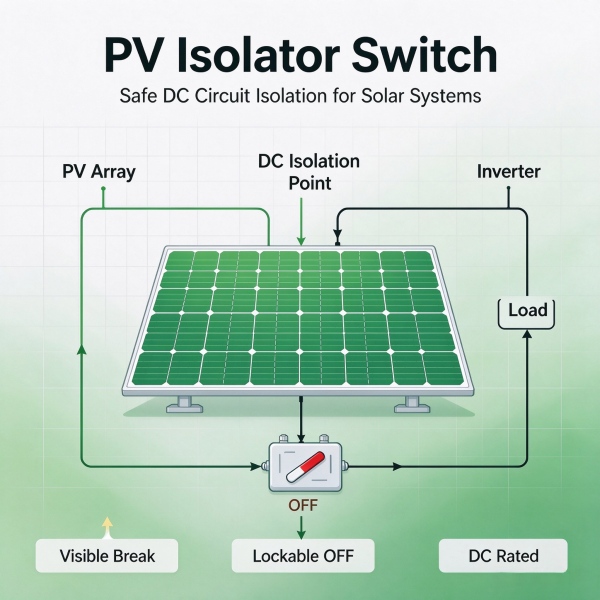
A PV Isolator Switch is a manual DC switch-disconnector. It is built for photovoltaic circuits only. Its key feature is the visible break. Flip the handle to OFF. Internal contacts pull apart. You can see the gap through a window or position indicator. This visual check is why it counts as a valid isolation point for maintenance. It is not just a simple on-off toggle.
Most use rotary or lever action. They come with arc-quenching chambers. DC arcs are stubborn. They do not die out like AC arcs. The chamber stretches and cools the arc until it goes out. That is why you cannot just use an ordinary AC isolator on a PV string. It cannot handle DC arc duty.
Where to place it? Usually between PV strings and inverter DC input. Some fit inside combiner boxes before string fuses. Large solar farms add extra isolators at combiner outlets. You can lock off one sub-array, without touching the inverter.
2. Key Reasons to Fit a DC PV Isolator Switch on Solar Installations
Codes set the baseline. IEC 60364-7-712 requires an accessible DC isolation point for PV service. Inspectors often hold approval if this part is missing. Many insurers also ask for it during handover.
Field safety is what matters most for the crew. Inverters fail. Connectors overheat. Cables get damaged. Without a proper DC isolator, workers only get bad options. Pull live connectors. Or wait for sunset. Neither is safe.
Backfeed is easy to overlook. Even with the inverter turned off, PV modules keep pushing voltage toward the DC bus. The isolator creates a hard break to stop that flow. It also helps emergency responders. Firefighters need a clearly marked point to de-energize DC wiring quickly.
3. Main Types of PV Isolator Switch for Different PV Voltage Ratings
Rotary DC isolators are what you run into most on site. They use 2-position or 4-position rotary handles. Housings are IP65 or IP66 polycarbonate. They mount on rails or walls. Simple, low-cost, widely accepted by inspectors.
Lockable models add a padlock slot. Lock the switch OFF during maintenance. Commercial and utility solar sites almost always require this. Lockout-tagout (LOTO) workflows depend on it. A switch you cannot lock off is not a reliable safety point.
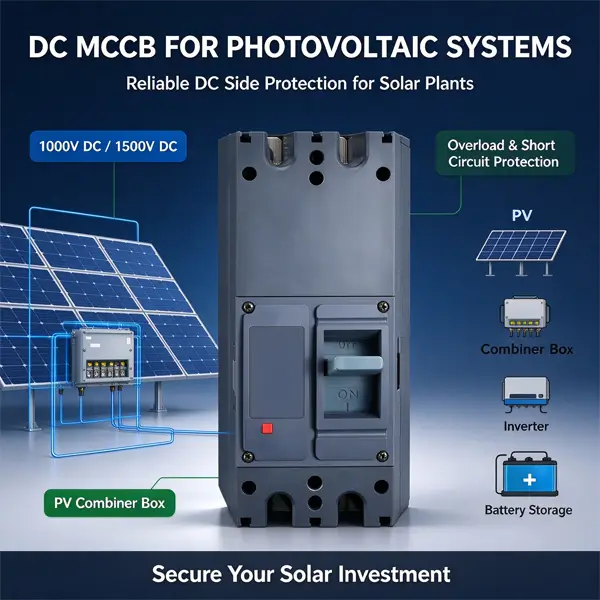
Voltage rating guides your selection. 1000V DC suits older residential and small commercial arrays. 1500V DC isolators are standard for large C&I and ground-mounted farms. These systems reach higher open-circuit voltage. The switch rating must match full system voltage, not just normal running voltage.
Compact versions fit single-string home systems. Heavy-duty models serve high-current combiner boxes. Do not shop only by price. A small residential isolator cannot handle utility-scale loads. Big industrial units are overkill for small rooftop jobs.
4. Critical Technical Parameters to Compare When Selecting a PV Isolator Switch
Rated DC voltage is your first check. Watch for a common trap. Many switches mark both AC and DC ratings on the label. Using the AC rating for PV DC circuits is dangerous. Stick to the DC spec.
Rated current needs extra margin. Strings run at STC nameplate current. Cold, bright days can push current higher. Enclosure heat also derates the switch. Never size it only to the array’s rated current.
Check utilization category. Look for DC-21B under IEC 60947-3. This certification proves the switch is tested for DC load switching and minor overloads, exactly what PV systems require.
Beyond datasheet numbers, look at physical features. Is the break visible? Can it be locked OFF with a padlock? What IP rating? Will the housing resist UV and repeated heat cycles on the roof? Cable entry and terminal size are easy to overlook. A switch that cannot fit your PV cables is useless once on site. Black rooftop enclosures run far hotter than surrounding air. Check the temperature rating.
5. Installation Rules and Lock-off Safety Practices for Solar DC Isolators
Plan mounting before drilling. Put the isolator somewhere easy to reach. Avoid positions that force workers to climb over modules. On rooftop jobs, handle status should be readable from the ground. Keep it away from standing water and hot inverter exhaust.
Wiring must follow polarity marks. Torque terminals to manufacturer values. Loose DC terminals cause fires. Thermal cycling loosens hand-tight connections over time. Use DC-rated cables and connectors. Do not mix AC accessories on this circuit.
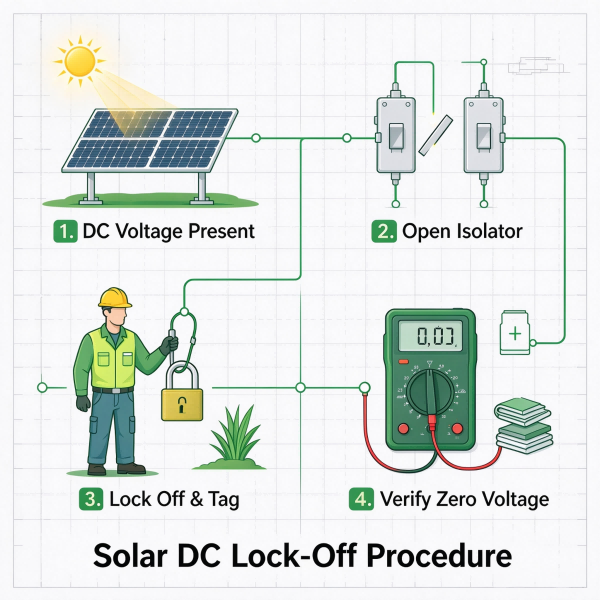
Lock-off workflow: switch OFF, add padlock and warning tag, test with a DC-rated meter to confirm zero voltage, then start work. Always treat PV wiring as live until testing proves otherwise.
Keep a simple inspection routine. At every service visit, check for water ingress, cracked housing, discoloured terminals and heat marks. Repeated DC switching slowly wears contacts. Most failures show up as overheating, not a stuck switch.
I keep seeing the same mistakes: using AC isolators for DC strings, blocked handle travel after installation, skipping lockable versions for commercial sites, one isolator shared across multiple independent strings.
Closing
Isolation hardware is only one line in the solar BOM. Still, it shapes long-term safety for everyone servicing the array. Choose a PV Isolator Switch matched to your array’s real DC voltage and current, confirm lockout capability, and install it in an accessible spot. This meets inspection rules and protects technicians who will maintain the system years later. Reach out to our team if you need YUYE PV isolator switch recommendations for your solar projects.
Article Source
This guide draws from IEC 60947-3 low-voltage switchgear standards, IEC 60364-7-712 photovoltaic installation specifications, DC disconnector manufacturer manuals and first-hand field notes from solar commissioning and O&M work. All guidance follows global solar safety best practices.
FAQ
Q1: Can an AC isolator replace a PV DC isolator?
A1: No. AC switches cannot extinguish DC arcs reliably. You need a device with dedicated DC rating and PV utilization category.
Q2: What does “visible break” mean?
A2: It means separated contacts can be visually verified, to confirm the circuit is safely isolated for maintenance.
Q3: Is a PV isolator required for residential rooftop solar?
A3: Rules vary by region. Most local codes require an accessible DC isolation point for service.
Q4: What IP rating fits outdoor rooftop installation?
A4: Minimum IP65. IP66 is preferred for heavy rain exposure. Enclosure material must be UV-stabilized.
Q5: PV isolator vs DC circuit breaker, what is the difference?
A5: Isolators provide safe disconnection. DC breakers add automatic overcurrent and short-circuit protection. Many PV systems use both.
Share This Article
Follow Us
Solar DC is tricky. Sunlight hits panels, voltage comes up right away. AC has a natural zero crossing that puts arcs out. DC does not. This single fact makes safe disconnection critical. For solar installers and service crews, PV Isolator Switch gives a solid, checkable break on live DC wiring. This is not sales copy. Just notes from rooftop and ground-mount jobs.
1. What Is a PV Isolator Switch and Its Core Function in Solar Systems
A PV Isolator Switch is a manual DC switch-disconnector. It is built for photovoltaic circuits only. Its key feature is the visible break. Flip the handle to OFF. Internal contacts pull apart. You can see the gap through a window or position indicator. This visual check is why it counts as a valid isolation point for maintenance. It is not just a simple on-off toggle.
Most use rotary or lever action. They come with arc-quenching chambers. DC arcs are stubborn. They do not die out like AC arcs. The chamber stretches and cools the arc until it goes out. That is why you cannot just use an ordinary AC isolator on a PV string. It cannot handle DC arc duty.
Where to place it? Usually between PV strings and inverter DC input. Some fit inside combiner boxes before string fuses. Large solar farms add extra isolators at combiner outlets. You can lock off one sub-array, without touching the inverter.
2. Key Reasons to Fit a DC PV Isolator Switch on Solar Installations
Codes set the baseline. IEC 60364-7-712 requires an accessible DC isolation point for PV service. Inspectors often hold approval if this part is missing. Many insurers also ask for it during handover.
Field safety is what matters most for the crew. Inverters fail. Connectors overheat. Cables get damaged. Without a proper DC isolator, workers only get bad options. Pull live connectors. Or wait for sunset. Neither is safe.
Backfeed is easy to overlook. Even with the inverter turned off, PV modules keep pushing voltage toward the DC bus. The isolator creates a hard break to stop that flow. It also helps emergency responders. Firefighters need a clearly marked point to de-energize DC wiring quickly.
3. Main Types of PV Isolator Switch for Different PV Voltage Ratings
Rotary DC isolators are what you run into most on site. They use 2-position or 4-position rotary handles. Housings are IP65 or IP66 polycarbonate. They mount on rails or walls. Simple, low-cost, widely accepted by inspectors.
Lockable models add a padlock slot. Lock the switch OFF during maintenance. Commercial and utility solar sites almost always require this. Lockout-tagout (LOTO) workflows depend on it. A switch you cannot lock off is not a reliable safety point.
Voltage rating guides your selection. 1000V DC suits older residential and small commercial arrays. 1500V DC isolators are standard for large C&I and ground-mounted farms. These systems reach higher open-circuit voltage. The switch rating must match full system voltage, not just normal running voltage.
Compact versions fit single-string home systems. Heavy-duty models serve high-current combiner boxes. Do not shop only by price. A small residential isolator cannot handle utility-scale loads. Big industrial units are overkill for small rooftop jobs.
4. Critical Technical Parameters to Compare When Selecting a PV Isolator Switch
Rated DC voltage is your first check. Watch for a common trap. Many switches mark both AC and DC ratings on the label. Using the AC rating for PV DC circuits is dangerous. Stick to the DC spec.
Rated current needs extra margin. Strings run at STC nameplate current. Cold, bright days can push current higher. Enclosure heat also derates the switch. Never size it only to the array’s rated current.
Check utilization category. Look for DC-21B under IEC 60947-3. This certification proves the switch is tested for DC load switching and minor overloads, exactly what PV systems require.
Beyond datasheet numbers, look at physical features. Is the break visible? Can it be locked OFF with a padlock? What IP rating? Will the housing resist UV and repeated heat cycles on the roof? Cable entry and terminal size are easy to overlook. A switch that cannot fit your PV cables is useless once on site. Black rooftop enclosures run far hotter than surrounding air. Check the temperature rating.
5. Installation Rules and Lock-off Safety Practices for Solar DC Isolators
Plan mounting before drilling. Put the isolator somewhere easy to reach. Avoid positions that force workers to climb over modules. On rooftop jobs, handle status should be readable from the ground. Keep it away from standing water and hot inverter exhaust.
Wiring must follow polarity marks. Torque terminals to manufacturer values. Loose DC terminals cause fires. Thermal cycling loosens hand-tight connections over time. Use DC-rated cables and connectors. Do not mix AC accessories on this circuit.
Lock-off workflow: switch OFF, add padlock and warning tag, test with a DC-rated meter to confirm zero voltage, then start work. Always treat PV wiring as live until testing proves otherwise.
Keep a simple inspection routine. At every service visit, check for water ingress, cracked housing, discoloured terminals and heat marks. Repeated DC switching slowly wears contacts. Most failures show up as overheating, not a stuck switch.
I keep seeing the same mistakes: using AC isolators for DC strings, blocked handle travel after installation, skipping lockable versions for commercial sites, one isolator shared across multiple independent strings.
Closing
Isolation hardware is only one line in the solar BOM. Still, it shapes long-term safety for everyone servicing the array. Choose a PV Isolator Switch matched to your array’s real DC voltage and current, confirm lockout capability, and install it in an accessible spot. This meets inspection rules and protects technicians who will maintain the system years later. Reach out to our team if you need YUYE PV isolator switch recommendations for your solar projects.
Article Source
This guide draws from IEC 60947-3 low-voltage switchgear standards, IEC 60364-7-712 photovoltaic installation specifications, DC disconnector manufacturer manuals and first-hand field notes from solar commissioning and O&M work. All guidance follows global solar safety best practices.
FAQ
Q1: Can an AC isolator replace a PV DC isolator?
A1: No. AC switches cannot extinguish DC arcs reliably. You need a device with dedicated DC rating and PV utilization category.
Q2: What does “visible break” mean?
A2: It means separated contacts can be visually verified, to confirm the circuit is safely isolated for maintenance.
Q3: Is a PV isolator required for residential rooftop solar?
A3: Rules vary by region. Most local codes require an accessible DC isolation point for service.
Q4: What IP rating fits outdoor rooftop installation?
A4: Minimum IP65. IP66 is preferred for heavy rain exposure. Enclosure material must be UV-stabilized.
Q5: PV isolator vs DC circuit breaker, what is the difference?
A5: Isolators provide safe disconnection. DC breakers add automatic overcurrent and short-circuit protection. Many PV systems use both.
Contact Us
Related Blog



Contact Us
Have questions about our products or services? Our team is here to help you with any inquiries.