

DC Molded Case Circuit Breaker (DC MCCB) Applications in Photovoltaic PV Systems: Safety, Protection & Selection Guide
DC Molded Case Circuit Breaker (DC MCCB) Applications in Photovoltaic PV Systems: Safety, Protection & Selection Guide
Solar photovoltaic systems operate on direct current before power flows into inverters. Unlike AC circuits, DC current has no natural zero crossing, which makes DC arc extinction far more difficult. A regular AC breaker cannot safely interrupt DC faults, which creates fire risks and permanent damage to expensive PV modules, wiring and inverters. This is why a specialized DC molded case circuit breaker (DC MCCB) becomes a core protection component for modern rooftop, commercial and utility-scale solar projects.
What Is a DC MCCB and Why It Is Different From AC MCCB
A DC molded case circuit breaker is a thermal-magnetic protection device enclosed in a robust thermoset housing, specially engineered for DC circuits. It is designed to clear overload and short-circuit faults while extinguishing sustained DC electric arcs quickly and reliably.
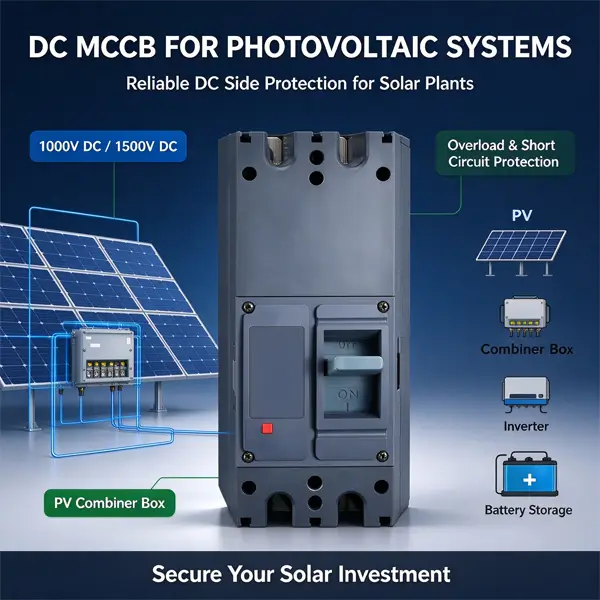
AC breakers rely on the alternating current zero point to extinguish arcs. In PV DC loops, current flows continuously in one direction. Without a dedicated arc chute structure, the arc will keep burning and may ignite surrounding cables or plastic parts. DC MCCBs adopt optimized arc extinguishing chambers, matched contact materials and trip curves calibrated for solar DC characteristics. Certified models IEC 60947-2, with voltage ratings of 1000V DC and 1500V DC, the mainstream voltage levels of today’s global photovoltaic industry.
Key Application Positions of DC MCCB in a PV System
In a complete on-grid or off-grid photovoltaic installation, DC MCCBs are deployed at several critical nodes to limit fault spread and provide safe isolation for maintenance.
PV Combiner Box Main Protection
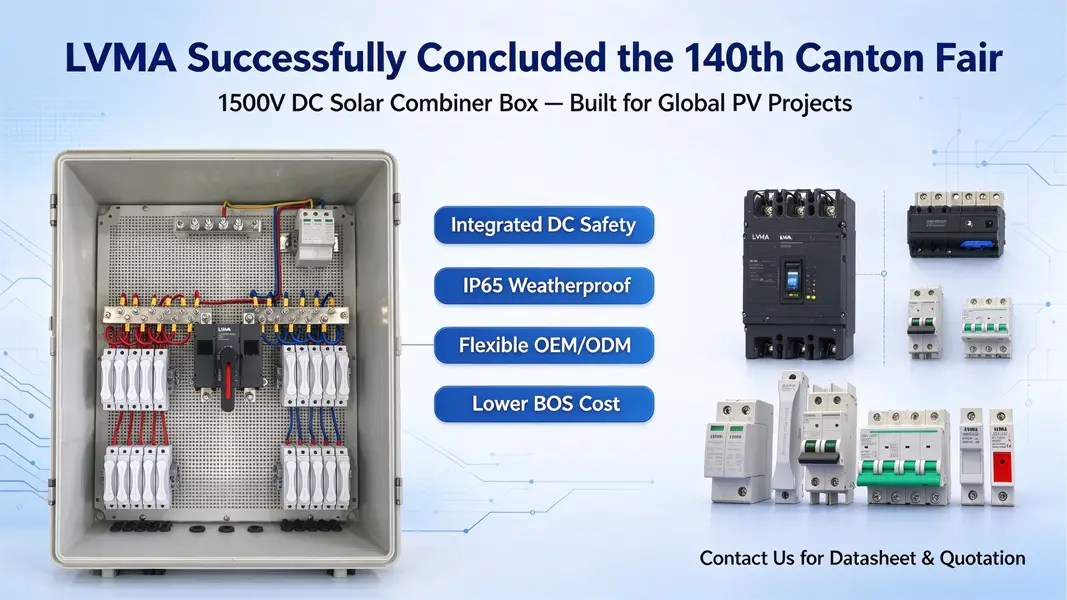
PV combiner boxes collect multiple PV string outputs into one main DC bus. When one string suffers short circuit or insulation failure, fault current can feed back to other healthy strings. Installing a DC MCCB as the main breaker of the combiner box isolates the faulty branch and stops cascading failure. This is the most common application for commercial rooftop solar and ground-mounted solar farms.
Inverter DC Input Side Protection
The DC side of solar inverters is another essential installation spot. The DC MCCB works as both fault protection and a manual disconnect switch. During routine inspection, inverter maintenance or emergency shutdown, technicians can cut off the DC power source locally. It protects the inverter internal power module from short-circuit surges and overcurrent damage caused by external wiring faults.
Main DC Bus Protection for Large Solar Plants
Utility-scale 1500V PV stations use centralized DC distribution cabinets. High-current DC MCCBs from 250A up to 630A are used on main DC buses. These high breaking capacity MCCBs handle large short-circuit currents and reduce downtime for the whole solar field. For large projects, this directly improves overall system availability and power generation revenue.
Hybrid PV + Battery Energy Storage Systems
Many solar projects pair PV arrays with battery energy storage systems. The same DC MCCB technology protects battery main DC loops. PV charging current and battery discharge current both pass through the DC MCCB, guarding against overcharge short-circuit risks for lithium battery clusters. This cross-scenario compatibility makes DC MCCB a standard part of solar-plus-storage solutions.
Core Functions of DC MCCB in Photovoltaic Installations
Overload Protection
PV output fluctuates with sunlight intensity, temperature and shading. Long-term overload will heat DC cables and accelerate insulation aging. The thermal trip unit of DC MCCB tracks continuous temperature rise and trips before permanent cable damage occurs. Solar designers usually apply 125% continuous derating rules when sizing DC MCCB for PV loops.
Short Circuit Protection
Short circuit is the most dangerous fault in PV DC systems. When positive and negative DC lines touch directly, huge instantaneous current occurs. The magnetic trip of DC MCCB triggers instantly to break the circuit. High Icu rated DC MCCB is required for large solar plants where available fault current is high.
Safe Isolation for Maintenance
Beyond protection, DC MCCB serves as a visible disconnect point. Qualified installers can lock off the breaker before working on combiner boxes or inverters, complying with global electrical safety codes for renewable sites.
Main Factors to Consider When Selecting DC MCCB for Solar Projects
First, confirm rated DC voltage. 1000V DC MCCB is widely used for residential and small commercial PV. 1500V DC MCCB dominates new utility solar farms because it reduces cable quantity and lowers BOS cost. You must never use a 1000V breaker on a 1500V PV circuit.
Second, select rated current and breaking capacity. Calculate the maximum short-circuit current of the PV array and choose Icu higher than the site fault level. For solar combiner boxes, common current frames are 125A, 160A, 250A, 400A and 630A.
Third, check certification standards. IEC 60947-2 is the primary international standard. For North America projects, look for UL 489B listed DC MCCB. CE certification is mandatory for EU solar tenders.
Fourth, consider environmental conditions. Outdoor solar sites face UV radiation, high temperature, humidity and dust. Select MCCBs with suitable enclosure ratings and wide operating temperature ranges for tropical, desert or high-altitude regions.
DC MCCB vs DC MCB for Solar PV Protection
Many buyers confuse DC MCCB and DC MCB. DC MCB is compact and used for small PV string branch protection with lower current. DC MCCB covers higher current and higher breaking capacity scenarios. As a general rule: use DC MCB for individual string protection; use DC MCCB for combiner main bus, inverter DC input and large main DC distribution circuits. They complement each other instead of replacing one another.
Common Mistakes to Avoid in PV DC Protection Design
The biggest mistake is fitting AC-rated MCCB on DC PV circuits. AC breakers cannot interrupt DC arcs reliably and may fail to trip under fault conditions. Another frequent error is undersizing breaking capacity. Even if the rated current matches, insufficient Icu will lead to breaker burnout during short-circuit events. Also, do not ignore polarity requirements. Many DC MCCBs have defined positive and negative connection directions for arc quenching. Wrong wiring direction will degrade interrupting performance.
Conclusion
As photovoltaic systems trend toward higher DC voltage and larger single-site capacity, DC-side safety becomes non-negotiable. DC molded case circuit breakers are not optional add-ons; they are fundamental protection devices that safeguard PV modules, inverters, combiner boxes, wiring and field workers. Properly selected DC MCCB minimizes fire hazards, cuts maintenance loss and extends the service life of your solar investment.
Whether you are sourcing components for residential rooftop solar, commercial PV or utility-scale 1500V solar farms, matching DC MCCB voltage, current, breaking capacity and certifications to your site design is the key to a compliant, stable and safe photovoltaic system.
Share This Article
Follow Us
Solar photovoltaic systems operate on direct current before power flows into inverters. Unlike AC circuits, DC current has no natural zero crossing, which makes DC arc extinction far more difficult. A regular AC breaker cannot safely interrupt DC faults, which creates fire risks and permanent damage to expensive PV modules, wiring and inverters. This is why a specialized DC molded case circuit breaker (DC MCCB) becomes a core protection component for modern rooftop, commercial and utility-scale solar projects.
What Is a DC MCCB and Why It Is Different From AC MCCB
A DC molded case circuit breaker is a thermal-magnetic protection device enclosed in a robust thermoset housing, specially engineered for DC circuits. It is designed to clear overload and short-circuit faults while extinguishing sustained DC electric arcs quickly and reliably.
AC breakers rely on the alternating current zero point to extinguish arcs. In PV DC loops, current flows continuously in one direction. Without a dedicated arc chute structure, the arc will keep burning and may ignite surrounding cables or plastic parts. DC MCCBs adopt optimized arc extinguishing chambers, matched contact materials and trip curves calibrated for solar DC characteristics. Certified models IEC 60947-2, with voltage ratings of 1000V DC and 1500V DC, the mainstream voltage levels of today’s global photovoltaic industry.
Key Application Positions of DC MCCB in a PV System
In a complete on-grid or off-grid photovoltaic installation, DC MCCBs are deployed at several critical nodes to limit fault spread and provide safe isolation for maintenance.
PV Combiner Box Main Protection
PV combiner boxes collect multiple PV string outputs into one main DC bus. When one string suffers short circuit or insulation failure, fault current can feed back to other healthy strings. Installing a DC MCCB as the main breaker of the combiner box isolates the faulty branch and stops cascading failure. This is the most common application for commercial rooftop solar and ground-mounted solar farms.
Inverter DC Input Side Protection
The DC side of solar inverters is another essential installation spot. The DC MCCB works as both fault protection and a manual disconnect switch. During routine inspection, inverter maintenance or emergency shutdown, technicians can cut off the DC power source locally. It protects the inverter internal power module from short-circuit surges and overcurrent damage caused by external wiring faults.
Main DC Bus Protection for Large Solar Plants
Utility-scale 1500V PV stations use centralized DC distribution cabinets. High-current DC MCCBs from 250A up to 630A are used on main DC buses. These high breaking capacity MCCBs handle large short-circuit currents and reduce downtime for the whole solar field. For large projects, this directly improves overall system availability and power generation revenue.
Hybrid PV + Battery Energy Storage Systems
Many solar projects pair PV arrays with battery energy storage systems. The same DC MCCB technology protects battery main DC loops. PV charging current and battery discharge current both pass through the DC MCCB, guarding against overcharge short-circuit risks for lithium battery clusters. This cross-scenario compatibility makes DC MCCB a standard part of solar-plus-storage solutions.
Core Functions of DC MCCB in Photovoltaic Installations
Overload Protection
PV output fluctuates with sunlight intensity, temperature and shading. Long-term overload will heat DC cables and accelerate insulation aging. The thermal trip unit of DC MCCB tracks continuous temperature rise and trips before permanent cable damage occurs. Solar designers usually apply 125% continuous derating rules when sizing DC MCCB for PV loops.
Short Circuit Protection
Short circuit is the most dangerous fault in PV DC systems. When positive and negative DC lines touch directly, huge instantaneous current occurs. The magnetic trip of DC MCCB triggers instantly to break the circuit. High Icu rated DC MCCB is required for large solar plants where available fault current is high.
Safe Isolation for Maintenance
Beyond protection, DC MCCB serves as a visible disconnect point. Qualified installers can lock off the breaker before working on combiner boxes or inverters, complying with global electrical safety codes for renewable sites.
Main Factors to Consider When Selecting DC MCCB for Solar Projects
First, confirm rated DC voltage. 1000V DC MCCB is widely used for residential and small commercial PV. 1500V DC MCCB dominates new utility solar farms because it reduces cable quantity and lowers BOS cost. You must never use a 1000V breaker on a 1500V PV circuit.
Second, select rated current and breaking capacity. Calculate the maximum short-circuit current of the PV array and choose Icu higher than the site fault level. For solar combiner boxes, common current frames are 125A, 160A, 250A, 400A and 630A.
Third, check certification standards. IEC 60947-2 is the primary international standard. For North America projects, look for UL 489B listed DC MCCB. CE certification is mandatory for EU solar tenders.
Fourth, consider environmental conditions. Outdoor solar sites face UV radiation, high temperature, humidity and dust. Select MCCBs with suitable enclosure ratings and wide operating temperature ranges for tropical, desert or high-altitude regions.
DC MCCB vs DC MCB for Solar PV Protection
Many buyers confuse DC MCCB and DC MCB. DC MCB is compact and used for small PV string branch protection with lower current. DC MCCB covers higher current and higher breaking capacity scenarios. As a general rule: use DC MCB for individual string protection; use DC MCCB for combiner main bus, inverter DC input and large main DC distribution circuits. They complement each other instead of replacing one another.
Common Mistakes to Avoid in PV DC Protection Design
The biggest mistake is fitting AC-rated MCCB on DC PV circuits. AC breakers cannot interrupt DC arcs reliably and may fail to trip under fault conditions. Another frequent error is undersizing breaking capacity. Even if the rated current matches, insufficient Icu will lead to breaker burnout during short-circuit events. Also, do not ignore polarity requirements. Many DC MCCBs have defined positive and negative connection directions for arc quenching. Wrong wiring direction will degrade interrupting performance.
Conclusion
As photovoltaic systems trend toward higher DC voltage and larger single-site capacity, DC-side safety becomes non-negotiable. DC molded case circuit breakers are not optional add-ons; they are fundamental protection devices that safeguard PV modules, inverters, combiner boxes, wiring and field workers. Properly selected DC MCCB minimizes fire hazards, cuts maintenance loss and extends the service life of your solar investment.
Whether you are sourcing components for residential rooftop solar, commercial PV or utility-scale 1500V solar farms, matching DC MCCB voltage, current, breaking capacity and certifications to your site design is the key to a compliant, stable and safe photovoltaic system.
Contact Us
Related Blog




Contact Us
Have questions about our products or services? Our team is here to help you with any inquiries.