

What is a Surge Protective Device (SPD)?
What is a Surge Protective Device (SPD)?
Power surges and transient over‑voltages are silent hazards for residential, commercial, industrial and solar PV electrical systems. Even indirect lightning strikes or grid switching can send destructive voltage spikes through wiring, burning circuit boards, destroying inverters, ruining expensive equipment and creating hidden fire risks.
At the core of modern surge defence sits the Surge Protective Device (SPD), also called surge arrester or transient voltage surge suppressor (TVSS). Many people confuse SPDs with consumer plug‑in surge strips, yet system‑level SPDs deliver far higher‑capacity protection compliant with global IEC 61643 standards. This article explains exactly what an SPD is, how it functions, critical technical parameters, main SPD categories, real‑world applications and key selection advice for your project.
What Is a Surge Protective Device (SPD)?
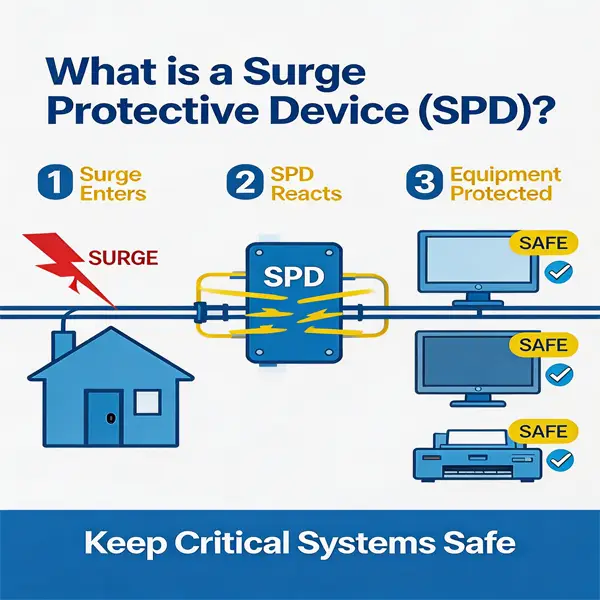
A Surge Protective Device (SPD) is a modular electrical protective component connected in parallel within distribution circuits. Its core mission: limit dangerous transient over‑voltage and divert surge current safely to earth ground, before high‑energy spikes reach sensitive downstream loads.
An SPD does not block normal operating voltage. Under stable grid conditions, it stays in high‑impedance standby mode and has zero influence on regular power supply. The instant voltage jumps past its pre‑set threshold, it switches in nanoseconds to low‑impedance status, shunting surge energy to ground, then automatically returns to normal working state once surges disappear.
Think of an SPD like a pressure‑release safety valve for your electrical installation.
Common Sources of Surges that SPDs Fight
- Lightning activity: Direct or nearby indirect lightning strikes (the most high‑energy threat)
- Grid switching surges: Utility network switching, large motor startup/shutdown inside buildings
- PV system transients: Voltage spikes on DC sides of solar combiner boxes and inverters
- Equipment failure‑related voltage fluctuations
How Does an SPD Work?
Most DIN‑rail mounted SPD units rely on Metal‑Oxide Varistor (MOV) nonlinear components as core elements.
- Normal state: Line voltage stays within safe rated range. MOV maintains very high resistance; almost no current flows through the SPD module.
- Surge event: Transient over‑voltage exceeds SPD’s voltage protection level (Up). MOV resistance drops sharply within nanoseconds.
- Energy diversion: The SPD opens a low‑resistance path to protective earth, sending surge current away from your appliances, PLCs, inverters or control gear.
- Recovery: After surge passes, resistance bounces back to high‑impedance mode, and the circuit resumes regular operation.
Important note: SPDs divert surge energy to ground; good earthing installation is mandatory for SPD to perform correctly. Poor grounding will heavily reduce surge‑suppression performance.
Key SPD Technical Parameters: In, Imax, Iimp, Up, Uc
Reading SPD datasheets can be confusing. These five core IEC‑standard parameters determine SPD performance and suitability for your project.
- In (Nominal Discharge Current, 8/20 μs) The peak surge current an SPD can withstand 15 times repeatedly under 8/20 μs waveform test. In reflects repeated surge‑handling capability, mainly for Type 2 SPD. Higher In means better durability against frequent minor switching surges.
- Imax (Maximum Discharge Current, 8/20 μs) The one‑time maximum surge current the SPD can survive without destruction under 8/20 μs impulse. Imax > In. It represents an absolute survival limit, not repeatable working current. After an Imax‑level surge, module inspection or replacement is required.
- Iimp (Impulse Current, 10/350 μs) Exclusive for Type 1 / Type 1+2 SPD, tested with 10/350 μs lightning impulse waveform. Iimp defines the SPD’s capacity to discharge partial direct‑lightning current. Critical for buildings with lightning‑protection systems (LPS).
- Up (Voltage Protection Level) Residual voltage measured across SPD terminals during surge events. This is the actual voltage that reaches your downstream equipment. Lower Up equals better protection. For most sensitive electronics, select SPD with Up ≤1.5 kVLSP.
- Uc (Maximum Continuous Operating Voltage) Maximum RMS voltage that can be applied continuously to SPD without triggering conduction or premature ageing. For AC 230 V systems, typical Uc =275 V. For PV DC SPD, Ucpv must be higher than maximum open‑circuit voltage of solar strings. Never select SPD with Uc lower than system operating voltage, otherwise overheating and failure will occur.
Quick selection reminder: Match Uc to system voltage first, choose proper In / Imax / Iimp according to lightning risk, and prioritize low Up for sensitive loads.
Main SPD Types: Type 1, Type 2, Type 3 & PV DC SPD
According to IEC 61643‑11, low‑voltage SPDs are classified by test standards and installation position for multi‑layer coordinated surge protection.
Type 1 SPD (Class I test, 10/350μs impulse current, marked by Iimp)
- Installation: Main incoming distribution board, building service entrance, locations exposed to high lightning risk
- Function: Discharge partial lightning current from direct or close lightning hits, first‑line heavy‑duty defence
- Best for: Buildings equipped with external lightning‑rod systems, industrial sites, solar power plants
Type 2 SPD (Class II test, 8/20μs nominal discharge current In, Imax rating)
- Installation: Main panel or sub‑distribution cabinets, the most widely‑used general‑purpose SPD
- Function: Absorb residual lightning energy and switching‑caused surges; standard protection for homes, workshops, commercial premises
- Best for: Most residential & commercial AC distribution systems; paired with Type 1 for multi‑stage protection
Type 3 SPD (Class III test)
- Installation: Close to terminal sensitive devices (socket outlets, control cabinets)
- Function: Fine‑level final protection for precision electronics
- Best for: PLC, computers, monitoring equipment, smart‑home hardware; always used together with Type 1 or Type 2 upstream SPDs, cannot work alone
PV DC SPD (IEC 61643‑31, up to 1500VDC, rated by Ucpv)
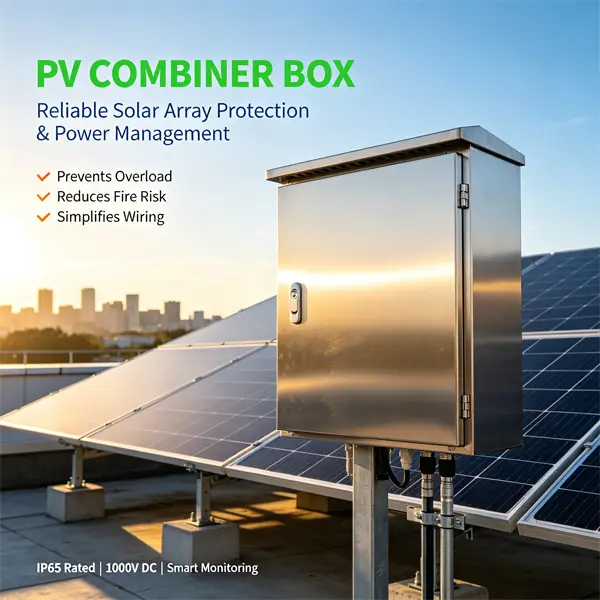
Specially engineered for solar photovoltaic DC circuits, installed inside PV combiner boxes or beside solar inverters. DC SPDs guard solar arrays against lightning‑induced surges on PV strings, protecting expensive inverters from burnout — a critical component for off‑grid and grid‑tie solar power stations.
Key Benefits of Installing Surge Protective Devices
- Prevent costly damage to inverters, home appliances, automation and industrial control equipment
- Reduce unplanned downtime for commercial facilities and solar power projects
- Lower fire risks triggered by transient over‑voltage inside wiring
- Extend service life of expensive electrical and electronic assets
- Help installations satisfy local electrical code and IEC safety requirements
Typical SPD Application Scenarios
✅ Residential housing: Whole‑house surge protection in main consumer unit
✅ Commercial offices, shopping malls, hotels: Building distribution system protection
✅ Industrial factories: Protect PLC, VFD, motor‑control cabinets
✅ Solar PV systems: PV combiner box & inverter DC/AC surge protection
✅ Data‑rooms & communication cabinets: Shield servers and signal circuits
✅ EV charging stations, backup energy‑storage installations
Frequently Asked Questions (FAQ)
Q1: What is the difference between SPD and ordinary plug‑in surge protector?
A: System‑level SPDs are DIN‑rail mount devices fitted inside distribution panels, designed for high‑magnitude surge currents following IEC standards. Consumer‑grade surge power strips offer limited local protection for single devices and cannot replace building‑wide SPD installation.
Q2: Can one single SPD cover all surge‑protection needs?
A: Rarely. For high‑risk sites, coordinated multi‑level protection combining Type 1 + Type 2 + Type 3 delivers optimal safety. Pay close attention to In, Imax, Iimp, Up and Uc parameters before purchase.
Q3: Do SPDs require maintenance?
A: Many modular SPDs come with visual failure status indicators. Replace SPD modules once the indicator shows end‑of‑life status, as internal components degrade after absorbing repeated surge events.
Q4: Must I install DC SPD for my solar system?
A: For outdoor PV arrays, lightning‑prone regions, or large‑scale solar projects, DC SPD inside PV combiner boxes is strongly recommended. Confirm Ucpv higher than PV array maximum open‑circuit voltage.
Conclusion
A Surge Protective Device (SPD) is indispensable safety hardware for modern low‑voltage electrical and solar PV installations. It defends valuable hardware against unpredictable lightning and switching‑caused voltage transients.
Understanding core parameters In, Imax, Iimp, Up, Uc, selecting correct SPD Type 1 / Type 2 / Type 3 or PV DC SPD, matching proper rated parameters, and guaranteeing reliable earthing are three key points to maximise surge‑protection performance. If you are designing residential, industrial or solar‑power projects, always factor SPD protection into your electrical planning.
Share This Article
Follow Us
Power surges and transient over‑voltages are silent hazards for residential, commercial, industrial and solar PV electrical systems. Even indirect lightning strikes or grid switching can send destructive voltage spikes through wiring, burning circuit boards, destroying inverters, ruining expensive equipment and creating hidden fire risks.
At the core of modern surge defence sits the Surge Protective Device (SPD), also called surge arrester or transient voltage surge suppressor (TVSS). Many people confuse SPDs with consumer plug‑in surge strips, yet system‑level SPDs deliver far higher‑capacity protection compliant with global IEC 61643 standards. This article explains exactly what an SPD is, how it functions, critical technical parameters, main SPD categories, real‑world applications and key selection advice for your project.
What Is a Surge Protective Device (SPD)?
A Surge Protective Device (SPD) is a modular electrical protective component connected in parallel within distribution circuits. Its core mission: limit dangerous transient over‑voltage and divert surge current safely to earth ground, before high‑energy spikes reach sensitive downstream loads.
An SPD does not block normal operating voltage. Under stable grid conditions, it stays in high‑impedance standby mode and has zero influence on regular power supply. The instant voltage jumps past its pre‑set threshold, it switches in nanoseconds to low‑impedance status, shunting surge energy to ground, then automatically returns to normal working state once surges disappear.
Think of an SPD like a pressure‑release safety valve for your electrical installation.
Common Sources of Surges that SPDs Fight
- Lightning activity: Direct or nearby indirect lightning strikes (the most high‑energy threat)
- Grid switching surges: Utility network switching, large motor startup/shutdown inside buildings
- PV system transients: Voltage spikes on DC sides of solar combiner boxes and inverters
- Equipment failure‑related voltage fluctuations
How Does an SPD Work?
Most DIN‑rail mounted SPD units rely on Metal‑Oxide Varistor (MOV) nonlinear components as core elements.
- Normal state: Line voltage stays within safe rated range. MOV maintains very high resistance; almost no current flows through the SPD module.
- Surge event: Transient over‑voltage exceeds SPD’s voltage protection level (Up). MOV resistance drops sharply within nanoseconds.
- Energy diversion: The SPD opens a low‑resistance path to protective earth, sending surge current away from your appliances, PLCs, inverters or control gear.
- Recovery: After surge passes, resistance bounces back to high‑impedance mode, and the circuit resumes regular operation.
Important note: SPDs divert surge energy to ground; good earthing installation is mandatory for SPD to perform correctly. Poor grounding will heavily reduce surge‑suppression performance.
Key SPD Technical Parameters: In, Imax, Iimp, Up, Uc
Reading SPD datasheets can be confusing. These five core IEC‑standard parameters determine SPD performance and suitability for your project.
- In (Nominal Discharge Current, 8/20 μs) The peak surge current an SPD can withstand 15 times repeatedly under 8/20 μs waveform test. In reflects repeated surge‑handling capability, mainly for Type 2 SPD. Higher In means better durability against frequent minor switching surges.
- Imax (Maximum Discharge Current, 8/20 μs) The one‑time maximum surge current the SPD can survive without destruction under 8/20 μs impulse. Imax > In. It represents an absolute survival limit, not repeatable working current. After an Imax‑level surge, module inspection or replacement is required.
- Iimp (Impulse Current, 10/350 μs) Exclusive for Type 1 / Type 1+2 SPD, tested with 10/350 μs lightning impulse waveform. Iimp defines the SPD’s capacity to discharge partial direct‑lightning current. Critical for buildings with lightning‑protection systems (LPS).
- Up (Voltage Protection Level) Residual voltage measured across SPD terminals during surge events. This is the actual voltage that reaches your downstream equipment. Lower Up equals better protection. For most sensitive electronics, select SPD with Up ≤1.5 kVLSP.
- Uc (Maximum Continuous Operating Voltage) Maximum RMS voltage that can be applied continuously to SPD without triggering conduction or premature ageing. For AC 230 V systems, typical Uc =275 V. For PV DC SPD, Ucpv must be higher than maximum open‑circuit voltage of solar strings. Never select SPD with Uc lower than system operating voltage, otherwise overheating and failure will occur.
Quick selection reminder: Match Uc to system voltage first, choose proper In / Imax / Iimp according to lightning risk, and prioritize low Up for sensitive loads.
Main SPD Types: Type 1, Type 2, Type 3 & PV DC SPD
According to IEC 61643‑11, low‑voltage SPDs are classified by test standards and installation position for multi‑layer coordinated surge protection.
Type 1 SPD (Class I test, 10/350μs impulse current, marked by Iimp)
- Installation: Main incoming distribution board, building service entrance, locations exposed to high lightning risk
- Function: Discharge partial lightning current from direct or close lightning hits, first‑line heavy‑duty defence
- Best for: Buildings equipped with external lightning‑rod systems, industrial sites, solar power plants
Type 2 SPD (Class II test, 8/20μs nominal discharge current In, Imax rating)
- Installation: Main panel or sub‑distribution cabinets, the most widely‑used general‑purpose SPD
- Function: Absorb residual lightning energy and switching‑caused surges; standard protection for homes, workshops, commercial premises
- Best for: Most residential & commercial AC distribution systems; paired with Type 1 for multi‑stage protection
Type 3 SPD (Class III test)
- Installation: Close to terminal sensitive devices (socket outlets, control cabinets)
- Function: Fine‑level final protection for precision electronics
- Best for: PLC, computers, monitoring equipment, smart‑home hardware; always used together with Type 1 or Type 2 upstream SPDs, cannot work alone
PV DC SPD (IEC 61643‑31, up to 1500VDC, rated by Ucpv)
Specially engineered for solar photovoltaic DC circuits, installed inside PV combiner boxes or beside solar inverters. DC SPDs guard solar arrays against lightning‑induced surges on PV strings, protecting expensive inverters from burnout — a critical component for off‑grid and grid‑tie solar power stations.
Key Benefits of Installing Surge Protective Devices
- Prevent costly damage to inverters, home appliances, automation and industrial control equipment
- Reduce unplanned downtime for commercial facilities and solar power projects
- Lower fire risks triggered by transient over‑voltage inside wiring
- Extend service life of expensive electrical and electronic assets
- Help installations satisfy local electrical code and IEC safety requirements
Typical SPD Application Scenarios
✅ Residential housing: Whole‑house surge protection in main consumer unit
✅ Commercial offices, shopping malls, hotels: Building distribution system protection
✅ Industrial factories: Protect PLC, VFD, motor‑control cabinets
✅ Solar PV systems: PV combiner box & inverter DC/AC surge protection
✅ Data‑rooms & communication cabinets: Shield servers and signal circuits
✅ EV charging stations, backup energy‑storage installations
Frequently Asked Questions (FAQ)
Q1: What is the difference between SPD and ordinary plug‑in surge protector?
A: System‑level SPDs are DIN‑rail mount devices fitted inside distribution panels, designed for high‑magnitude surge currents following IEC standards. Consumer‑grade surge power strips offer limited local protection for single devices and cannot replace building‑wide SPD installation.
Q2: Can one single SPD cover all surge‑protection needs?
A: Rarely. For high‑risk sites, coordinated multi‑level protection combining Type 1 + Type 2 + Type 3 delivers optimal safety. Pay close attention to In, Imax, Iimp, Up and Uc parameters before purchase.
Q3: Do SPDs require maintenance?
A: Many modular SPDs come with visual failure status indicators. Replace SPD modules once the indicator shows end‑of‑life status, as internal components degrade after absorbing repeated surge events.
Q4: Must I install DC SPD for my solar system?
A: For outdoor PV arrays, lightning‑prone regions, or large‑scale solar projects, DC SPD inside PV combiner boxes is strongly recommended. Confirm Ucpv higher than PV array maximum open‑circuit voltage.
Conclusion
A Surge Protective Device (SPD) is indispensable safety hardware for modern low‑voltage electrical and solar PV installations. It defends valuable hardware against unpredictable lightning and switching‑caused voltage transients.
Understanding core parameters In, Imax, Iimp, Up, Uc, selecting correct SPD Type 1 / Type 2 / Type 3 or PV DC SPD, matching proper rated parameters, and guaranteeing reliable earthing are three key points to maximise surge‑protection performance. If you are designing residential, industrial or solar‑power projects, always factor SPD protection into your electrical planning.
Contact Us
Related Blog

Contact Us
Have questions about our products or services? Our team is here to help you with any inquiries.