

Complete Professional Knowledge of Low-Voltage Switchgear
Complete Professional Knowledge of Low-Voltage Switchgear
Low-voltage switchgear refers to assembled power distribution equipment with a rated voltage of ≤1000V AC and ≤1500V DC. It is composed of circuit breakers, contactors, current transformers, busbars, meters, protection components and cabinet frames, and is used for power distribution, electrical control, equipment protection and energy metering.
Core National & International Standards
- According to unified IEC international specifications, low voltage electrical equipment is defined as:
- AC System: ≤ 1000V
- DC System: ≤ 1500V
All our switchgear products strictly follow IEC 61439-1/2 (low-voltage switchgear and control assemblies) and pass CE certification, fully adapting to European, Southeast Asian, Middle Eastern, African, and global engineering standards.
Application Scenarios
- Main power distribution and workshop power distribution for industrial plants
- Power rooms of commercial complexes, office buildings and residential communities
- DC/AC distribution cabinets for photovoltaic, energy storage and charging pile projects
- Dual-power distribution systems for hospitals, data centers and fire-fighting facilities
- Municipal engineering and temporary power distribution for construction sites
2. Classification of Mainstream Cabinet Types
2.1 GGD Fixed Low-Voltage Switchgear (Main Inlet/Outlet Cabinet)
- Structure: Welded fixed cabinet, wall-mounted installation, operable and maintainable on double sides
- Rated current: 630A~4000A
- Application: Low-voltage main inlet cabinet, power compensation cabinet, tie cabinet and large-current outlet cabinet for substations
- Protection grade: IP30, IP40 (indoor power room)
2.2 GCK Drawable Switchgear (High-End Industrial & Automatic Workshop)
- Structure: Main switches and feeder circuits adopt drawable truck design; faulty circuits can be replaced independently without full cabinet power outage
- Advantages: Safe maintenance, minimal power outage range, convenient capacity expansion
- Application: Large factories, data centers and places requiring uninterrupted power supply
2.3 MNS Drawable Switchgear (Modular Imported Structure)
- Modular assembly with standard modular units, excellent scalability and global universality
- Compatible with fixed units and drawable units, applicable for mixed installation of inlet, compensation and motor control circuits
2.4 XL-21 Power Distribution Box (Small Floor-Standing/Wall-Mounted Cabinet)
- Small-capacity complete equipment with rated current ≤630A, independently applied for single equipment power distribution on construction sites and workshops
- Cost-effective and flexible installation, IP44 waterproof grade available for outdoor use
2.5 PZ30 Lighting Distribution Box (Terminal Household Box)
Civil terminal distribution device, not classified as switchgear, only used for terminal lighting power distribution.
2.6 Special Complete Cabinets
- Power compensation cabinet: Equipped with capacitor switching devices to improve power factor and reduce power consumption costs
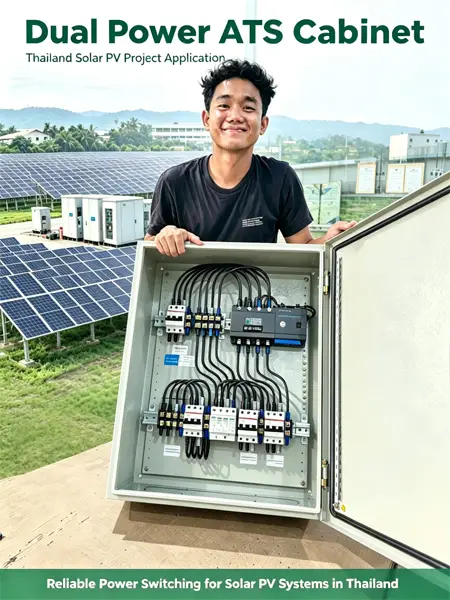
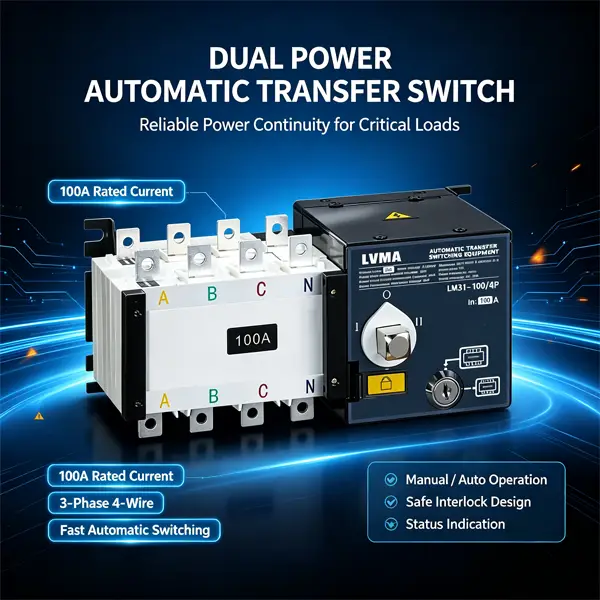
- ATS automatic transfer switch cabinet: Realizes automatic switching between dual mains power or mains power + generator, essential for fire-fighting and critical loads
- Photovoltaic DC combiner cabinet / Energy storage supporting cabinet: Professional DC complete equipment, applicable for DC500V/1000V/1500V systems
- Fire-fighting dedicated distribution cabinet: Fire-resistant cabinet body to ensure power supply for emergency lighting and fans during fire accidents
3. Core Internal Components of Complete Switchgear
3.1 Primary Main Circuit (High-Current Power Bearing System)
- Main Busbar: TMY tinned copper busbar, including horizontal main busbar and vertical branch busbar, tinned surface for anti-oxidation, bearing total system current
- Inlet Protection Components: MCCB molded case circuit breaker, ACB air circuit breaker (for large-current inlet above 2000A)
- Feeder Outlet Components: MCCB, MCB miniature circuit breaker, AC contactor + thermal overload relay (for motor circuits)
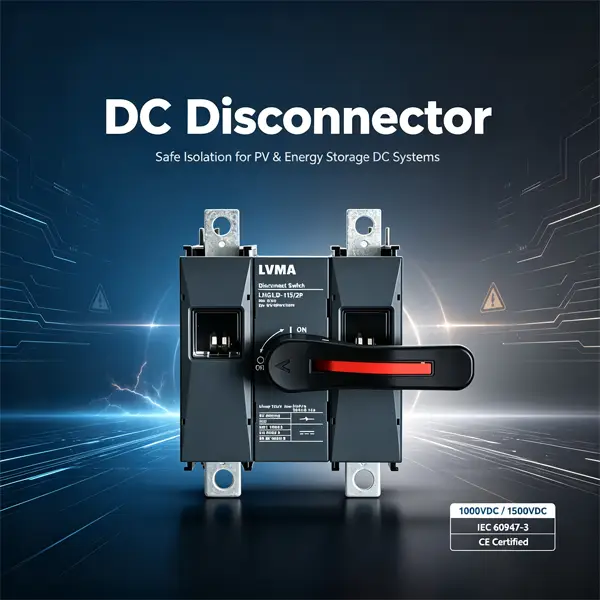
- Isolator: Cuts off power for maintenance and provides visible breaking points
- ATS Automatic Transfer Switch: Completes switching of dual power sources
- CT Current Transformer: Converts high current into 5A signal current for metering and protection
- Capacitors & Reactors: Special components for power compensation cabinets
- PE Grounding Busbar: Unifies grounding of all equipment shells in the cabinet to prevent electric shock accidents
3.2 Secondary Control Circuit (Low-Voltage Control, Measurement & Protection System)
- Multifunctional power meter: Measures voltage, current, power, power factor and electric energy
- Indicator lights, transfer switches and control buttons: For manual operation and running/fault status indication
- Intermediate relays and time relays: Realize logical control functions
- Microcomputer comprehensive protector: Provides over-current, overload, short-circuit, under-voltage and zero-sequence leakage protection
- SPD Surge Protective Device: Resists lightning surge and protects terminal equipment
- Secondary terminal block: Centralized wiring for convenient maintenance and line replacement
3.3 Cabinet Structural Components
- Frame: Made of bent and welded cold-rolled steel plates, bearing busbars and electrical components
- Partition plates: Divide independent busbar room, switch room and cable room to prevent arc flash spread/li>
- Cabinet door, door lock and observation window
- Ventilation and heat dissipation shutters, dust-proof filter screens
- Cable inlet and outlet holes, rubber wire protectors
4. Functional Classification of Switchgears (Standard Power Room Configuration)
A complete low-voltage power distribution room is generally composed of multiple switchgears arranged side by side:
- Inlet Cabinet: Connects to the low-voltage side of the transformer, equipped with ACB air circuit breaker for total system protection and metering
- Metering Cabinet: Independently installed with metering transformers and power bureau electric meters with independent sealing
- Tie Cabinet: Connects two sections of busbars for segmented power supply of dual busbar systems
- Power Compensation Cabinet: Automatic reactive power compensation, stably adjusting power factor above 0.95
- Outlet Cabinet: Multiple feeder circuits for power supply to workshops, buildings, water pumps, fans and other loads
- Dual-Power Transfer Cabinet: Dedicated for critical loads such as fire-fighting systems and computer rooms
5. Key Professional Parameters
- Rated Insulation Voltage (Ui): Normally 690V
- Rated Operating Voltage (Ue): 380V/400V three-phase AC, 230V single-phase AC
- Rated Operating Current (In): Single circuit rated current; main busbar rated current
- Rated Short-Time Withstand Current (Icw): Unit in kA (15kA, 30kA, 50kA), representing the short-circuit impact resistance of cabinet busbars and components; higher value means stronger short-circuit resistance
- IP Protection Grade
- IP30: Indoor power room, foreign solid object prevention, no waterproof capability
- IP44: Outdoor and construction site cabinets, splash water resistance
- IP54: Outdoor complete equipment for dusty workshops
- Breaking Capacity: The maximum short-circuit current that a circuit breaker can cut off; the complete set design must match the short-time withstand current of the busbar
6. Core Design Key Points of Complete Switchgear
- Dynamic and Thermal Stability Verification: Short-circuit faults generate high temperature and electric power. The busbar thickness, insulator support and circuit breaker breaking capacity must match the Icw value to avoid busbar deformation and cabinet burnout caused by short-circuit impact.
- Temperature Rise Control: High-current busbars and circuit breakers generate heat during operation. The cabinet must be reserved with ventilation channels, and the busbar cross-section shall be selected according to current carrying capacity to prevent insulation aging caused by long-term high temperature.
- Partition Isolation Design: The busbar room, switch room and cable room are isolated from each other to prevent arc fault diffusion and improve overall operation safety.
- Grounding System Specification: The whole cabinet is equipped with through-type PE busbar; all door panels and equipment shells are reliably connected with yellow-green grounding wires. Neutral N busbar and PE busbar are strictly separated and mixed connection is prohibited.
- Secondary Wiring Standard: Adopt 1.5/2.5mm² copper core wires for control circuits with clear wire numbers and fastened terminals; separate wiring for strong current and weak current signals.
7. Production Process of Complete Switchgear
- Sheet metal processing: Steel plate cutting, bending, welding and electrostatic spraying
- Busbar processing: Copper bar cutting, punching and tin plating
- Primary assembly: Installation of busbars, circuit breakers and transformers
- Secondary wiring: Wiring for instruments, protection devices and control circuits
- Testing: Insulation withstand voltage test, circuit continuity test and protection parameter debugging
- Factory inspection: Sampling type test in accordance with IEC60439 standards and qualification certificate issuance
8. Industry Development Trends
- Intelligent Complete Equipment: Equipped with smart meters and IoT gateways to remotely upload current, fault and energy consumption data for cloud monitoring
- New Energy DC Complete Equipment: Special low-voltage DC switchgear for photovoltaic and energy storage systems, compatible with DC1000V/1500V systems
- Integrated Miniaturized Cabinet: Integrates ATS, power compensation and protection functions to save power room space
- Green & Lightweight Design: Adopts high-strength aluminum cabinet and high-conductivity copper busbars to reduce energy loss
- Export Standardization: Compliant with CE and IEC international standards, adapting to overseas 415V three-phase power systems
9. Common Faults & Basic Maintenance
9.1 Common Faults
- Overheating fault: Loose busbar bolts, insufficient busbar cross-section or long-term overload operation
- Frequent tripping: Load short circuit, grounding leakage or improperly set protection current value
- No meter display: Loose secondary wiring or broken transformer circuit
- Failure of compensation cabinet switching: Faulty power factor controller or damaged capacitors
9.2 Daily Maintenance Guidelines
- Regularly fasten busbar bolts and clean dust inside the cabinet
- Check ventilation and heat dissipation conditions to avoid shutter blockage
- Calibrate protection device operating values and replace aging capacitors regularly
- Strengthen moisture-proof inspection in rainy seasons to prevent condensation short circuit
Share This Article
Follow Us
Low-voltage switchgear refers to assembled power distribution equipment with a rated voltage of ≤1000V AC and ≤1500V DC. It is composed of circuit breakers, contactors, current transformers, busbars, meters, protection components and cabinet frames, and is used for power distribution, electrical control, equipment protection and energy metering.
Core National & International Standards
- According to unified IEC international specifications, low voltage electrical equipment is defined as:
- AC System: ≤ 1000V
- DC System: ≤ 1500V
All our switchgear products strictly follow IEC 61439-1/2 (low-voltage switchgear and control assemblies) and pass CE certification, fully adapting to European, Southeast Asian, Middle Eastern, African, and global engineering standards.
Application Scenarios
- Main power distribution and workshop power distribution for industrial plants
- Power rooms of commercial complexes, office buildings and residential communities
- DC/AC distribution cabinets for photovoltaic, energy storage and charging pile projects
- Dual-power distribution systems for hospitals, data centers and fire-fighting facilities
- Municipal engineering and temporary power distribution for construction sites
2. Classification of Mainstream Cabinet Types
2.1 GGD Fixed Low-Voltage Switchgear (Main Inlet/Outlet Cabinet)
- Structure: Welded fixed cabinet, wall-mounted installation, operable and maintainable on double sides
- Rated current: 630A~4000A
- Application: Low-voltage main inlet cabinet, power compensation cabinet, tie cabinet and large-current outlet cabinet for substations
- Protection grade: IP30, IP40 (indoor power room)
2.2 GCK Drawable Switchgear (High-End Industrial & Automatic Workshop)
- Structure: Main switches and feeder circuits adopt drawable truck design; faulty circuits can be replaced independently without full cabinet power outage
- Advantages: Safe maintenance, minimal power outage range, convenient capacity expansion
- Application: Large factories, data centers and places requiring uninterrupted power supply
2.3 MNS Drawable Switchgear (Modular Imported Structure)
- Modular assembly with standard modular units, excellent scalability and global universality
- Compatible with fixed units and drawable units, applicable for mixed installation of inlet, compensation and motor control circuits
2.4 XL-21 Power Distribution Box (Small Floor-Standing/Wall-Mounted Cabinet)
- Small-capacity complete equipment with rated current ≤630A, independently applied for single equipment power distribution on construction sites and workshops
- Cost-effective and flexible installation, IP44 waterproof grade available for outdoor use
2.5 PZ30 Lighting Distribution Box (Terminal Household Box)
Civil terminal distribution device, not classified as switchgear, only used for terminal lighting power distribution.
2.6 Special Complete Cabinets
- Power compensation cabinet: Equipped with capacitor switching devices to improve power factor and reduce power consumption costs
- ATS automatic transfer switch cabinet: Realizes automatic switching between dual mains power or mains power + generator, essential for fire-fighting and critical loads
- Photovoltaic DC combiner cabinet / Energy storage supporting cabinet: Professional DC complete equipment, applicable for DC500V/1000V/1500V systems
- Fire-fighting dedicated distribution cabinet: Fire-resistant cabinet body to ensure power supply for emergency lighting and fans during fire accidents
3. Core Internal Components of Complete Switchgear
3.1 Primary Main Circuit (High-Current Power Bearing System)
- Main Busbar: TMY tinned copper busbar, including horizontal main busbar and vertical branch busbar, tinned surface for anti-oxidation, bearing total system current
- Inlet Protection Components: MCCB molded case circuit breaker, ACB air circuit breaker (for large-current inlet above 2000A)
- Feeder Outlet Components: MCCB, MCB miniature circuit breaker, AC contactor + thermal overload relay (for motor circuits)
- Isolator: Cuts off power for maintenance and provides visible breaking points
- ATS Automatic Transfer Switch: Completes switching of dual power sources
- CT Current Transformer: Converts high current into 5A signal current for metering and protection
- Capacitors & Reactors: Special components for power compensation cabinets
- PE Grounding Busbar: Unifies grounding of all equipment shells in the cabinet to prevent electric shock accidents
3.2 Secondary Control Circuit (Low-Voltage Control, Measurement & Protection System)
- Multifunctional power meter: Measures voltage, current, power, power factor and electric energy
- Indicator lights, transfer switches and control buttons: For manual operation and running/fault status indication
- Intermediate relays and time relays: Realize logical control functions
- Microcomputer comprehensive protector: Provides over-current, overload, short-circuit, under-voltage and zero-sequence leakage protection
- SPD Surge Protective Device: Resists lightning surge and protects terminal equipment
- Secondary terminal block: Centralized wiring for convenient maintenance and line replacement
3.3 Cabinet Structural Components
- Frame: Made of bent and welded cold-rolled steel plates, bearing busbars and electrical components
- Partition plates: Divide independent busbar room, switch room and cable room to prevent arc flash spread/li>
- Cabinet door, door lock and observation window
- Ventilation and heat dissipation shutters, dust-proof filter screens
- Cable inlet and outlet holes, rubber wire protectors
4. Functional Classification of Switchgears (Standard Power Room Configuration)
A complete low-voltage power distribution room is generally composed of multiple switchgears arranged side by side:
- Inlet Cabinet: Connects to the low-voltage side of the transformer, equipped with ACB air circuit breaker for total system protection and metering
- Metering Cabinet: Independently installed with metering transformers and power bureau electric meters with independent sealing
- Tie Cabinet: Connects two sections of busbars for segmented power supply of dual busbar systems
- Power Compensation Cabinet: Automatic reactive power compensation, stably adjusting power factor above 0.95
- Outlet Cabinet: Multiple feeder circuits for power supply to workshops, buildings, water pumps, fans and other loads
- Dual-Power Transfer Cabinet: Dedicated for critical loads such as fire-fighting systems and computer rooms
5. Key Professional Parameters
- Rated Insulation Voltage (Ui): Normally 690V
- Rated Operating Voltage (Ue): 380V/400V three-phase AC, 230V single-phase AC
- Rated Operating Current (In): Single circuit rated current; main busbar rated current
- Rated Short-Time Withstand Current (Icw): Unit in kA (15kA, 30kA, 50kA), representing the short-circuit impact resistance of cabinet busbars and components; higher value means stronger short-circuit resistance
- IP Protection Grade
- IP30: Indoor power room, foreign solid object prevention, no waterproof capability
- IP44: Outdoor and construction site cabinets, splash water resistance
- IP54: Outdoor complete equipment for dusty workshops
- Breaking Capacity: The maximum short-circuit current that a circuit breaker can cut off; the complete set design must match the short-time withstand current of the busbar
6. Core Design Key Points of Complete Switchgear
- Dynamic and Thermal Stability Verification: Short-circuit faults generate high temperature and electric power. The busbar thickness, insulator support and circuit breaker breaking capacity must match the Icw value to avoid busbar deformation and cabinet burnout caused by short-circuit impact.
- Temperature Rise Control: High-current busbars and circuit breakers generate heat during operation. The cabinet must be reserved with ventilation channels, and the busbar cross-section shall be selected according to current carrying capacity to prevent insulation aging caused by long-term high temperature.
- Partition Isolation Design: The busbar room, switch room and cable room are isolated from each other to prevent arc fault diffusion and improve overall operation safety.
- Grounding System Specification: The whole cabinet is equipped with through-type PE busbar; all door panels and equipment shells are reliably connected with yellow-green grounding wires. Neutral N busbar and PE busbar are strictly separated and mixed connection is prohibited.
- Secondary Wiring Standard: Adopt 1.5/2.5mm² copper core wires for control circuits with clear wire numbers and fastened terminals; separate wiring for strong current and weak current signals.
7. Production Process of Complete Switchgear
- Sheet metal processing: Steel plate cutting, bending, welding and electrostatic spraying
- Busbar processing: Copper bar cutting, punching and tin plating
- Primary assembly: Installation of busbars, circuit breakers and transformers
- Secondary wiring: Wiring for instruments, protection devices and control circuits
- Testing: Insulation withstand voltage test, circuit continuity test and protection parameter debugging
- Factory inspection: Sampling type test in accordance with IEC60439 standards and qualification certificate issuance
8. Industry Development Trends
- Intelligent Complete Equipment: Equipped with smart meters and IoT gateways to remotely upload current, fault and energy consumption data for cloud monitoring
- New Energy DC Complete Equipment: Special low-voltage DC switchgear for photovoltaic and energy storage systems, compatible with DC1000V/1500V systems
- Integrated Miniaturized Cabinet: Integrates ATS, power compensation and protection functions to save power room space
- Green & Lightweight Design: Adopts high-strength aluminum cabinet and high-conductivity copper busbars to reduce energy loss
- Export Standardization: Compliant with CE and IEC international standards, adapting to overseas 415V three-phase power systems
9. Common Faults & Basic Maintenance
9.1 Common Faults
- Overheating fault: Loose busbar bolts, insufficient busbar cross-section or long-term overload operation
- Frequent tripping: Load short circuit, grounding leakage or improperly set protection current value
- No meter display: Loose secondary wiring or broken transformer circuit
- Failure of compensation cabinet switching: Faulty power factor controller or damaged capacitors
9.2 Daily Maintenance Guidelines
- Regularly fasten busbar bolts and clean dust inside the cabinet
- Check ventilation and heat dissipation conditions to avoid shutter blockage
- Calibrate protection device operating values and replace aging capacitors regularly
- Strengthen moisture-proof inspection in rainy seasons to prevent condensation short circuit
Contact Us
Related Blog



Contact Us
Have questions about our products or services? Our team is here to help you with any inquiries.