

DC MCCB: Intelligent DC Circuit Protection for Solar PV & Energy Storage
DC MCCB: Intelligent DC Circuit Protection for Solar PV & Energy Storage
I. Preface
Solar photovoltaic and battery energy storage markets grow fast worldwide, making DC power distribution mainstream for new energy projects. High-voltage DC loops from PV panels and battery clusters easily generate sustained electric arcs and destructive short-circuit faults, which threaten the safe operation of new energy power stations.
Using ordinary AC MCCB for DC circuit protection is a common industry mistake, which fails DC arc extinction and project safety standards. As a professional DC protective component, DC MCCB provides reliable circuit protection for all solar and energy storage DC systems.
II. Core Benefits of DC MCCB for New Energy DC Distribution
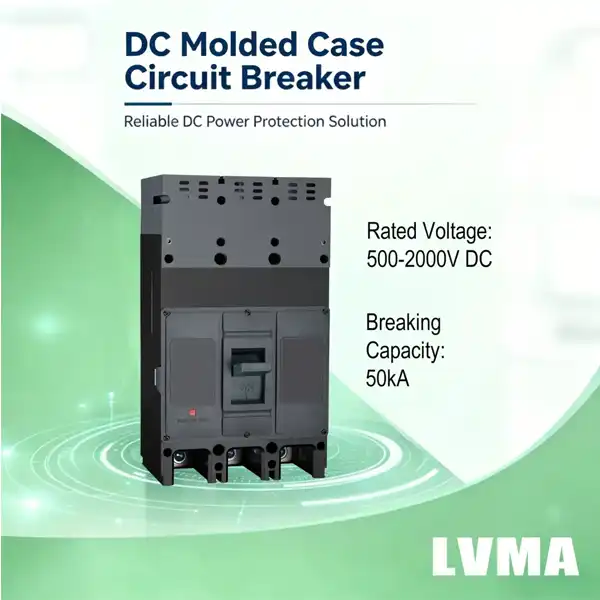
A DC molded case circuit breaker is customized for unidirectional DC current and persistent DC arcs. Designed for new energy field application, DC MCCB fits residential solar, commercial PV and container energy storage scenarios for unified circuit protection.
Compared with standard AC circuit breakers, it features dedicated DC tripping, strong anti-current impact performance and universal modular structure. It simplifies on-site installation, project acceptance and lowers overall operation costs for PV and energy storage plants.
III. 5 Key Advantages of Professional DC Circuit Breaker
1. High-efficiency DC Arc Extinguishing
Built-in multi-grid arc extinguishing chamber cuts off sustained DC arcs quickly. It prevents circuit fire and insulation damage, complies with IEC 60947-2 global low-voltage breaker standards, and adapts frequent switch operation of PV DC loops.
2. Wide Voltage & Current Compatibility
Available in 500V-1500V DC voltage and 63A-2500A current specifications. It covers distributed residential solar, commercial PV stations and battery energy storage clusters, reducing repeated component selection for engineers.
3. Accurate Overload & Short Circuit Protection
Dual electromagnetic and thermal tripping system realizes millisecond fault breaking. It protects solar inverters, lithium batteries and combiner boxes from current surge caused by solar irradiance change and frequent charge-discharge cycles.
4. Weatherproof Housing for Outdoor Use
Flame-retardant molded shell features anti-corrosion, UV resistance and wide temperature adaptability. It works stably in desert PV farms, coastal energy storage bases and outdoor container energy storage cabins with low failure rate.
5. Standard Size for Easy Cabinet Installation
Universal mounting size matches mainstream DC distribution cabinets and PV combiner boxes. No cabinet modification is required, cutting labor cost and shortening construction period for new energy projects.
IV. Core Application Scenarios
This DC molded case circuit breaker fits mainstream new energy DC distribution scenarios, meeting global PV and energy storage construction standards:
- DC bus protection for residential distributed photovoltaic systems to secure self-consumption photovoltaic circuits;
- Circuit protection for arrays of industrial and commercial centralized photovoltaic power stations to manage multi-channel parallel DC circuits;
- Main circuit protection for electrochemical energy storage power stations and container energy storage to stabilize charging and discharging operation of battery clusters;
- Built-in protection for complete new energy DC power distribution and energy storage equipment to support factory assembly of finished devices.
V. Industry Selection Suggestions And Safety Advantages
Electrical engineers must avoid replacing dedicated DC breakers with AC MCCB. AC breakers rely on AC zero-crossing arc extinction, which cannot cut continuous DC arcs, leading to contact burnout and cabinet fire risks that fail official grid inspection.
Qualified DC breakers reduce circuit faults, battery loss and annual maintenance cost for PV and energy storage plants. For compliant, full-lifecycle DC power protection, DC MCCB remains the top choice for global new energy projects.
VI. FAQ
Q1: Can dedicated DC circuit breakers be omitted for small residential photovoltaic systems?
A: No. Residential PV DC voltage exceeds 600V, which may cause leakage and arc faults. National standards mandate dedicated DC protective breakers for PV DC buses.
Q2: AC and DC molded case circuit breakers share the same appearance, can they be used interchangeably?
A: Forbidden. AC and DC breakers have different internal structures and tripping parameters. AC breakers cannot cut off DC arcs and will cause electrical accidents.
Q3: Are extra protective accessories required for the device applied to outdoor energy storage cabins?
A: No extra parts needed for regular outdoor cabins. External protective boxes are recommended for coastal salt-fog and mining scenarios to extend service life.
Q4: Is the device compatible with renovation of new and old energy storage projects?
A: Yes. With standard mounting size, it can directly replace old AC breakers without cabinet modification, suitable for old and new energy storage project renovation.
VII. Conclusion
DC safety is critical for long-term solar and battery energy storage operation. Standardized DC protective breakers become essential for modern new energy power systems. With reliable arc suppression, wide scenario adaptability and easy installation, this DC breaker solves common DC circuit faults, supports residential and commercial clean energy projects, and promotes safe global new energy development.
Share This Article
Follow Us
I. Preface
Solar photovoltaic and battery energy storage markets grow fast worldwide, making DC power distribution mainstream for new energy projects. High-voltage DC loops from PV panels and battery clusters easily generate sustained electric arcs and destructive short-circuit faults, which threaten the safe operation of new energy power stations.
Using ordinary AC MCCB for DC circuit protection is a common industry mistake, which fails DC arc extinction and project safety standards. As a professional DC protective component, DC MCCB provides reliable circuit protection for all solar and energy storage DC systems.
II. Core Benefits of DC MCCB for New Energy DC Distribution
A DC molded case circuit breaker is customized for unidirectional DC current and persistent DC arcs. Designed for new energy field application, DC MCCB fits residential solar, commercial PV and container energy storage scenarios for unified circuit protection.
Compared with standard AC circuit breakers, it features dedicated DC tripping, strong anti-current impact performance and universal modular structure. It simplifies on-site installation, project acceptance and lowers overall operation costs for PV and energy storage plants.
III. 5 Key Advantages of Professional DC Circuit Breaker
1. High-efficiency DC Arc Extinguishing
Built-in multi-grid arc extinguishing chamber cuts off sustained DC arcs quickly. It prevents circuit fire and insulation damage, complies with IEC 60947-2 global low-voltage breaker standards, and adapts frequent switch operation of PV DC loops.
2. Wide Voltage & Current Compatibility
Available in 500V-1500V DC voltage and 63A-2500A current specifications. It covers distributed residential solar, commercial PV stations and battery energy storage clusters, reducing repeated component selection for engineers.
3. Accurate Overload & Short Circuit Protection
Dual electromagnetic and thermal tripping system realizes millisecond fault breaking. It protects solar inverters, lithium batteries and combiner boxes from current surge caused by solar irradiance change and frequent charge-discharge cycles.
4. Weatherproof Housing for Outdoor Use
Flame-retardant molded shell features anti-corrosion, UV resistance and wide temperature adaptability. It works stably in desert PV farms, coastal energy storage bases and outdoor container energy storage cabins with low failure rate.
5. Standard Size for Easy Cabinet Installation
Universal mounting size matches mainstream DC distribution cabinets and PV combiner boxes. No cabinet modification is required, cutting labor cost and shortening construction period for new energy projects.
IV. Core Application Scenarios
This DC molded case circuit breaker fits mainstream new energy DC distribution scenarios, meeting global PV and energy storage construction standards:
- DC bus protection for residential distributed photovoltaic systems to secure self-consumption photovoltaic circuits;
- Circuit protection for arrays of industrial and commercial centralized photovoltaic power stations to manage multi-channel parallel DC circuits;
- Main circuit protection for electrochemical energy storage power stations and container energy storage to stabilize charging and discharging operation of battery clusters;
- Built-in protection for complete new energy DC power distribution and energy storage equipment to support factory assembly of finished devices.
V. Industry Selection Suggestions And Safety Advantages
Electrical engineers must avoid replacing dedicated DC breakers with AC MCCB. AC breakers rely on AC zero-crossing arc extinction, which cannot cut continuous DC arcs, leading to contact burnout and cabinet fire risks that fail official grid inspection.
Qualified DC breakers reduce circuit faults, battery loss and annual maintenance cost for PV and energy storage plants. For compliant, full-lifecycle DC power protection, DC MCCB remains the top choice for global new energy projects.
VI. FAQ
Q1: Can dedicated DC circuit breakers be omitted for small residential photovoltaic systems?
A: No. Residential PV DC voltage exceeds 600V, which may cause leakage and arc faults. National standards mandate dedicated DC protective breakers for PV DC buses.
Q2: AC and DC molded case circuit breakers share the same appearance, can they be used interchangeably?
A: Forbidden. AC and DC breakers have different internal structures and tripping parameters. AC breakers cannot cut off DC arcs and will cause electrical accidents.
Q3: Are extra protective accessories required for the device applied to outdoor energy storage cabins?
A: No extra parts needed for regular outdoor cabins. External protective boxes are recommended for coastal salt-fog and mining scenarios to extend service life.
Q4: Is the device compatible with renovation of new and old energy storage projects?
A: Yes. With standard mounting size, it can directly replace old AC breakers without cabinet modification, suitable for old and new energy storage project renovation.
VII. Conclusion
DC safety is critical for long-term solar and battery energy storage operation. Standardized DC protective breakers become essential for modern new energy power systems. With reliable arc suppression, wide scenario adaptability and easy installation, this DC breaker solves common DC circuit faults, supports residential and commercial clean energy projects, and promotes safe global new energy development.
Contact Us
Related Blog


Contact Us
Have questions about our products or services? Our team is here to help you with any inquiries.