

All Types of Low Voltage Electrical Components: The 2026 Guide
All Types of Low Voltage Electrical Components: The 2026 Guide
A safe, stable, and efficient electrical system is built on high-quality low voltage electrical components. For residential buildings, commercial offices, industrial workshops, and renewable energy projects, low-voltage devices (operating under 1000V AC) act as the core line of defense against short circuits, overloads, leakage current, voltage surges, and unstable power supply.
Many electricians, project contractors, wholesalers, and DIY installers struggle to distinguish between MCB, RCCB, RCBO, smart circuit breakers, fuses, SPDs, over and under voltage protectors, and distribution boxes. Choosing the wrong electrical device leads to frequent tripping, equipment burnout, electrical fire risks, and non-compliant electrical installations.
In this comprehensive SEO guide, we systematically explain the functions, types, working principles, and application scenarios of all mainstream low-voltage electrical components, helping you select the perfect parts for your power distribution system
1. Miniature Circuit Breaker Series (MCB / RCCB / RCBO)
Circuit breakers are the most essential low-voltage devices for terminal circuit protection. In household and light commercial electrical systems, MCB, RCCB, and RCBO are three widely used types with clear functional differences.
1.1 MCB (Miniature Circuit Breaker)
MCB is the basic miniature circuit breaker designed for overload and short circuit protection. It has no leakage protection function and focuses on preventing circuit overcurrent faults caused by overloaded electrical loads or line short circuits.
Available in common current ratings from 6A to 63A and multiple curve types (B, C, D), MCBs suit different scenarios: B-type for home lighting, C-type for household appliances and sockets, D-type for industrial motors and high-inrush current equipment. Features include compact size, quick tripping, and reusable operation, making it the standard component for branch circuit protection.
1.2 RCCB (Residual Current Circuit Breaker)
RCCB, also known as residual current breaker or earth leakage circuit breaker, only provides electric leakage protection. It cannot protect against overload or short circuits.
This device monitors unbalanced current in the circuit. When electric leakage occurs (caused by damaged wires, wet equipment, or human electric shock), the RCCB trips instantly to cut off power and avoid personal electric shock accidents and leakage-induced fires. It is usually matched with MCBs for combined circuit protection in bathroom, kitchen, and outdoor circuits.
1.3 RCBO (Residual Current Circuit Breaker with Overcurrent Protection)
RCBO is an integrated upgraded device that combines all functions of MCB and RCCB in one unit. It provides three core protections: overload protection, short circuit protection, and residual current leakage protection.
Compared with separate MCB + RCCB combinations, RCBOs save installation space, reduce wiring faults, and offer more sensitive and stable protection performance. It is the preferred choice for high-standard residential renovation, luxury buildings, and precision equipment circuits, becoming the mainstream replacement for traditional combined protection solutions.
2. Smart Circuit Breaker
With the popularity of smart homes and smart power management systems, smart circuit breakers have become a trending low-voltage electrical product. Based on traditional miniature breakers, they are embedded with intelligent control modules and communication chips.
Different from ordinary breakers, smart circuit breakers support remote ON/OFF control, real-time current/voltage/power monitoring, over-temperature protection, and mobile APP alarm reminders. Users can remotely cut off the power through mobile phones when away from home, view real-time power consumption data, and receive fault push notifications immediately once circuit abnormalities occur.
Widely applied in smart home systems, rental houses, office buildings, and intelligent industrial power distribution, smart breakers realize digital and visualized power safety management, greatly improving electrical intelligence and safety level.
3. Low Voltage Fuse
The low voltage fuse is a classic, ultra-reliable overcurrent protection component with a simple structure and extremely low failure rate. The core working principle is to use the thermal melting characteristics of the internal metal fuse element.
When the circuit suffers extreme short circuit or severe overload, the instantaneous overcurrent will melt the fuse element in milliseconds to cut off the circuit, isolating faulty lines and protecting electrical equipment and cables. Unlike reusable breakers, fuses are disposable products but feature faster breaking speed, higher stability, and lower cost.
Common types include cartridge fuses, plug fuses, and blade fuses. They are widely used in distribution boxes, industrial control cabinets, power supply equipment, and precision instrument circuits, serving as essential secondary backup protection for low-voltage systems.
4. Surge Protection Device (SPD)
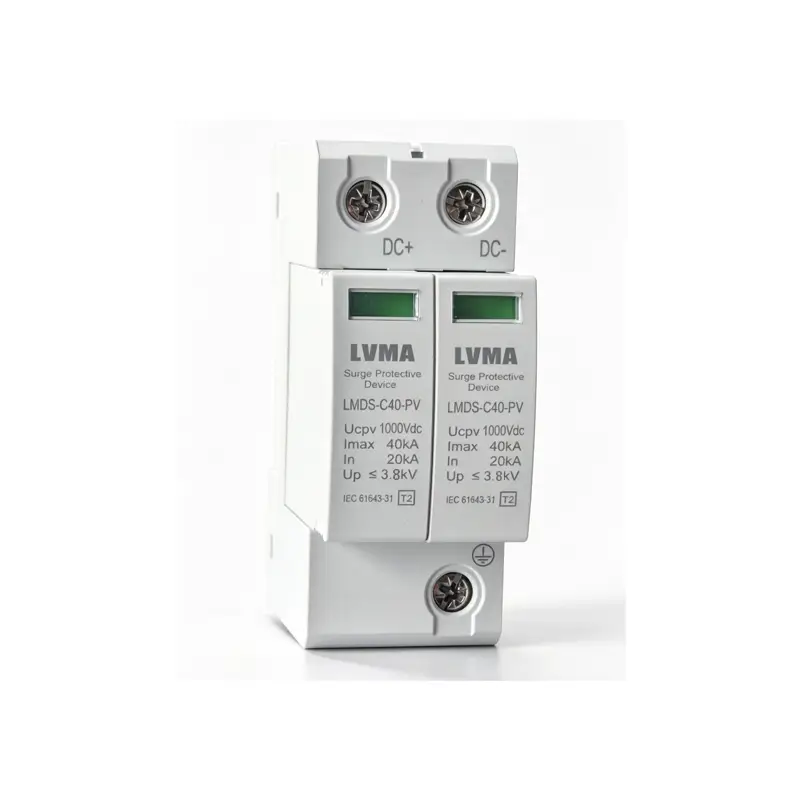
Surge Protection Device (SPD), commonly called a lightning surge arrester, is a special low-voltage component for resisting transient overvoltage and surge current.
Power grid switching, thunderstorm lightning strikes, and frequent startup of large equipment will generate instantaneous high-voltage surges. These invisible surges will gradually damage the insulation of electrical equipment, burn out precision circuits, and shorten the service life of home appliances and industrial devices.
Under normal working voltage, the SPD is in an insulating standby state and does not affect circuit operation. Once a voltage surge occurs, the SPD instantly conducts and releases surge current to the ground, clamping the circuit voltage within a safe range. It is a must-install device for building main power inlets, photovoltaic power systems, data centers, and lightning-prone areas.
5. Over and Under Voltage Protector
Most traditional circuit breakers only protect against overcurrent and short circuits, with no monitoring function for abnormal grid voltage. In remote areas, peak power consumption periods, and old community power grids, overvoltage and undervoltage problems are very common.
Sustained overvoltage will burn out equipment insulation and cause appliance damage; long-term undervoltage will lead to motor stalling, equipment overheating, and circuit aging. Theover and under voltage protector solves this pain point perfectly.
This low-voltage device monitors grid voltage in real time 24/7. When the voltage exceeds the upper limit or drops below the lower limit of the safe range, it automatically cuts off the power supply. After the grid voltage returns to normal and passes the delay confirmation, it will automatically reset and restore power supply, effectively protecting household appliances, industrial motors, and precision electrical equipment.
6. Electrical Distribution Box (Circuit Box)
The electrical distribution box (circuit box) is the core carrier of the entire low-voltage power distribution system, serving as the centralized installation box for all the above protective components.
lassified by usage scenarios, it includes household wall-mounted distribution boxes, industrial waterproof circuit boxes, and commercial power distribution cabinets. A standard distribution box is equipped with main breakers, branch MCB/RCBO breakers, fuses, SPDs, and voltage protectors, realizing hierarchical distribution and centralized protection of electric circuits.
A high-quality electrical circuit box features fireproof, anti-aging, waterproof, and dustproof performance, which can effectively protect internal electrical components from external environmental interference, avoid short circuit faults caused by dust and moisture, and ensure the long-term stable operation of the power system.
7. How to Match Low Voltage Electrical Components Correctly?
A complete safe low-voltage system requires reasonable matching of different components, instead of single device installation:
- Household conventional circuits: Main MCB + branch MCB + RCCB leakage protection
- High-standard home & precision equipment circuits: Full RCBO configuration + over/under voltage protector
- Smart home systems: Replace traditional breakers with smart circuit breakers
- Building main power inlet: Install professional SPD for surge and lightning protection
- Industrial control circuits: Match breakers with fuses for dual overcurrent protection
- All scenarios: Integrate all components into standardized fireproof distribution boxes
8. Conclusion
Each type of low-voltage electrical component has its unique irreplaceable function: MCB/RCCB/RCBO handle overcurrent and leakage faults, smart breakers realize intelligent power management, fuses provide ultra-fast backup protection, SPDs resist lightning and surge damage, over/under voltage protectors stabilize power quality, and distribution boxes standardize the entire circuit system.
Only by reasonably selecting and matching these low-voltage devices can we eliminate potential electrical hazards, reduce equipment maintenance costs, and build a safe, stable, and intelligent power distribution system for residential, commercial, and industrial projects.
9. FAQs for Low Voltage Electrical Devices
1. What is the main difference between MCB, RCCB and RCBO?
MCB protects against overload and short circuit; RCCB only provides leakage protection; RCBO integrates overload, short circuit and leakage three-in-one protection, which is the most comprehensive and space-saving solution.
2. Are smart circuit breakers worth installing?
Yes. Smart breakers support remote control and real-time data monitoring, which is very suitable for smart homes, rental properties and unattended industrial equipment, greatly improving power safety and management efficiency.
3. Do I need both a fuse and a circuit breaker?
For high-standard industrial and commercial circuits, the combination of fuses and breakers provides dual protection, with fuses handling extreme short-circuit faults and breakers managing daily overload protection.
4. Why install an over and under voltage protector?
Traditional breakers cannot identify voltage anomalies. This protector effectively prevents equipment burnout caused by unstable grid voltage, especially in areas with poor power quality.
Share This Article
Follow Us
A safe, stable, and efficient electrical system is built on high-quality low voltage electrical components. For residential buildings, commercial offices, industrial workshops, and renewable energy projects, low-voltage devices (operating under 1000V AC) act as the core line of defense against short circuits, overloads, leakage current, voltage surges, and unstable power supply.
Many electricians, project contractors, wholesalers, and DIY installers struggle to distinguish between MCB, RCCB, RCBO, smart circuit breakers, fuses, SPDs, over and under voltage protectors, and distribution boxes. Choosing the wrong electrical device leads to frequent tripping, equipment burnout, electrical fire risks, and non-compliant electrical installations.
In this comprehensive SEO guide, we systematically explain the functions, types, working principles, and application scenarios of all mainstream low-voltage electrical components, helping you select the perfect parts for your power distribution system
1. Miniature Circuit Breaker Series (MCB / RCCB / RCBO)
Circuit breakers are the most essential low-voltage devices for terminal circuit protection. In household and light commercial electrical systems, MCB, RCCB, and RCBO are three widely used types with clear functional differences.
1.1 MCB (Miniature Circuit Breaker)
MCB is the basic miniature circuit breaker designed for overload and short circuit protection. It has no leakage protection function and focuses on preventing circuit overcurrent faults caused by overloaded electrical loads or line short circuits.
Available in common current ratings from 6A to 63A and multiple curve types (B, C, D), MCBs suit different scenarios: B-type for home lighting, C-type for household appliances and sockets, D-type for industrial motors and high-inrush current equipment. Features include compact size, quick tripping, and reusable operation, making it the standard component for branch circuit protection.
1.2 RCCB (Residual Current Circuit Breaker)
RCCB, also known as residual current breaker or earth leakage circuit breaker, only provides electric leakage protection. It cannot protect against overload or short circuits.
This device monitors unbalanced current in the circuit. When electric leakage occurs (caused by damaged wires, wet equipment, or human electric shock), the RCCB trips instantly to cut off power and avoid personal electric shock accidents and leakage-induced fires. It is usually matched with MCBs for combined circuit protection in bathroom, kitchen, and outdoor circuits.
1.3 RCBO (Residual Current Circuit Breaker with Overcurrent Protection)
RCBO is an integrated upgraded device that combines all functions of MCB and RCCB in one unit. It provides three core protections: overload protection, short circuit protection, and residual current leakage protection.
Compared with separate MCB + RCCB combinations, RCBOs save installation space, reduce wiring faults, and offer more sensitive and stable protection performance. It is the preferred choice for high-standard residential renovation, luxury buildings, and precision equipment circuits, becoming the mainstream replacement for traditional combined protection solutions.
2. Smart Circuit Breaker
With the popularity of smart homes and smart power management systems, smart circuit breakers have become a trending low-voltage electrical product. Based on traditional miniature breakers, they are embedded with intelligent control modules and communication chips.
Different from ordinary breakers, smart circuit breakers support remote ON/OFF control, real-time current/voltage/power monitoring, over-temperature protection, and mobile APP alarm reminders. Users can remotely cut off the power through mobile phones when away from home, view real-time power consumption data, and receive fault push notifications immediately once circuit abnormalities occur.
Widely applied in smart home systems, rental houses, office buildings, and intelligent industrial power distribution, smart breakers realize digital and visualized power safety management, greatly improving electrical intelligence and safety level.
3. Low Voltage Fuse
The low voltage fuse is a classic, ultra-reliable overcurrent protection component with a simple structure and extremely low failure rate. The core working principle is to use the thermal melting characteristics of the internal metal fuse element.
When the circuit suffers extreme short circuit or severe overload, the instantaneous overcurrent will melt the fuse element in milliseconds to cut off the circuit, isolating faulty lines and protecting electrical equipment and cables. Unlike reusable breakers, fuses are disposable products but feature faster breaking speed, higher stability, and lower cost.
Common types include cartridge fuses, plug fuses, and blade fuses. They are widely used in distribution boxes, industrial control cabinets, power supply equipment, and precision instrument circuits, serving as essential secondary backup protection for low-voltage systems.
4. Surge Protection Device (SPD)
Surge Protection Device (SPD), commonly called a lightning surge arrester, is a special low-voltage component for resisting transient overvoltage and surge current.
Power grid switching, thunderstorm lightning strikes, and frequent startup of large equipment will generate instantaneous high-voltage surges. These invisible surges will gradually damage the insulation of electrical equipment, burn out precision circuits, and shorten the service life of home appliances and industrial devices.
Under normal working voltage, the SPD is in an insulating standby state and does not affect circuit operation. Once a voltage surge occurs, the SPD instantly conducts and releases surge current to the ground, clamping the circuit voltage within a safe range. It is a must-install device for building main power inlets, photovoltaic power systems, data centers, and lightning-prone areas.
5. Over and Under Voltage Protector
Most traditional circuit breakers only protect against overcurrent and short circuits, with no monitoring function for abnormal grid voltage. In remote areas, peak power consumption periods, and old community power grids, overvoltage and undervoltage problems are very common.
Sustained overvoltage will burn out equipment insulation and cause appliance damage; long-term undervoltage will lead to motor stalling, equipment overheating, and circuit aging. Theover and under voltage protector solves this pain point perfectly.
This low-voltage device monitors grid voltage in real time 24/7. When the voltage exceeds the upper limit or drops below the lower limit of the safe range, it automatically cuts off the power supply. After the grid voltage returns to normal and passes the delay confirmation, it will automatically reset and restore power supply, effectively protecting household appliances, industrial motors, and precision electrical equipment.
6. Electrical Distribution Box (Circuit Box)
The electrical distribution box (circuit box) is the core carrier of the entire low-voltage power distribution system, serving as the centralized installation box for all the above protective components.
lassified by usage scenarios, it includes household wall-mounted distribution boxes, industrial waterproof circuit boxes, and commercial power distribution cabinets. A standard distribution box is equipped with main breakers, branch MCB/RCBO breakers, fuses, SPDs, and voltage protectors, realizing hierarchical distribution and centralized protection of electric circuits.
A high-quality electrical circuit box features fireproof, anti-aging, waterproof, and dustproof performance, which can effectively protect internal electrical components from external environmental interference, avoid short circuit faults caused by dust and moisture, and ensure the long-term stable operation of the power system.
7. How to Match Low Voltage Electrical Components Correctly?
A complete safe low-voltage system requires reasonable matching of different components, instead of single device installation:
- Household conventional circuits: Main MCB + branch MCB + RCCB leakage protection
- High-standard home & precision equipment circuits: Full RCBO configuration + over/under voltage protector
- Smart home systems: Replace traditional breakers with smart circuit breakers
- Building main power inlet: Install professional SPD for surge and lightning protection
- Industrial control circuits: Match breakers with fuses for dual overcurrent protection
- All scenarios: Integrate all components into standardized fireproof distribution boxes
8. Conclusion
Each type of low-voltage electrical component has its unique irreplaceable function: MCB/RCCB/RCBO handle overcurrent and leakage faults, smart breakers realize intelligent power management, fuses provide ultra-fast backup protection, SPDs resist lightning and surge damage, over/under voltage protectors stabilize power quality, and distribution boxes standardize the entire circuit system.
Only by reasonably selecting and matching these low-voltage devices can we eliminate potential electrical hazards, reduce equipment maintenance costs, and build a safe, stable, and intelligent power distribution system for residential, commercial, and industrial projects.
9. FAQs for Low Voltage Electrical Devices
1. What is the main difference between MCB, RCCB and RCBO?
MCB protects against overload and short circuit; RCCB only provides leakage protection; RCBO integrates overload, short circuit and leakage three-in-one protection, which is the most comprehensive and space-saving solution.
2. Are smart circuit breakers worth installing?
Yes. Smart breakers support remote control and real-time data monitoring, which is very suitable for smart homes, rental properties and unattended industrial equipment, greatly improving power safety and management efficiency.
3. Do I need both a fuse and a circuit breaker?
For high-standard industrial and commercial circuits, the combination of fuses and breakers provides dual protection, with fuses handling extreme short-circuit faults and breakers managing daily overload protection.
4. Why install an over and under voltage protector?
Traditional breakers cannot identify voltage anomalies. This protector effectively prevents equipment burnout caused by unstable grid voltage, especially in areas with poor power quality.
Contact Us
Related Blog




Contact Us
Have questions about our products or services? Our team is here to help you with any inquiries.